
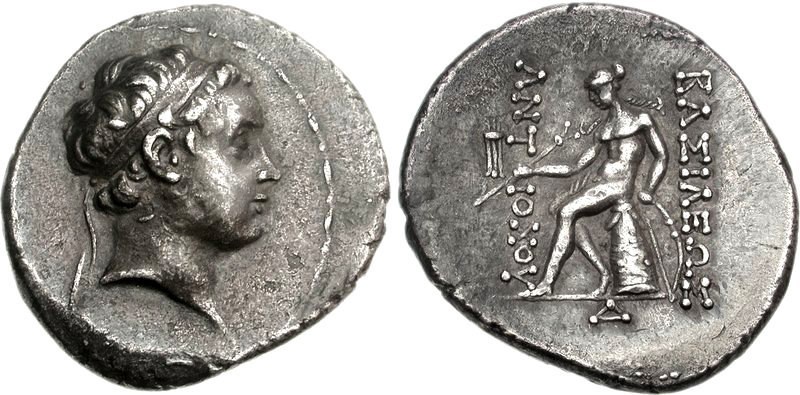
Antiochos the Child Tetradrachm
Silver Seleucid tetradrachm, c. 175 BC, with a young diademed head and a martial reverse figure with spear and shield.
- Country
- Seleucid Empire (Ancient)
- Denomination
- Tetradrachm
- Metal
- Silver
Got a coin like this?
Identify any coin from a photo, free.
Overview
The Antiochos the Child tetradrachm is a large silver coin of the Seleucid Empire, associated with the short reign of the young Antiochos around 175 BC. The example shown pairs a youthful diademed head with curly hair on the obverse with a martial figure carrying a spear and shield on the reverse, either mounted on horseback or seated in a warrior pose.
As a tetradrachm, the coin was worth four drachms and served as the standard large silver denomination of the Hellenistic Greek world. It is a broad, heavy disc of high-purity silver, the kind of piece used for major payments, trade, and military pay across the Seleucid realm.
The coin belongs to the turbulent period after the death of Seleucus IV Philopator in 175 BC, when the Seleucid throne passed to a child, Antiochos, under the guardianship of his uncle Antiochos IV Epiphanes. Coinage of this brief interval reflects the dynastic uncertainty of the moment, with the boy king's youthful portrait presented in the royal Seleucid style.
History & Background
In 175 BC the Seleucid king Seleucus IV Philopator was assassinated by his own minister. His heir was a young son, Antiochos, still a child. The boy was elevated to the throne, but real power fell to his uncle, who returned from Rome and took the throne as Antiochos IV Epiphanes, first ruling alongside or as guardian of his young nephew.
The child's reign was brief and precarious. Within a few years the boy Antiochos was killed, leaving Antiochos IV as sole ruler. Because his tenure was so short and overshadowed by his powerful uncle, the young Antiochos left only a limited numismatic record, which is part of what makes coinage tied to this moment historically interesting.
The Seleucid Empire in this era stretched across Syria, Mesopotamia, and neighboring regions, one of the great Hellenistic kingdoms founded by Alexander the Great's successors. Its royal mints, above all Antioch, struck abundant silver tetradrachms that carried the reigning dynasty's chosen portrait and imagery throughout the eastern Mediterranean and Near East.
How to Identify
The obverse shows a young head facing right, wearing the royal diadem (a plain cloth headband tied at the back) and with distinctive curly hair. The youthful, rounded features are a key point: this is not the mature, heavier portrait seen on much later Seleucid silver, but a young ruler rendered in the idealized Hellenistic style.
The reverse carries a martial figure equipped with a spear and shield, shown either riding on horseback or seated in a warrior stance. Seleucid tetradrachms normally place a Greek royal legend around the reverse type, typically naming the king with the title BASILEOS ("of the King"), together with monograms or control marks that vary between dies and mints.
In hand the coin is a large, thick silver disc, on the order of about 16 to 17 grams and roughly 28 to 32 mm across, struck on hand-cut dies. Expect an irregular, slightly oval flan and centering that can push part of the design or legend off the blank. The metal is high-grade silver, usually toned grey with age. The combination of a young diademed head and a spear-and-shield martial reverse is the coin's core identifier.
Value & Collectibility
Genuine Seleucid silver tetradrachms are actively collected, and pieces tied to the brief reign of the young Antiochos draw added interest because of their short and unusual historical window. Worn but clearly identifiable examples generally trade in the low-to-mid hundreds of dollars, while sharply struck, well-centered coins with a bold portrait can reach well into the four figures.
Value depends on the strength and style of the portrait, the completeness of the reverse figure and legend, centering, surface quality and toning, and overall eye appeal. Attractive dies, superb preservation, and documented provenance command strong premiums, while off-center strikes, corrosion, or heavy wear reduce value.
These figures are general context rather than appraisals. Any specific coin's price depends heavily on condition, attribution, and authenticity, and valuable Hellenistic silver of this kind is often sold with specialist attribution or third-party certification.
Frequently asked questions
Who was Antiochos the Child?
He was a young Seleucid prince, son of Seleucus IV Philopator, who became nominal king around 175 BC after his father's assassination. Real power lay with his uncle Antiochos IV Epiphanes, and the boy's short reign ended when he was killed a few years later.
What is shown on the reverse?
The reverse carries a martial figure equipped with a spear and shield, shown either on horseback or seated in a warrior pose, in keeping with the military imagery favored by Hellenistic rulers.
How big and heavy is the coin?
It is a large silver tetradrachm, typically on the order of about 16 to 17 grams and roughly 28 to 32 mm across. It is a thick, substantial piece struck on a hand-cut blank, so its shape is somewhat irregular.
Is there writing on the coin?
Yes. Seleucid tetradrachms normally carry a Greek royal legend around the reverse, typically naming the king with the title BASILEOS ("of the King"), often accompanied by monograms or control marks that vary between dies.
Why is this coinage historically notable?
The young Antiochos ruled only briefly and was overshadowed by his uncle, so coinage connected to this moment reflects a short, unstable dynastic interval in Seleucid history rather than a long, well-documented reign.
Antiochos the Child Tetradrachm guides
In-depth guides for identifying, valuing, and collecting Antiochos the Child Tetradrachm.
Other coins you may enjoy
Tetradrachm of Ptolemy XII
80-51 BC
Tetradrachm of Ptolemy I
305-283 BC
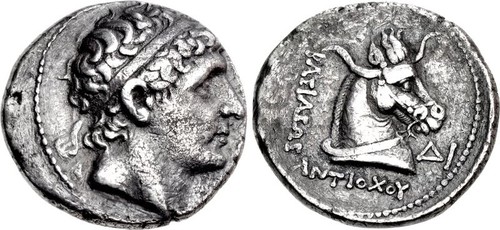
Tetradrachm of Antiochos I Soter
281-261 BC
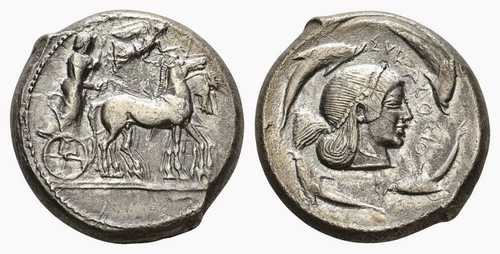
Syracuse Tetradrachm
c. 5th-4th century BC (Classical period)
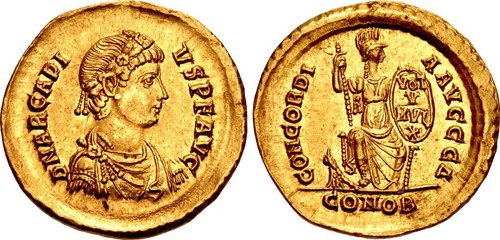
Solidus of Arcadius
AD 395-402
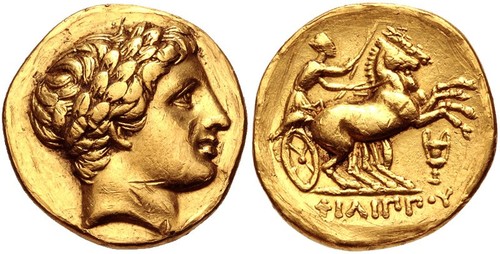
Philip III Gold Stater
323-317 BC
Siliqua of Gratian
AD 367-383
Sestertius of Maximinus Thrax
235-238 AD
Solidus of Valentinian III
AD 425-455
Seleucus I Nicator Tetradrachm
Late 4th-3rd century BC
Nummus of Magnentius
AD 350-353
Follis of Galerius
AD 308-310