
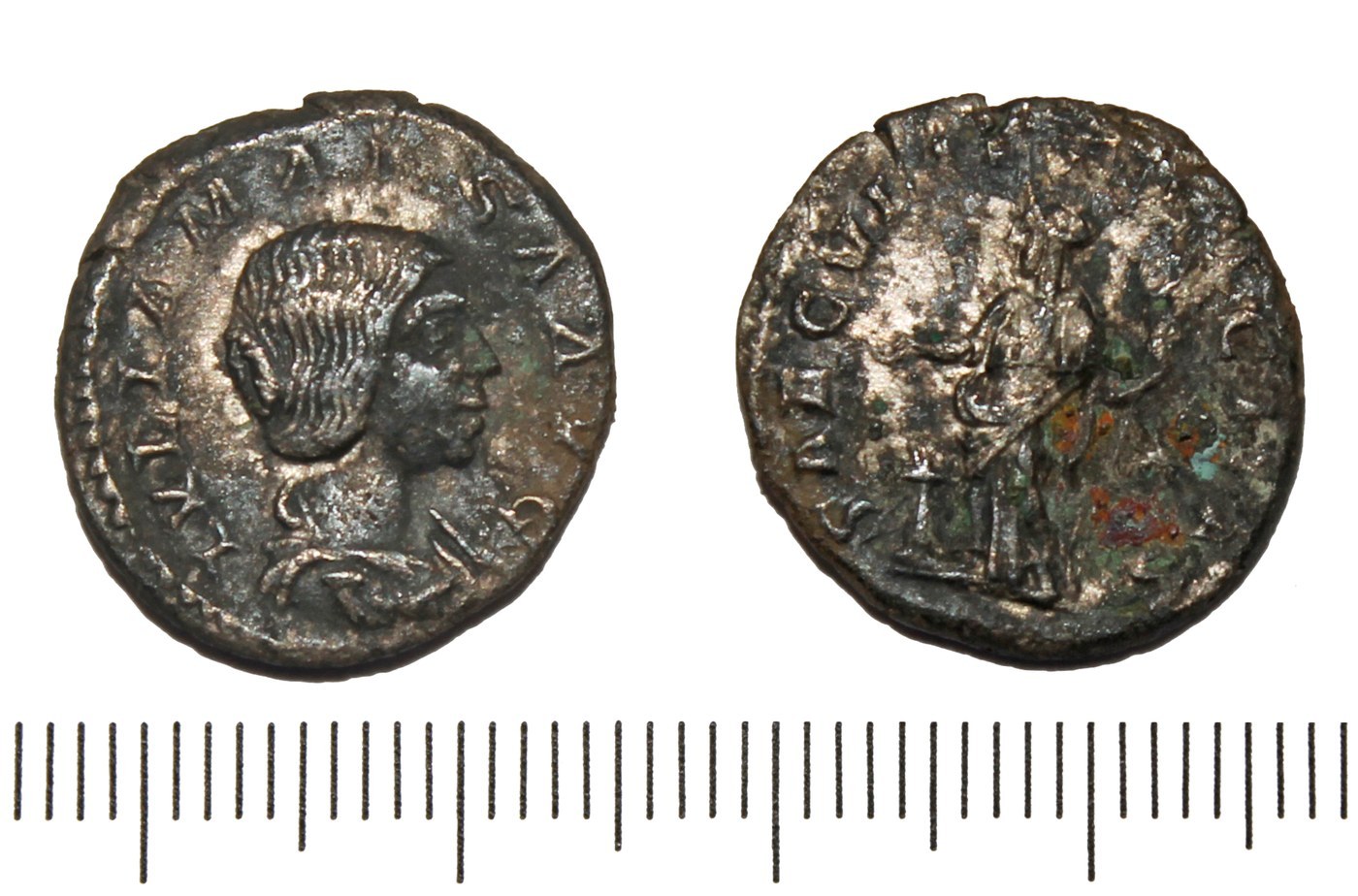
Denarius of Julia Maesa
Roman silver denarius struck for Julia Maesa (c. 218–222 CE), showing her draped bust with wavy hair and a standing deity on the reverse.
- Country
- Roman Empire
- Denomination
- Denarius
- Metal
- Silver
Got a coin like this?
Identify any coin from a photo, free.
Overview
The denarius of Julia Maesa is a Roman imperial silver coin issued during the reign of her grandson Elagabalus, roughly 218–222 CE. Julia Maesa was a member of the powerful Severan dynasty and, as an imperial grandmother who helped engineer Elagabalus's rise, she was honored with her own coinage in the manner of a reigning empress. The example shown here has her portrait on the obverse and a standing figure on the reverse.
The obverse shows Julia Maesa's draped bust facing right, her hair dressed in the deep waves that swept back to a bun typical of Severan women's portraits, surrounded by a Latin legend naming her. The reverse carries a standing personification or deity such as Pudicitia, Pietas, Juno, or Fecunditas, accompanied by an inscription describing that virtue. It is a widely collected and relatively affordable entry point into genuine ancient Roman silver.
History & Background
Julia Maesa was the sister of Julia Domna, the influential wife of Emperor Septimius Severus. After the murder of Caracalla and the brief reign of Macrinus, Maesa used her family's wealth and connections to place her teenage grandson Elagabalus on the throne in 218 CE. As a leading figure of the Severan household she received the title Augusta and appeared on the imperial coinage, a rare distinction for a woman who never ruled in her own name.
Her denarii were struck mainly at the mint of Rome during Elagabalus's reign (218–222 CE), with reverse types promoting traditional Roman virtues and goddesses associated with imperial women. These messages of piety, chastity, and dynastic fertility helped legitimize the young emperor and the family's hold on power.
Julia Maesa died around 224–225 CE, early in the reign of her second grandson Severus Alexander, and was subsequently deified. Her coinage belongs to the final decades of the good-silver denarius before the denomination was steadily debased and eclipsed by the double denarius in the mid-third century.
How to Identify
Identify the obverse by the right-facing draped bust of a mature woman with distinctive wavy hair pulled back into a bun at the nape, encircled by a Latin legend that typically reads IVLIA MAESA AVG. The name MAESA in the inscription is the surest confirmation and distinguishes her from the many other Severan women, such as Julia Domna, Julia Soaemias, Julia Paula, or Julia Mamaea.
The reverse shows a standing figure, usually a goddess or personified virtue, holding attributes and identified by the surrounding legend, for example PVDICITIA, PIETAS AVG, IVNO, SAECVLI FELICITAS, or FECVNDITAS SAECVLI. The coin is a small silver piece about 18–20 mm across and roughly 2.5–3.5 grams, struck by hand so the flan is often slightly irregular and the strike a little off-center.
Genuine examples show good-quality Severan silver with a bright to lightly toned surface. Because these are hand-struck ancients, expect variation in centering, minor flatness, and edge shape rather than the machined uniformity of a modern coin.
Value & Collectibility
Denarii of Julia Maesa are among the more common and affordable genuine ancient Roman silver coins, since they were produced in quantity and many survive. Ordinary circulated examples with clear portraits and readable legends generally trade in the low tens of dollars, while worn or off-center pieces can be even less.
High-grade coins with sharp detail, full legends, attractive toning, and well-centered strikes command stronger premiums, and scarcer reverse types or exceptional eye appeal push prices higher still. As with all ancient silver, condition, centering, surface quality, and the desirability of the reverse type drive value far more than the mere presence of her name.
Because this type is frequently offered, buyers should compare recent auction results for the specific reverse and grade rather than rely on a single figure. Provenance and, for higher-value pieces, third-party authentication add confidence and can support a premium.
Frequently asked questions
Who was Julia Maesa?
She was a Severan noblewoman, sister of the empress Julia Domna, who engineered her grandson Elagabalus's rise to emperor in 218 CE. As an imperial Augusta she was honored with her own silver coinage though she never ruled directly.
When was this denarius made?
Most denarii of Julia Maesa were struck at Rome during the reign of Elagabalus, roughly 218–222 CE, near the end of the good-silver denarius era.
What is on the reverse?
The reverse shows a standing deity or personified virtue such as Pudicitia, Pietas, Juno, or Fecunditas, named in the surrounding Latin legend. These types promoted traditional Roman virtues linked to imperial women.
Is a Julia Maesa denarius valuable?
It is one of the more affordable genuine ancient Roman silver coins. Typical circulated examples sell in the low tens of dollars, with sharp, well-centered, or scarce-reverse pieces bringing more.
How do I know it is really hers and not another Severan empress?
Read the obverse legend: the name MAESA (usually IVLIA MAESA AVG) confirms Julia Maesa and separates her from Julia Domna, Soaemias, Paula, or Mamaea, who wore similar hairstyles.
Denarius of Julia Maesa guides
In-depth guides for identifying, valuing, and collecting Denarius of Julia Maesa.
Other coins you may enjoy
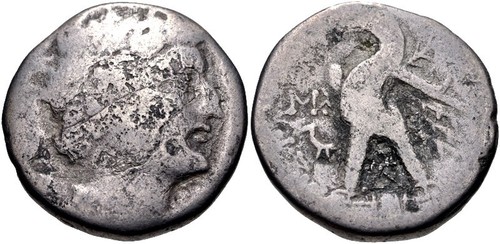
Tetradrachm of Ptolemy XII
80-51 BC
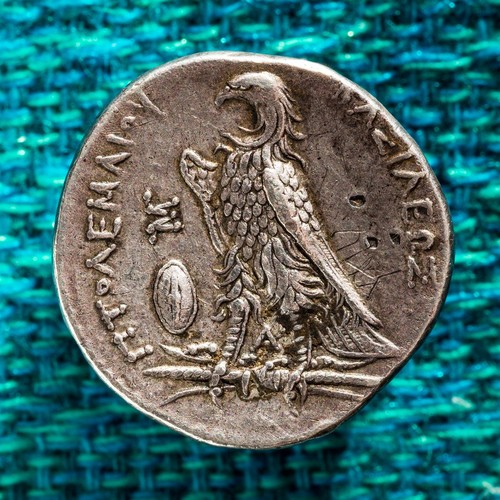
Tetradrachm of Ptolemy I
305-283 BC
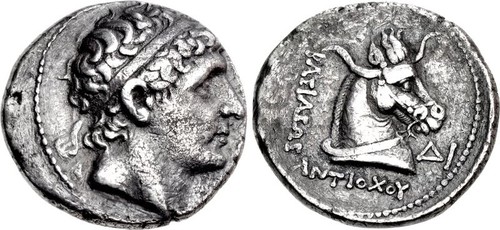
Tetradrachm of Antiochos I Soter
281-261 BC
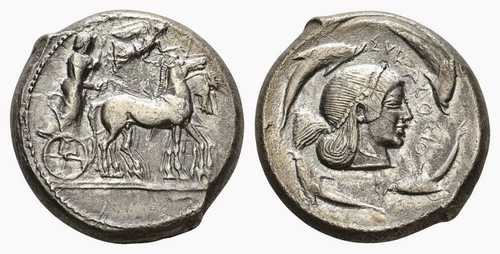
Syracuse Tetradrachm
c. 5th-4th century BC (Classical period)
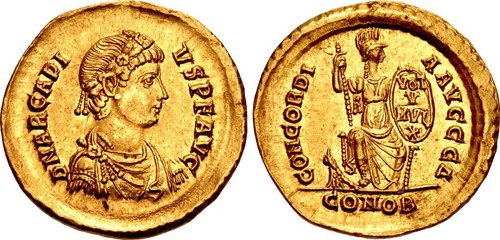
Solidus of Arcadius
AD 395-402
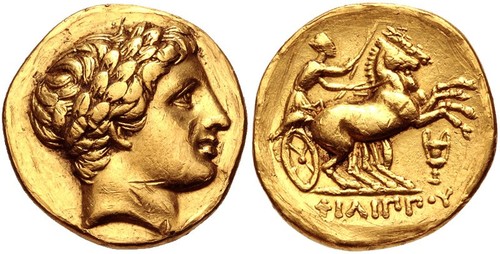
Philip III Gold Stater
323-317 BC
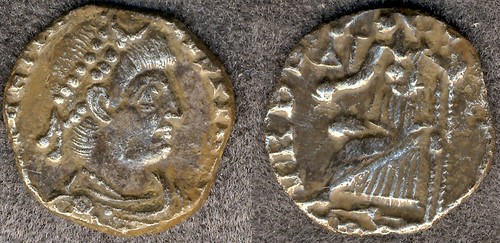
Siliqua of Gratian
AD 367-383
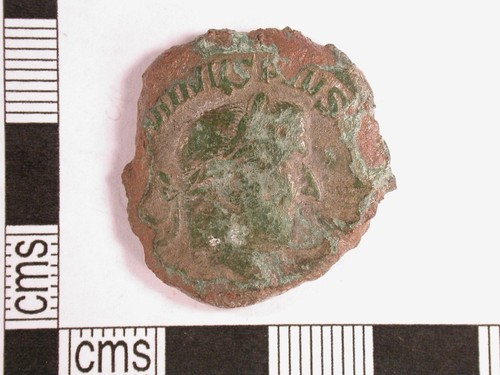
Sestertius of Maximinus Thrax
235-238 AD
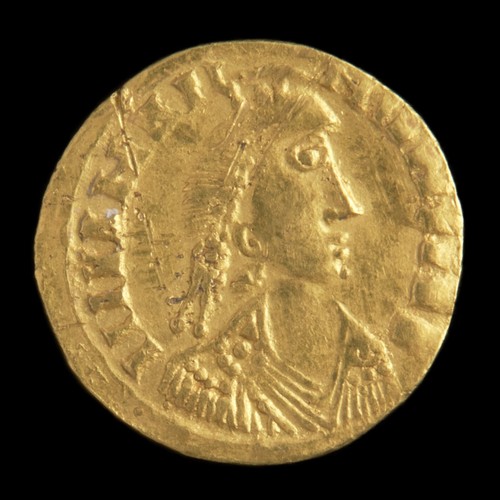
Solidus of Valentinian III
AD 425-455
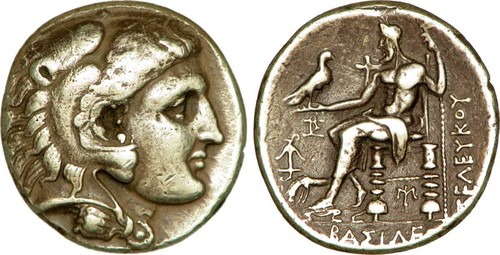
Seleucus I Nicator Tetradrachm
Late 4th-3rd century BC
Nummus of Magnentius
AD 350-353
Follis of Galerius
AD 308-310