
How to Identify the Denarius of Julia Maesa
A collector's guide to recognizing Julia Maesa's Roman silver denarius by its portrait, MAESA legend, reverse deity, size, and metal.
Read the full Denarius of Julia Maesa encyclopedia entry →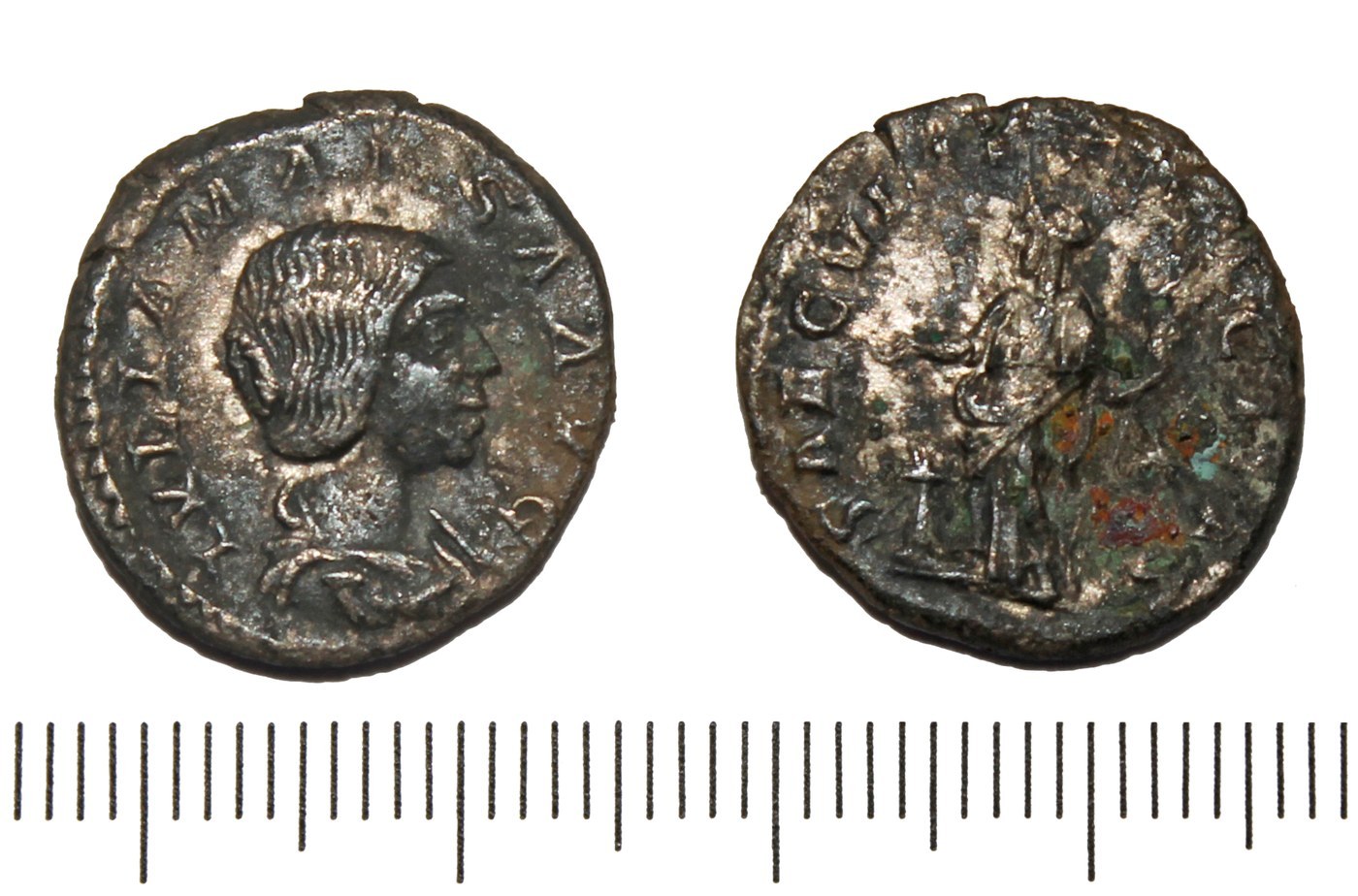
Begin with the obverse legend, because the portraits of Severan women look much alike. Julia Maesa's denarius shows a right-facing draped bust with deeply waved hair gathered into a bun, ringed by a Latin inscription that normally reads IVLIA MAESA AVG. Finding the word MAESA is the single most reliable step; it separates her from Julia Domna, Julia Soaemias, Julia Paula, and Julia Mamaea, all of whom share a similar hairstyle and naming pattern.
Next read the reverse. Expect a single standing figure, a goddess or personified virtue, holding attributes and named by the legend around it, such as PVDICITIA, PIETAS AVG, IVNO, or SAECVLI FELICITAS. Matching the reverse legend and the figure's pose and attributes to published Severan reference types (RIC, RSC/Sear) will pin down the exact variety and help confirm authenticity.
Check the physical coin. A genuine denarius of this period is a small hand-struck silver piece, roughly 18–20 mm in diameter and about 2.5–3.5 grams, with good Severan silver that looks bright or lightly toned rather than gray or porous. The flan is often a little irregular and the strike can be off-center or slightly flat in spots; this is normal for ancients and is not a defect the way it would be on a modern coin. These coins were struck at Rome and do not carry modern-style mint marks.
Watch for look-alikes and fakes. Beware cast copies (seams, bubbles, a soft mushy surface, or wrong weight), modern tourist replicas, and coins of other Severan women misattributed to Maesa; always let the legend, not just the portrait, decide. Silver-washed or suspiciously heavy or light pieces deserve caution. For anything beyond a modest sum, buy from reputable dealers, seek provenance, and consider third-party authentication.
Finally, judge condition honestly: centering, sharpness of the portrait and legends, surface quality, and toning drive value. Because this type is common, an attractive, well-centered example with full inscriptions is worth holding out for over a worn or partially struck one at a similar price.
Frequently asked questions
What legend confirms the coin is Julia Maesa?
Look for MAESA in the obverse inscription, usually IVLIA MAESA AVG. That name confirms her and rules out other Severan empresses like Julia Domna or Julia Mamaea who wore similar hairstyles.
How big and heavy should a genuine denarius be?
A period denarius is about 18–20 mm across and roughly 2.5–3.5 grams of good silver. Coins far outside that range, or that look porous or seamed, may be cast fakes or replicas.
Does it have a mint mark?
No. These were struck at Rome by hand and do not carry modern-style mint marks. The coin is identified by its portrait, legends, and reverse type rather than a mark.
Why does my coin look off-center or uneven?
Ancient denarii were struck by hand on slightly irregular flans, so off-center strikes, minor flatness, and uneven edges are normal and do not indicate a fake.