
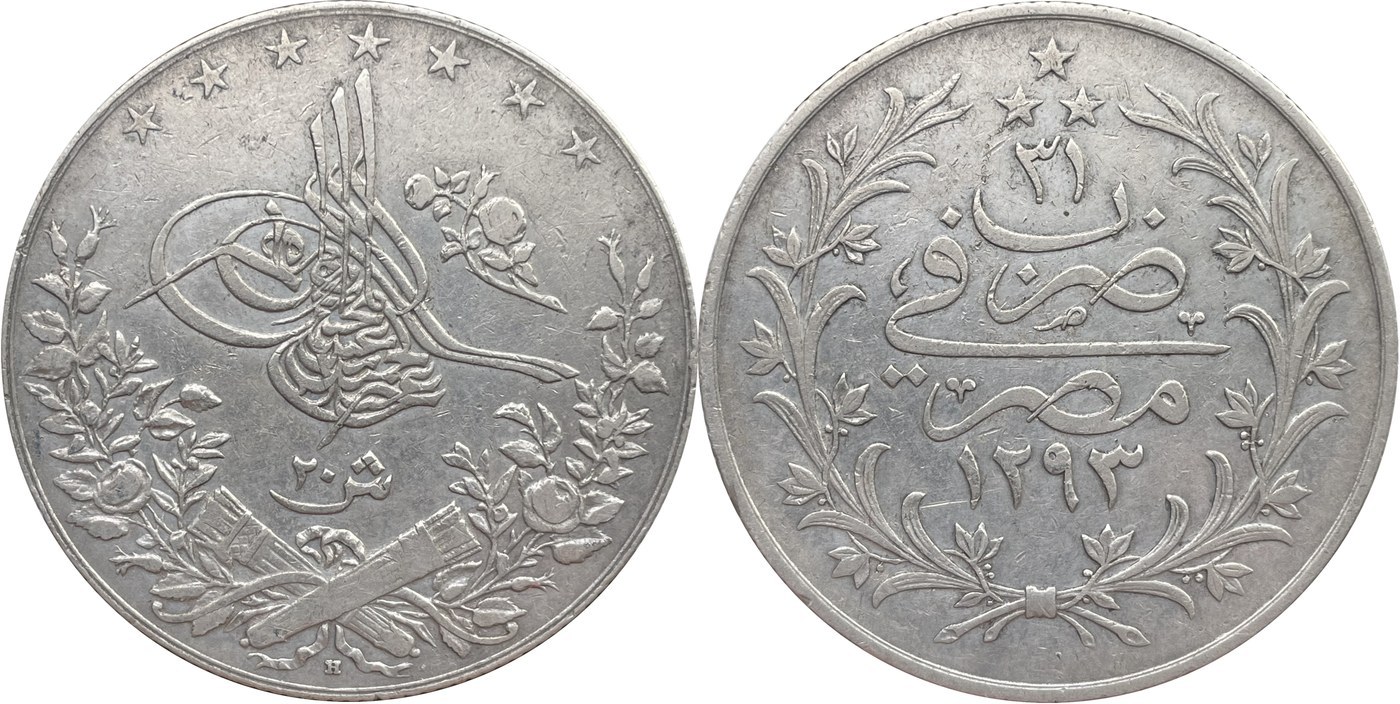
Egypt 20 Qirsh
The 20 qirsh was Egypt's largest silver coin under the Khedivate, bearing the Ottoman sultan's tughra; this example dates to 1905.
- Country
- Egypt
- Denomination
- 20 Qirsh
- Metal
- Silver
Got a coin like this?
Identify any coin from a photo, free.
Overview
The 20 qirsh (20 piastres) was the largest silver denomination of Egyptian coinage during the Khedivate, an era when Egypt was an autonomous province still under the nominal sovereignty of the Ottoman Empire. As the top of the everyday silver series, it served as a substantial trade and store-of-value coin rather than small change.
This example is dated 1905 and belongs to the reign of Khedive Abbas II Hilmi. In keeping with Egypt's Ottoman ties, the coin carries a tughra — the calligraphic monogram of the reigning Ottoman sultan — on the obverse, surrounded by stars and floral ornament, with Arabic inscriptions and a decorative wreath on the reverse.
Struck in silver on a broad, heavy flan, the 20 qirsh is among the more imposing coins of the period and a popular type with collectors of Egyptian, Ottoman, and wider Middle Eastern numismatics.
History & Background
Through the 19th and into the early 20th century, Egypt was governed by a line of khedives descended from Muhammad Ali, holding autonomous rule while remaining formally a part of the Ottoman Empire. Egyptian coinage of this period reflected that dual status: it was issued in the name and monetary system of Egypt yet displayed the tughra of the Ottoman sultan as the symbol of overarching sovereignty.
Abbas II Hilmi, under whom this 1905 coin was struck, was the last khedive to reign before Egypt's status changed during the First World War. The qirsh (piastre) was the principal unit of account, and the 20 qirsh sat at the head of the silver denominations that circulated for larger commercial payments.
Because Egypt did not operate a large modern mint of its own for much of this era, its coins were commonly produced at European mints under contract. The result is a consistently well-made silver series that circulated widely in Egypt and neighboring regions.
How to Identify
The obverse is dominated by an Ottoman tughra, a dense, looping calligraphic monogram in Arabic script, flanked and accompanied by small stars and floral ornaments. The reverse carries Arabic inscriptions — including the denomination and dating elements — set within an ornamental wreath. There is no portrait; the design is entirely calligraphic and decorative, typical of Ottoman-era Islamic coinage.
The coin is a large silver piece, noticeably broad and heavy in hand relative to lower denominations. Egyptian coins of this system are conventionally dated by the accession year of the reigning Ottoman sultan (in Arabic-Hijri numerals) together with a regnal year, so the calendar date is read by combining those figures rather than from a single Western year.
Key diagnostics are the denomination expressed in qirsh, the tughra style, the star-and-floral border on the tughra side, and the wreath framing the reverse legend. Confirm attribution by reading the Arabic legends and matching the tughra and dating to published references for Egyptian Khedivate coinage rather than by general appearance alone.
Value & Collectibility
As a large silver coin, the Egyptian 20 qirsh carries value both from its silver content and from collector demand for the type. Condition is the primary driver: well-struck examples with sharp tughra detail, full wreath, and original surfaces bring more than worn, cleaned, or damaged pieces.
Date and reign matter as well. Scarcer years, particular mints, and higher grades command premiums, while common dates in circulated condition trade closer to a modest collector level above bullion. Because this is a substantial silver piece, its intrinsic metal value sets a practical floor under lower grades.
Exact prices vary by specific coin, grade, and venue, so figures are best treated as ranges rather than fixed values. For meaningful examples, professional grading or an expert opinion helps confirm authenticity and pin down where a given coin sits in the market.
Frequently asked questions
What is the Egyptian 20 qirsh?
It is the largest silver denomination of Egyptian Khedivate coinage, equal to 20 qirsh (piastres), used for larger transactions during the era of Ottoman suzerainty.
What is the swirling design on the front of the coin?
It is an Ottoman tughra, the calligraphic monogram of the reigning sultan, used on Egyptian coins to signify Ottoman sovereignty over the autonomous Khedivate.
Why does an Egyptian coin carry an Ottoman symbol?
Egypt was an autonomous province still nominally under the Ottoman Empire, so its coinage displayed the sultan's tughra even though it was issued in Egypt's own monetary system.
Is 'qirsh' the same as 'piastre'?
Yes. Qirsh is the Arabic term and piastre the European term for the same Egyptian unit, so a 20 qirsh coin is also called a 20 piastres coin.
Are these coins valuable?
As large silver coins they hold both bullion and collector value; price depends chiefly on condition, date, mint, and eye appeal, with scarcer years and high grades bringing premiums.
Egypt 20 Qirsh guides
In-depth guides for identifying, valuing, and collecting Egypt 20 Qirsh.
Other coins you may enjoy
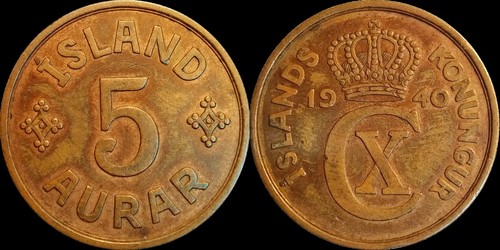
5 Aurar
1926-1942
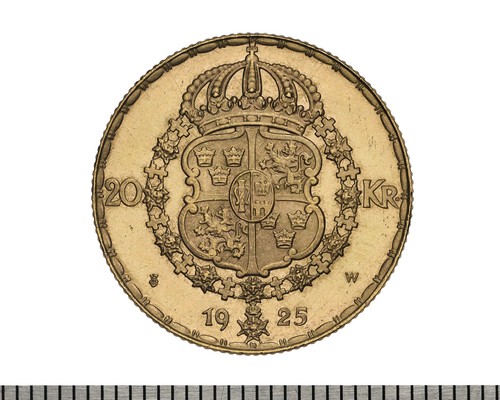
20 Kronor
1925 (denomination struck 1873-1925)
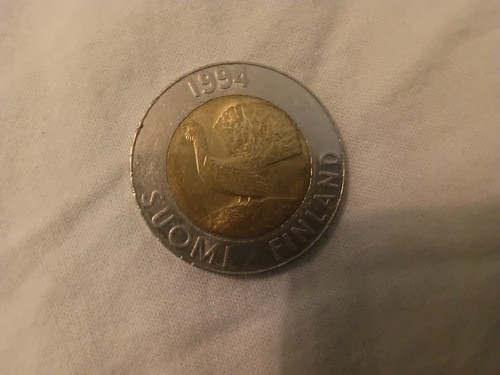
10 Markka
1993–2001
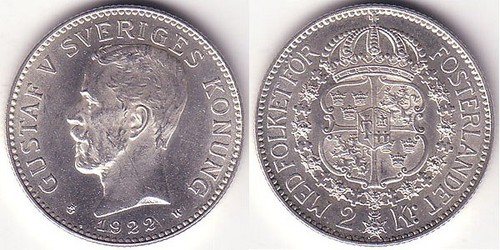
2 Kronor
1910-1940 (this example dated 1922)
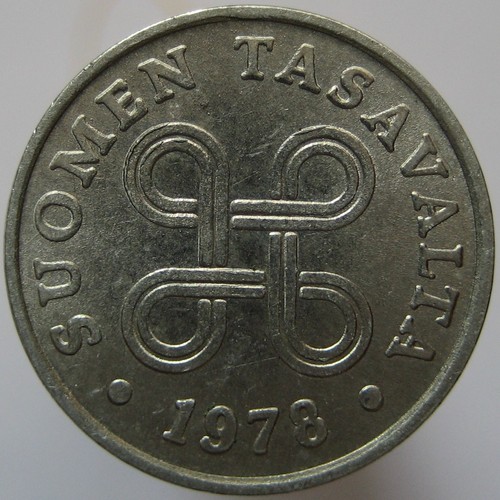
1 Penni
1969–1979
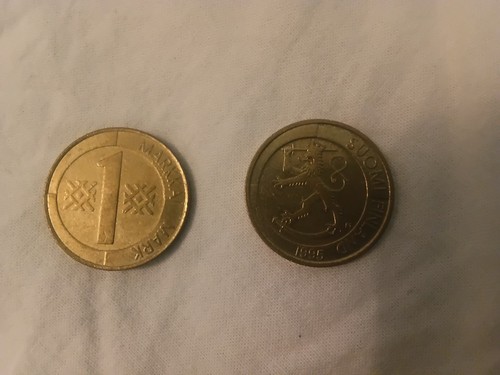
1 Markka
1993–2001
Kenya 5 Shillings
Bimetallic issues (2005–2010)
Kenya 20 Shillings
Modern issue (late 1990s–2000s)
South Africa Farthing
1923-1960
Kenya 10 Shillings
Republic of Kenya, bimetallic issues (mid-1990s to c. 2010)
Gold Sovereign
1817–present
Henri V Five Francs
1831