
How to Identify the Egypt 20 Qirsh
A collector's guide to identifying the Egyptian 20 qirsh by its Ottoman tughra, wreath reverse, large silver flan, Arabic dating, and look-alikes.
Read the full Egypt 20 Qirsh encyclopedia entry →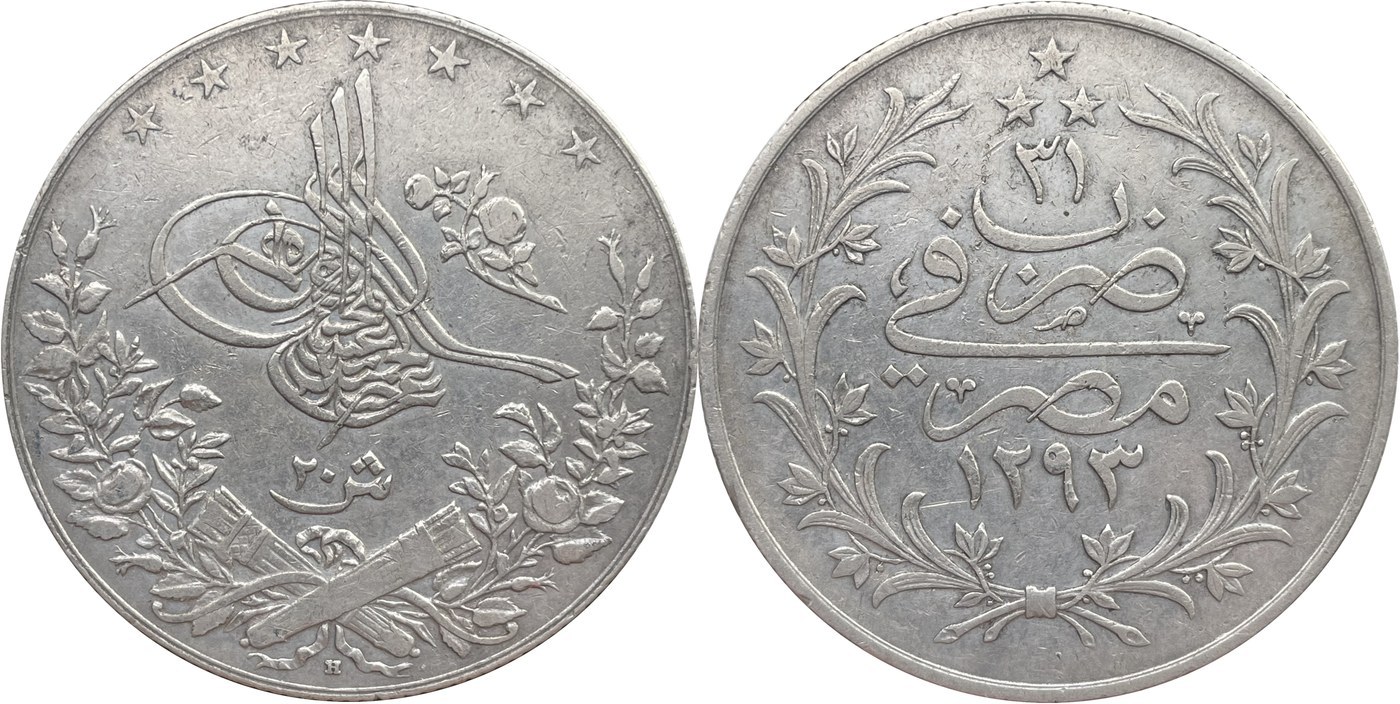
What This Coin Is
The Egypt 20 qirsh (20 piastres) is the top silver denomination of the Khedivate coinage, struck during the period when Egypt was an autonomous but nominally Ottoman province. Identifying one begins with recognizing a large, all-calligraphic silver coin bearing an Ottoman tughra rather than any portrait or numeral in Western figures. This example is dated 1905, in the reign of Khedive Abbas II Hilmi.
Reading the Obverse
The obverse centers on the tughra, a tightly interlaced Arabic monogram with tall vertical strokes and sweeping loops, set off by small stars and floral ornaments around it. The tughra is the sultan's emblem, so its specific form is a genuine attribution clue, not mere decoration — compare it against published examples rather than relying on a general impression of the swirling design.
Reading the Reverse
The reverse presents Arabic inscriptions framed by an ornamental wreath. Expect to find the denomination stated in qirsh and the dating elements rendered in Arabic-Hijri numerals. Egyptian coins of this system are typically dated by the Ottoman sultan's accession year plus a regnal year, so the calendar date is worked out by combining those two figures — a key point when matching a coin to a catalog year such as 1905.
Size, Metal, and Fabric
This is a large, heavy silver coin, broad in diameter and substantial in weight compared with the smaller qirsh denominations, so size and heft are quick first checks. Genuine silver examples show the toning and wear patterns of a circulating precious-metal coin. Weigh and measure any candidate and compare against published specifications; a coin that is markedly light, undersized, or non-silver in appearance deserves scrutiny.
Look-Alikes and Authentication Cautions
Smaller Egyptian silver denominations (such as the 10, 5, or 2 qirsh) share the same tughra-and-wreath design and can be mistaken for the 20 qirsh if size is not checked, so always confirm the stated denomination and the coin's diameter and weight. Ottoman coins of the same era also carry tughras and can look broadly similar. Because this is a desirable large silver type, be alert to cast copies (seams, bubbles, mushy detail), altered dates, and cleaned or tooled surfaces; for anything of value, verify against a standard reference for Egyptian Khedivate coinage or seek professional authentication.
Frequently asked questions
How do I tell the 20 qirsh from smaller Egyptian silver coins?
They share the tughra-and-wreath design, so check the denomination in the legend and measure the coin — the 20 qirsh is distinctly larger and heavier than the 10, 5, or 2 qirsh.
How is the date read on this coin?
Egyptian Khedivate coins are dated by the Ottoman sultan's accession year in Arabic-Hijri numerals plus a regnal year; combine the two to arrive at the calendar year, such as 1905.
How can I tell it apart from an Ottoman coin?
Both carry a tughra, so read the legends: the Egyptian piece states its value in qirsh within the Egyptian system, and its style and dating match Khedivate references rather than Constantinople issues.
What are common signs of a fake?
Casting seams, surface bubbles, soft or mushy detail, incorrect weight or diameter, altered dates, and unnaturally smooth or bright surfaces are all warning signs worth checking on a large silver coin.