
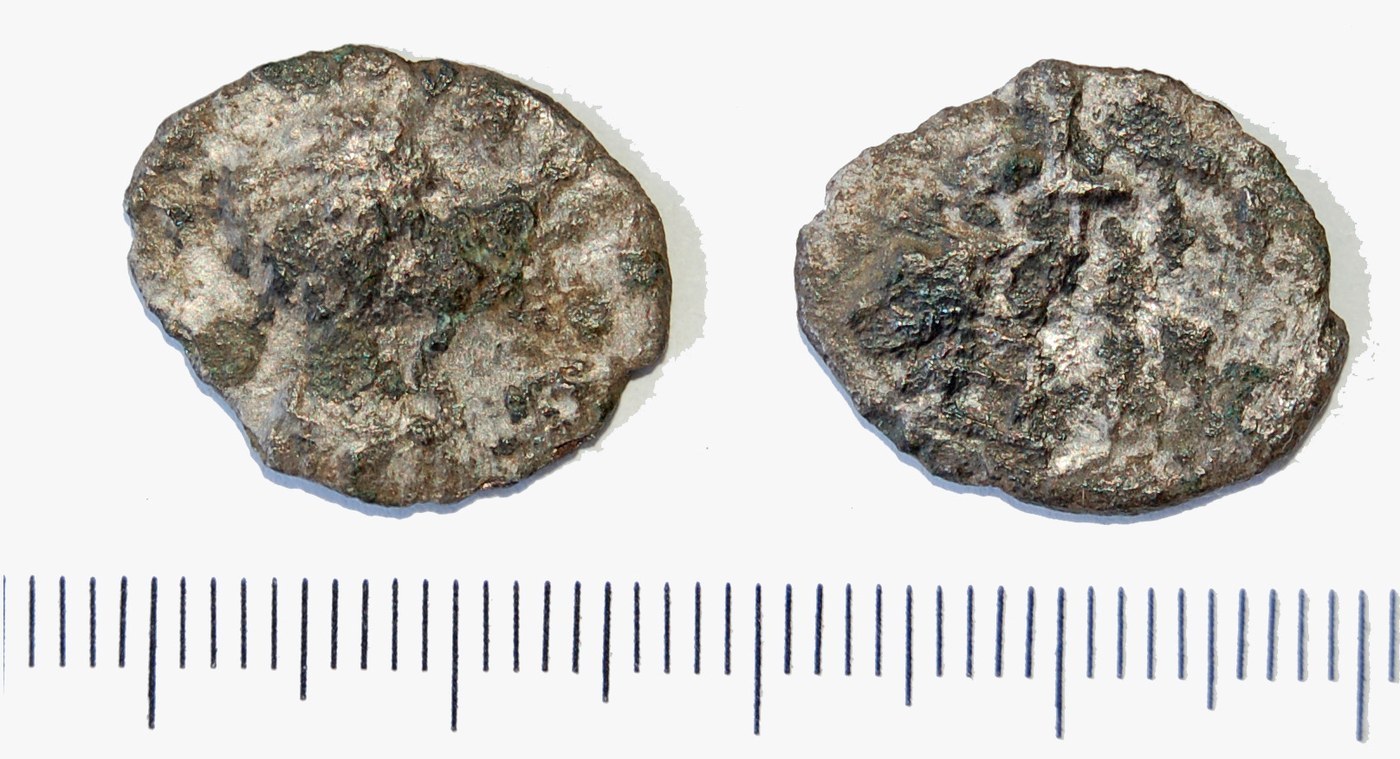
Denarius of Faustina the Elder
A silver Roman denarius honoring Faustina the Elder, wife of Antoninus Pius, with her draped bust and a seated Fortuna reverse, struck c. 141–161 AD.
- Country
- Roman Empire
- Denomination
- Denarius
- Metal
- Silver
Got a coin like this?
Identify any coin from a photo, free.
Overview
The denarius of Faustina the Elder is a small silver coin of the Roman Empire bearing the veiled or draped portrait of Faustina I, wife of the emperor Antoninus Pius. The example shown carries her draped bust facing right on the obverse and a seated figure of Fortuna holding a rudder and cornucopia on the reverse, a pairing typical of her extensive posthumous coinage.
Although Faustina died early in her husband's reign, her image continued to appear on imperial silver for roughly two decades. These commemorative denarii were struck in large numbers, so surviving examples are relatively common and are among the more accessible portrait denarii of the Antonine period.
The coin is struck in good silver of the mid-second century, before the heavy debasement of later reigns, and typically shows a clear portrait accompanied by short Latin legends naming Faustina and describing the reverse figure.
History & Background
Faustina the Elder (Annia Galeria Faustina) was the wife of Antoninus Pius, who became emperor in 138 AD. She died around 140–141 AD, only a few years into his long reign. In her memory Antoninus Pius had the Senate declare her a diva (a deified state figure), and he issued a vast and enduring series of commemorative coins in her honor from her death until his own in 161 AD.
Because these coins were posthumous memorial issues rather than lifetime portraits, they carry the legend DIVA FAVSTINA and celebrate her consecration and virtues. The reverses draw on a wide repertoire of deities and personifications, including Fortuna, Ceres, Aeternitas, Concordia, Pietas, and Venus, often paired with legends emphasizing eternity, piety, or good fortune.
The scale and duration of this memorial coinage made Faustina I one of the most frequently depicted women on Roman silver. The seated Fortuna type on this coin, holding a rudder to steer fortune and a cornucopia symbolizing abundance, fits the reassuring, benevolent imagery favored throughout the peaceful Antonine age.
How to Identify
Start with the obverse. A right-facing female bust, draped and often veiled with the hair arranged in a coiled bun, accompanied by the legend DIVA FAVSTINA, identifies the coin as a memorial denarius of Faustina the Elder. The word DIVA marks it as a posthumous, deified issue rather than a lifetime portrait.
The reverse of this example shows Fortuna seated, holding a rudder in one hand and a cornucopia in the other, with a surrounding Latin legend. Related reverse legends on the type include AVGVSTA, AETERNITAS, CERES, and similar words naming the figure or theme. Reading the reverse legend and identifying the attributes the figure holds narrows the exact variety.
Physically the coin is a denarius: a small silver piece roughly 17–19 mm in diameter and about 3 grams in weight. Genuine examples show honest wear, a toned silver surface, and hand-struck irregularities such as slightly off-center designs. There is no date on the coin; it is attributed to the roughly 141–161 AD memorial period by its legends and portrait style.
Value & Collectibility
Denarii of Faustina the Elder are relatively common and remain among the more affordable Roman portrait denarii. Worn but clearly identifiable examples in circulated grades typically trade for modest sums, often in the range of a few tens of dollars, reflecting how many were struck and survive.
Value rises with sharper detail, attractive toning, full legends, and well-centered strikes. Higher-grade coins with a bold portrait, strong reverse, and pleasing surfaces command more, and scarcer reverse types or exceptional eye appeal can push prices well above the common range.
As with all ancient coins, condition, centering, and originality of surface drive price far more than mere age. Cleaned, corroded, or heavily worn pieces sit at the bottom of the range, while problem-free, sharply struck examples are the most sought after.
Frequently asked questions
Who was Faustina the Elder?
She was Annia Galeria Faustina, wife of the emperor Antoninus Pius. She died around 140–141 AD and was deified, after which large numbers of memorial coins were issued in her honor.
Why does the coin say DIVA FAVSTINA?
DIVA means she had been deified after death. The legend marks these as posthumous memorial coins struck in her memory, not portraits made during her lifetime.
What does the seated figure on the reverse represent?
On this coin it is Fortuna, holding a rudder to steer fortune and a cornucopia symbolizing abundance and good fortune, a common benevolent theme on her memorial coinage.
Is the coin made of real silver?
Yes. It is a denarius struck in good silver of the mid-second century, before the heavier debasement of later Roman coinage, so it retains genuine silver content.
Are these coins rare or valuable?
They are relatively common because the memorial series was large and long-running. Circulated examples are affordable, while sharp, well-centered, attractively toned coins bring more.
Denarius of Faustina the Elder guides
In-depth guides for identifying, valuing, and collecting Denarius of Faustina the Elder.
Other coins you may enjoy
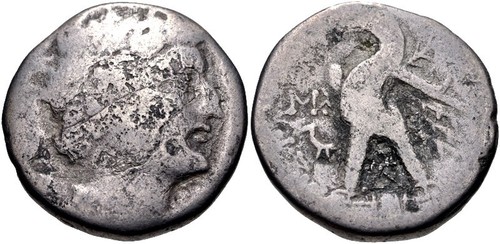
Tetradrachm of Ptolemy XII
80-51 BC
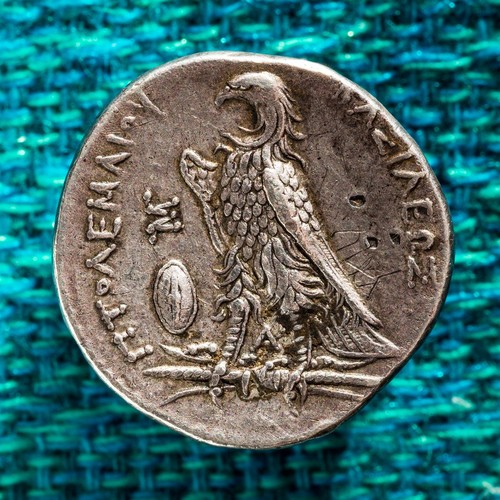
Tetradrachm of Ptolemy I
305-283 BC
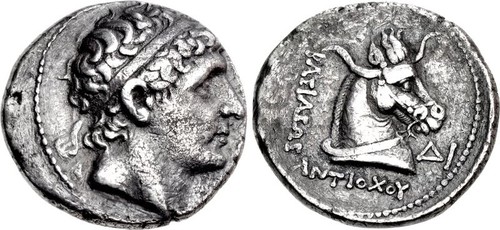
Tetradrachm of Antiochos I Soter
281-261 BC
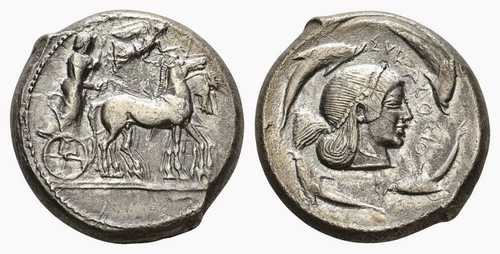
Syracuse Tetradrachm
c. 5th-4th century BC (Classical period)
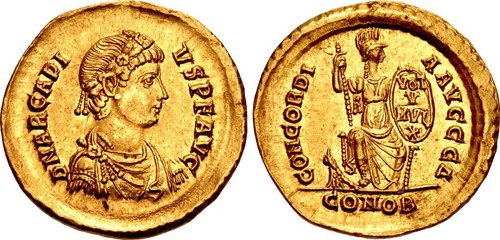
Solidus of Arcadius
AD 395-402
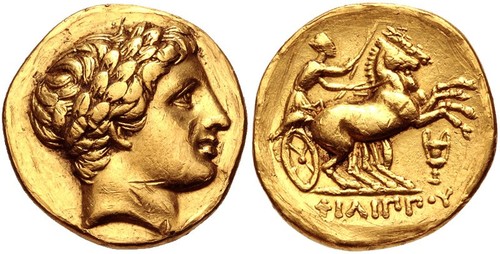
Philip III Gold Stater
323-317 BC
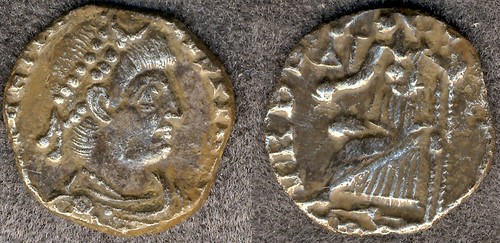
Siliqua of Gratian
AD 367-383
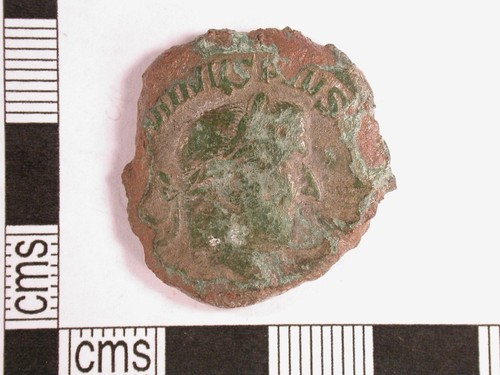
Sestertius of Maximinus Thrax
235-238 AD
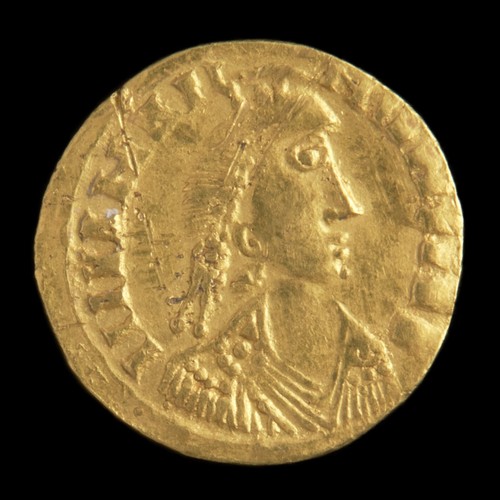
Solidus of Valentinian III
AD 425-455
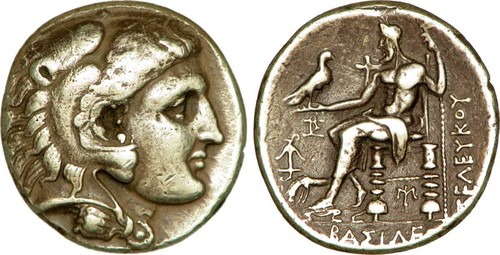
Seleucus I Nicator Tetradrachm
Late 4th-3rd century BC
Nummus of Magnentius
AD 350-353
Follis of Galerius
AD 308-310