
How to Identify the Denarius of Faustina the Elder
A collector's guide to confirming a Diva Faustina denarius by its legend, portrait, reverse figure, size, and metal, and spotting look-alikes.
Read the full Denarius of Faustina the Elder encyclopedia entry →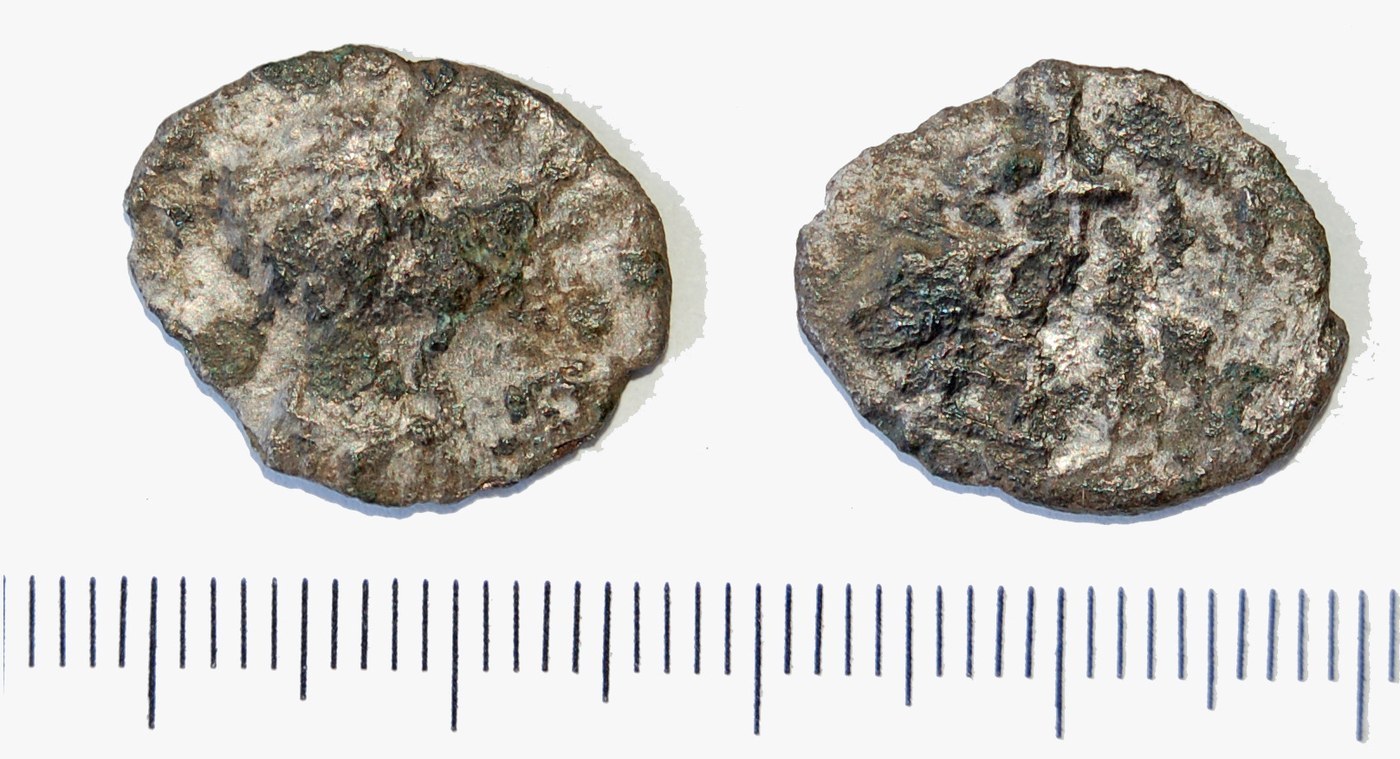
Begin with the obverse legend and portrait. A memorial denarius of Faustina the Elder shows a right-facing draped female bust, frequently veiled with the hair drawn up into a bun, encircled by the legend DIVA FAVSTINA. The word DIVA is the key diagnostic: it confirms a deified, posthumous issue and separates Faustina I from other Antonine women. Read the letters carefully, as they are the most reliable identifier when the portrait is worn.
Turn to the reverse and identify the figure by its attributes. On this coin Fortuna sits holding a rudder and a cornucopia; other Faustina reverses show Ceres, Aeternitas, Concordia, Pietas, or Venus, each with distinct attributes and its own legend (such as AVGVSTA or AETERNITAS). Matching the seated figure, the objects it holds, and the surrounding legend lets you attribute the exact reverse variety in a reference catalog.
Check the physical characteristics. A genuine denarius is small, about 17–19 mm across and near 3 grams, struck in good silver with a toned, slightly uneven hand-struck surface. There is no date on the coin; attribution to the roughly 141–161 AD memorial period rests on the legends and portrait style, not a stamped year. Expect honest wear, natural toning, and minor off-centering rather than flawless, machine-perfect surfaces.
Distinguish Faustina the Elder from Faustina the Younger, her daughter and the wife of Marcus Aurelius, whose coins are also plentiful. The Younger's legends read FAVSTINA AVGVSTA or FAVSTINA AVG PII AVG FIL and usually lack DIVA on lifetime issues, and her portrait styling differs. When in doubt, the presence of DIVA FAVSTINA points to the Elder.
Approach authentication with care. Watch for cast copies (look for seams, bubbles, or a soft, mushy surface), tooled or re-engraved details, and modern fakes with wrong weight or fabric. Favor coins with crisp, hand-struck detail, stable original toning, and correct size and weight, and buy uncertain or higher-value examples from reputable dealers who guarantee authenticity.
Frequently asked questions
What is the single most reliable identifier?
The obverse legend DIVA FAVSTINA around a draped female bust. The word DIVA confirms a deified, posthumous issue and distinguishes Faustina the Elder from other Antonine women.
How do I tell Faustina the Elder from Faustina the Younger?
Read the legend. The Elder's memorial coins say DIVA FAVSTINA, while the Younger's typically read FAVSTINA AVGVSTA or FAVSTINA AVG PII AVG FIL. Portrait style also differs.
How can I confirm the reverse type?
Identify the seated figure by its attributes and read its legend. On this coin Fortuna holds a rudder and cornucopia; matching figure, attributes, and legend pins down the exact variety.
What size and weight should a genuine coin be?
A denarius of this period is roughly 17–19 mm across and about 3 grams of good silver. Wrong size, weight, or a cast-looking surface with seams or bubbles is a warning sign.