
Coin Encyclopedia
Search and identify coins from around the world — with country, denomination, metal, mint, history, and how to tell them apart.
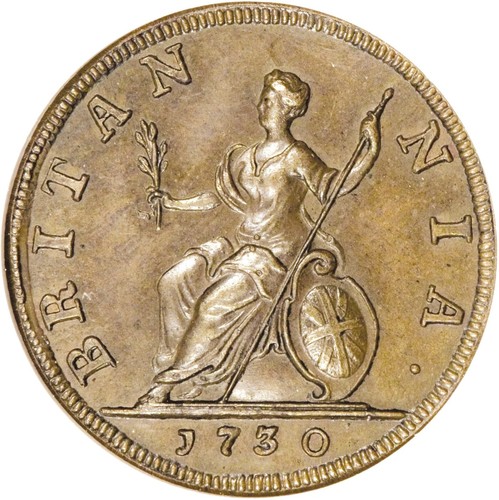
British Farthing
Small copper farthing of King George II, with his laureate bust facing left and a seated Britannia on the reverse; struck in the 1730s.
British Isles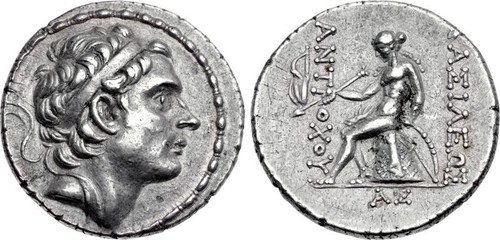
Antiochos III Tetradrachm
A large Seleucid silver coin of Antiochos III the Great, showing his diademed head and a seated deity holding shield and spear.
Ancient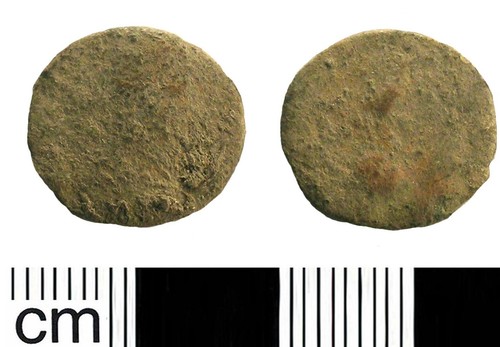
Half Centenionalis of Constans or Constantius II
A small mid-4th-century Roman bronze attributed to Constans or Constantius II, sons of Constantine the Great, worn but identifiable by its imperial portrait and era.
Ancient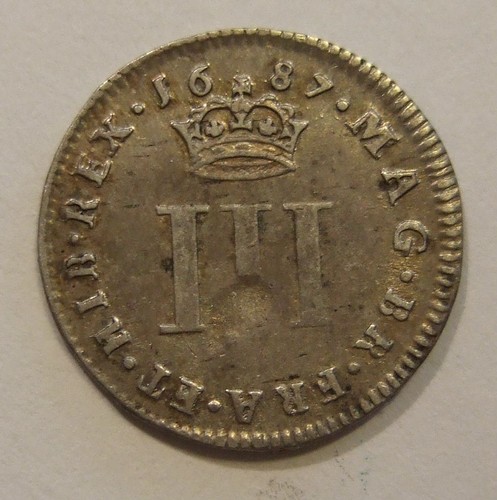
Maundy Money Threepence
A tiny sterling-silver British threepence; the 1687 James II example shows a crowned bust and a crowned Roman numeral III on the reverse.
Maundy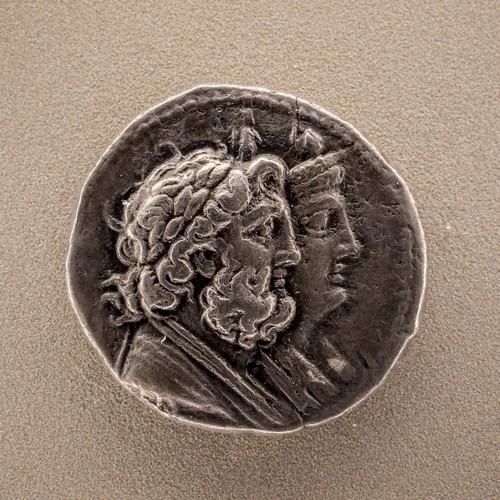
Gold Tetradrachm of Ptolemy II and Arsinoe II
Ptolemaic gold of Egypt, c. 260-240 BC, with paired busts of Ptolemy II and Arsinoe II on one side and Ptolemy I and Berenike I on the other.
Ancient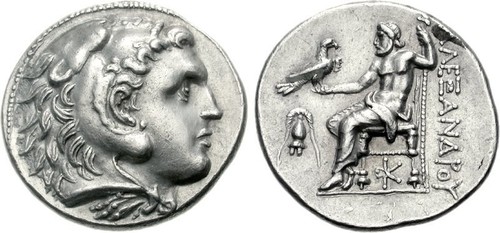
Antigonos II Gonatas Tetradrachm
Silver tetradrachm of the Macedonian king Antigonos II Gonatas, c. 275-270 BC, with a bearded royal head and a seated Nike holding a wreath.
Ancient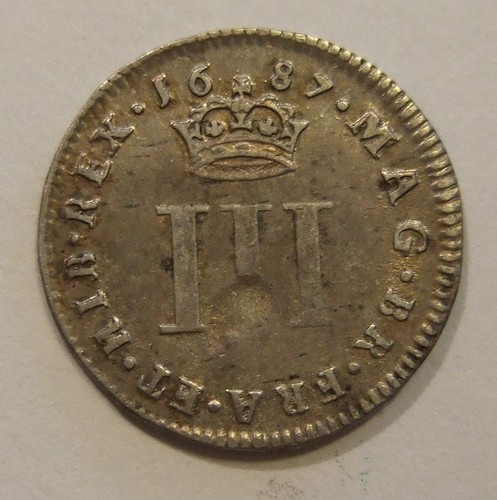
Maundy Three Pence
A tiny sterling-silver threepence tied to Britain's Royal Maundy tradition; the photographed 1687 coin shows James II's bust and a crowned Roman numeral III.
Maundy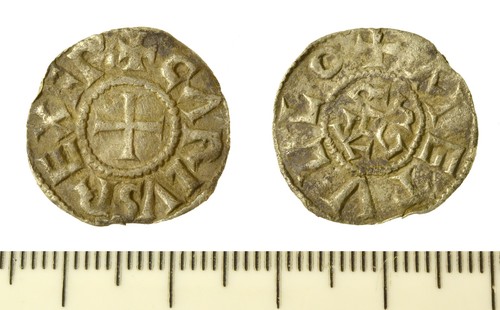
Denier of Charles the Bald
A small hammered silver denier of the Carolingian king Charles the Bald (r. 840–877), pairing a cross or monogram design with a ruler's profile.
Medieval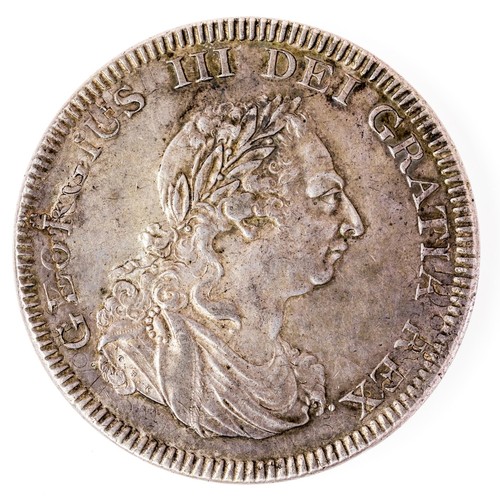
Bank of England Dollar
A George III silver dollar issued by the Bank of England in 1804, struck over Spanish eight-reales coins, with a laureate bust and a crowned shield reverse.
Milled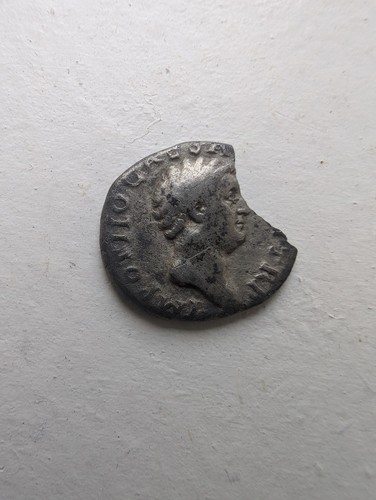
Denarius of Otho
Silver denarius of the emperor Otho, struck at Rome during his brief AD 69 reign, showing his bare head right with the legend IMP OTHO CAESAR.
Ancient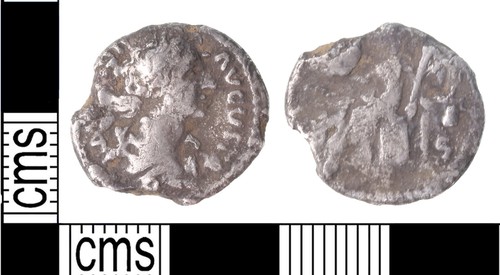
Denarius of Faustina the Younger
Roman Imperial silver denarius of Faustina the Younger, showing her draped bust with an elaborate curled hairstyle and a standing deity or personification on the reverse.
Ancient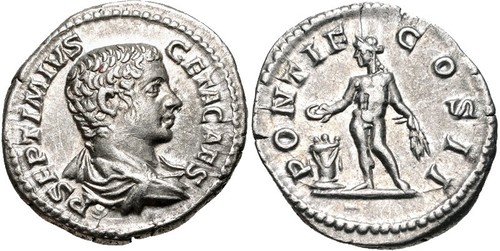
Denarius of Geta
Silver denarius of the Severan prince Geta, showing his youthful bust with a standing deity or personification on the reverse.
Ancient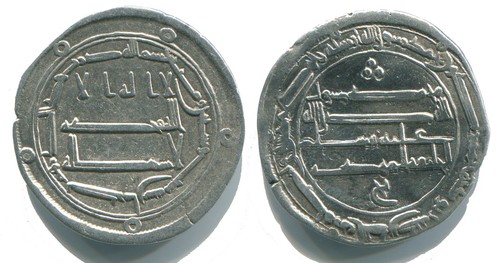
Dirham of al-Mahdi
A silver Abbasid dirham struck under Caliph al-Mahdi in AH 166 (783 CE), its faces filled with linear Kufic Arabic legends declaring the Islamic faith.
Islamic (Medieval)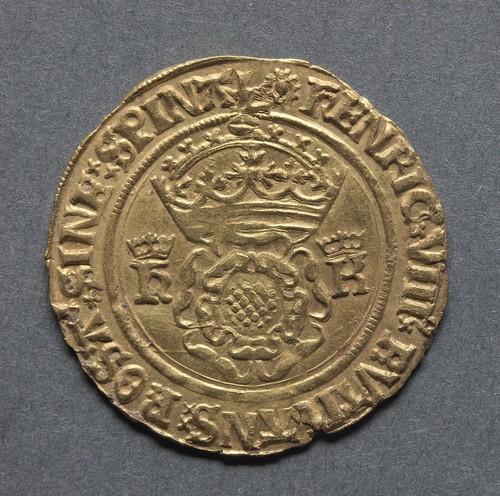
Crown of the Double Rose
A hammered Tudor gold crown of Henry VIII, valued at five shillings and named for the crowned double Tudor rose that defines its design.
Hammered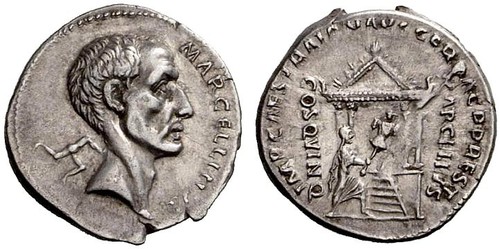
Denarius of Trajan
Silver denarius of the emperor Trajan (98–117 AD), showing his laureate bust and, on this piece, Libertas standing with patera and rod.
Ancient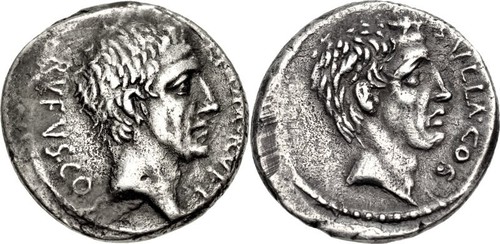
Denarius of the Pompeia Family
Silver Roman Republican denarius of the Pompeia family, with a male portrait head and a Victory driving a chariot on the reverse.
Ancient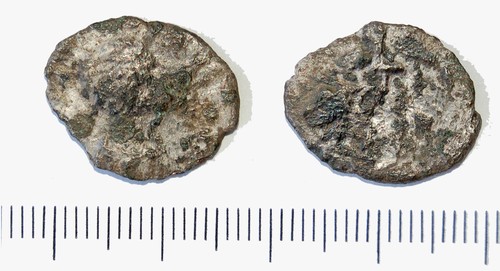
Denarius of Faustina the Elder
A silver Roman denarius honoring Faustina the Elder, wife of Antoninus Pius, with her draped bust and a seated Fortuna reverse, struck c. 141–161 AD.
Ancient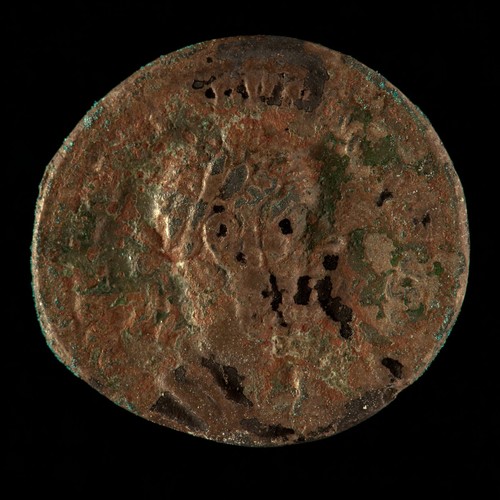
Denarius of Macrinus
Silver denarius of Macrinus (r. 217–218 AD), a bearded emperor portrait paired with a standing deity or personification on the reverse.
Ancient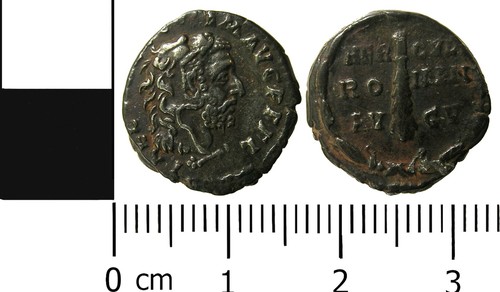
Denarius of Commodus
A silver denarius of the Roman emperor Commodus (180–192 AD), with his laureate bearded portrait and a standing deity or personification on the reverse.
Ancient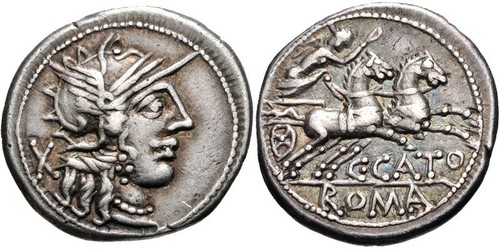
Denarius of C. Cato
Silver Roman Republican denarius struck at Rome in 123 BC by the moneyer C. Cato, with a helmeted head of Roma and Victory driving a chariot.
Ancient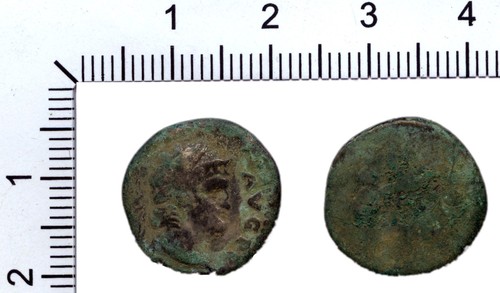
Denarius of Nero
Silver denarius of the emperor Nero (AD 54-68), the last Julio-Claudian ruler, shown with a laureate portrait and a military-standards reverse.
Ancient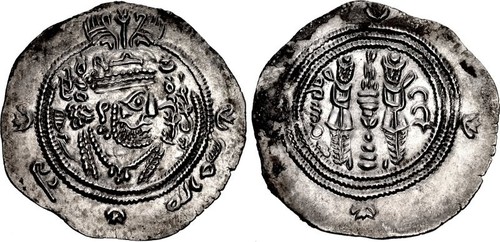
Dirham of Sistan
A silver Umayyad dirham struck at the Sijistan (Sistan) mint in AH 82 (701–702 CE), its faces filled with Kufic Arabic inscriptions ringed by concentric borders.
Islamic (Medieval)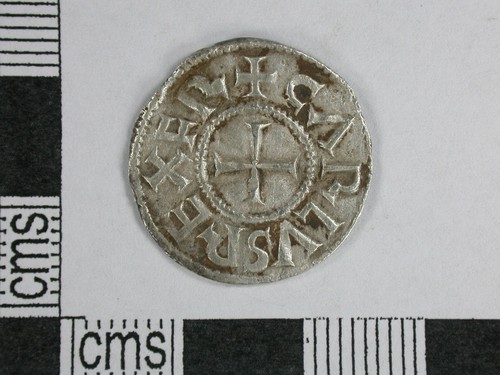
Denier of Charlemagne
A hand-struck silver denier of Charlemagne, king of the Franks: a central cross ringed by the CARLVS REX FR legend, with a royal monogram design on the reverse.
Medieval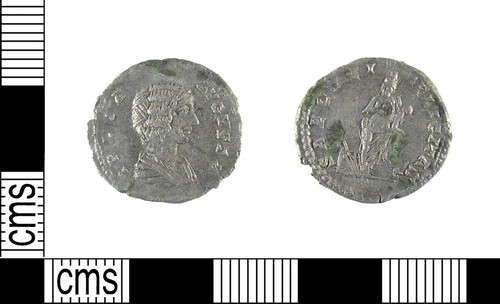
Denarius of Julia Domna
Roman silver denarius of the empress Julia Domna (193-217 CE), with her draped bust and a standing goddess or personification on the reverse.
Ancient