
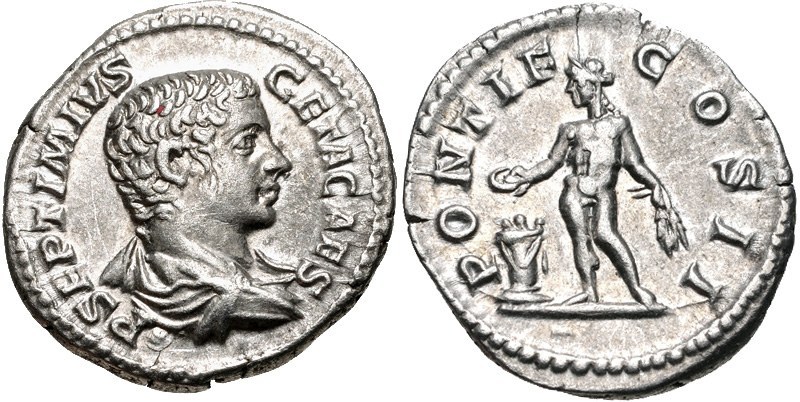
Denarius of Geta
Silver denarius of the Severan prince Geta, showing his youthful bust with a standing deity or personification on the reverse.
- Country
- Roman Empire
- Denomination
- Denarius
- Metal
- Silver
Got a coin like this?
Identify any coin from a photo, free.
Overview
The Denarius of Geta is a Roman Imperial silver coin struck for Publius Septimius Geta, the younger son of the emperor Septimius Severus and brother of Caracalla. This example carries a youthful right-facing bust of Geta on the obverse and a standing figure on the reverse, and is attributed to the year AD 208. The denarius was the workhorse silver coin of the Roman economy, roughly the size of a modern small silver coin and struck in large numbers across the Severan period.
Geta's coinage tracks his rise from Caesar to Augustus: earlier issues show him as a boy with a bare, beardless head, while later ones present an older, bearded portrait. The youthful bust on this piece reflects the earlier phase of his short career, before his elevation to full co-emperor. Because Geta ruled jointly and was killed young, his coins are collected both as a distinct portrait series and as part of the broader Severan dynastic set.
History & Background
Geta was born in AD 189 and raised to the rank of Caesar in AD 198, then made Augustus (co-emperor) around AD 209-210. His father Septimius Severus intended the empire to be shared between Geta and his elder brother Caracalla, but the two brothers were bitterly hostile. After Severus died at York (Eboracum) in Britain in AD 211, the joint rule collapsed almost immediately.
Later in AD 211 Caracalla had Geta murdered and imposed a formal damnatio memoriae, ordering his name and image struck from inscriptions and monuments. Despite this campaign to erase him, large quantities of his coinage survive, having already entered general circulation. A denarius dated to AD 208 belongs to the period when both brothers were being promoted as heirs under their father, and its imagery is part of the dynasty's public messaging of unity, piety, and military strength.
How to Identify
Look for a Latin obverse legend running around a youthful male bust facing right; Geta's early titles typically include forms such as P SEPT GETA CAES PONT (as Caesar) or later P SEPTIMIVS GETA CAES and, once Augustus, legends built on GETA PIVS AVG. The precise reading of the legend is the surest way to place the coin within his reign.
The reverse shows a standing figure, most often a deity or personification (for example Providentia, Felicitas, Minerva, or a similar type) holding attributes such as a wand, scepter, cornucopia, or patera, with a short reverse legend naming the concept or virtue. The coin is silver, generally about 18-20 mm across and roughly 2.5-3.5 g, struck on a fairly thin flan with the slightly irregular edges typical of hand-struck ancient coins.
Value & Collectibility
Geta denarii are among the more accessible Severan silver coins because they were produced in quantity and survive in large numbers. Common reverse types in worn to moderately worn condition typically trade in the low tens of dollars, while attractive examples with sharp portraits and good silver surfaces command more.
Value is driven by the crispness of the portrait, completeness and legibility of the legends, the specific reverse type, toning, and overall eye appeal. Scarcer reverse types, well-centered strikes, and coins with strong metal quality carry premiums. As with all ancient silver, authenticity, surfaces (no tooling or harsh cleaning), and clear provenance matter more to price than a single grade number.
Frequently asked questions
Who was Geta?
Geta was the younger son of Septimius Severus and the brother of Caracalla. He served as Caesar and briefly as co-emperor (Augustus) before Caracalla had him murdered in AD 211.
Is a Geta denarius made of real silver?
Yes. The denarius was Rome's standard silver coin. Severan-era denarii like Geta's contain a substantial proportion of silver, though the fineness had declined from earlier centuries.
Why do Geta's coins survive despite his damnatio memoriae?
Caracalla ordered Geta's name and image erased from monuments, but coins already in circulation could not be recalled. As a result many of his denarii survive today.
How can I tell a Geta denarius from a Caracalla denarius?
Read the obverse legend. Geta's names include GETA, while Caracalla's coins name ANTONINVS. The two brothers' youthful portraits can look similar, so the legend is the reliable guide.
Denarius of Geta guides
In-depth guides for identifying, valuing, and collecting Denarius of Geta.
Other coins you may enjoy
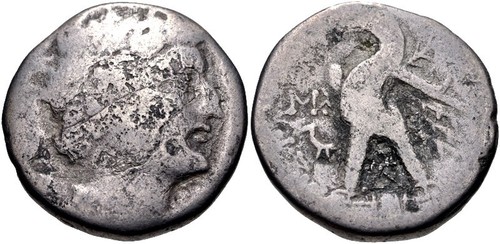
Tetradrachm of Ptolemy XII
80-51 BC
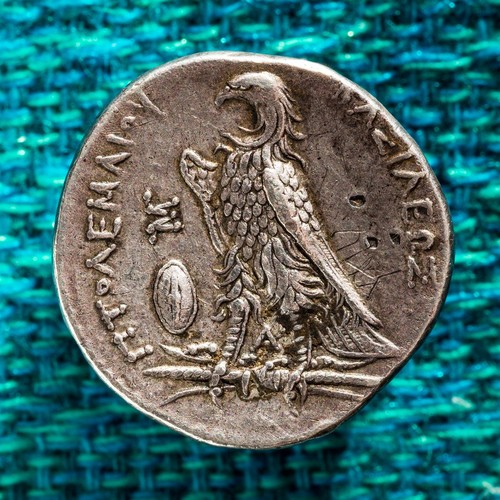
Tetradrachm of Ptolemy I
305-283 BC
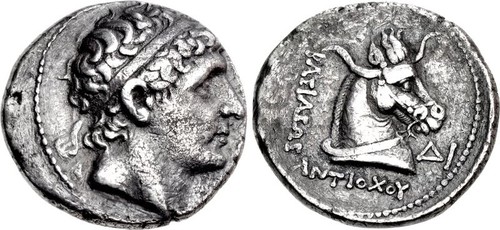
Tetradrachm of Antiochos I Soter
281-261 BC
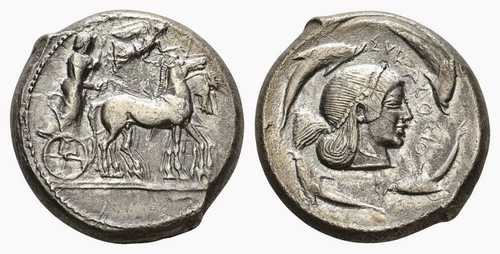
Syracuse Tetradrachm
c. 5th-4th century BC (Classical period)
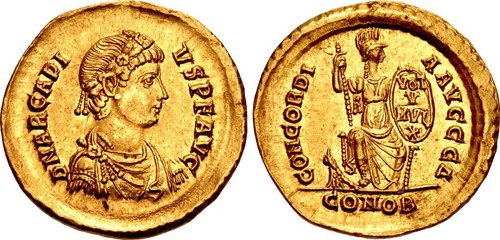
Solidus of Arcadius
AD 395-402
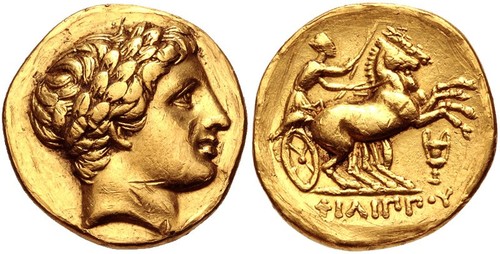
Philip III Gold Stater
323-317 BC
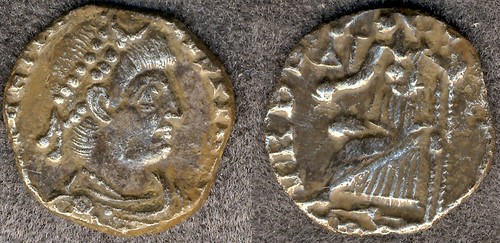
Siliqua of Gratian
AD 367-383
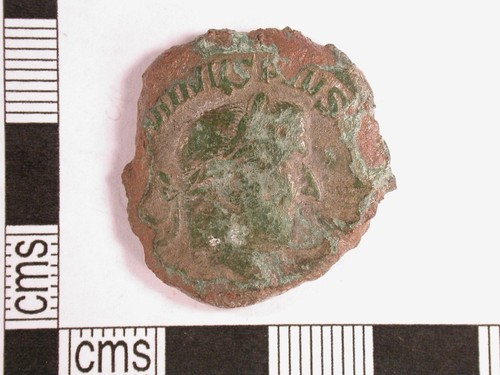
Sestertius of Maximinus Thrax
235-238 AD
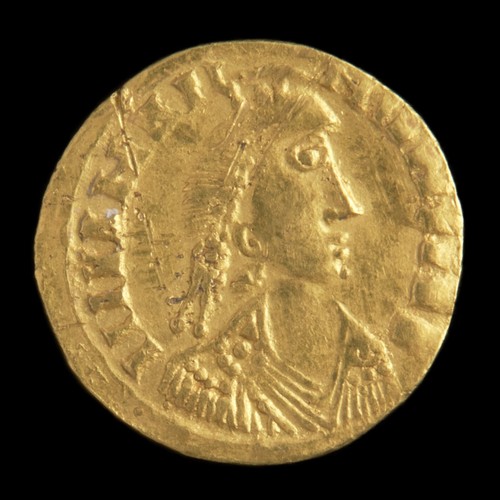
Solidus of Valentinian III
AD 425-455
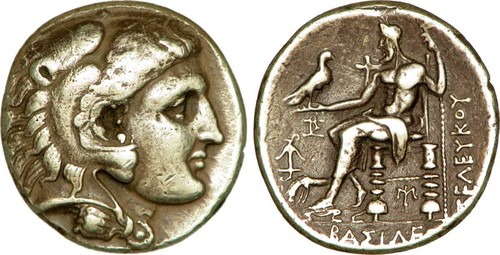
Seleucus I Nicator Tetradrachm
Late 4th-3rd century BC
Nummus of Magnentius
AD 350-353
Follis of Galerius
AD 308-310