
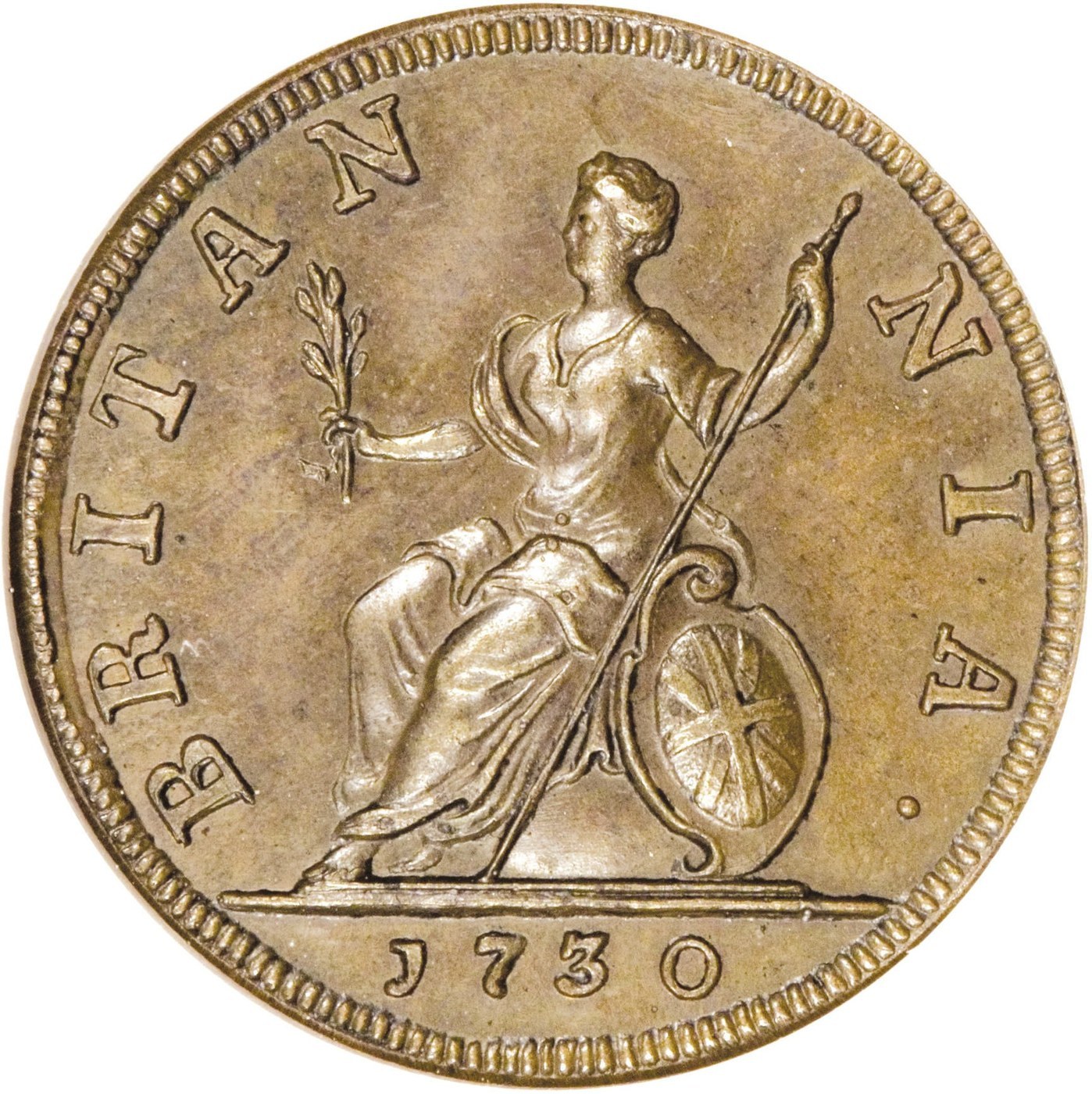
British Farthing
Small copper farthing of King George II, with his laureate bust facing left and a seated Britannia on the reverse; struck in the 1730s.
- Country
- United Kingdom
- Denomination
- Farthing
- Metal
- Copper
Got a coin like this?
Identify any coin from a photo, free.
Overview
The British farthing was the smallest everyday copper coin of the pre-decimal system, worth a quarter of a penny—one nine-hundred-and-sixtieth of a pound. The example shown is a George II issue from the 1730s: the obverse carries the king's laureate bust facing left with a legend based on GEORGIVS II REX, while the reverse shows a seated Britannia holding a spray and spear with a shield at her side, above the word BRITANNIA and a date in the range 1730–1739.
At roughly 22–23 mm across and only a few grams of copper, the farthing was small change in the most literal sense, used for the cheapest transactions of Georgian Britain. Four farthings made a penny, so the coin sat at the very bottom of a currency system that ran up through the penny, shilling and pound.
These early copper farthings saw hard use and most surviving pieces are well worn, so they are collected as affordable Georgian history rather than as high-value rarities; condition and a clearly readable date matter far more than the type itself.
History & Background
George II reigned from 1727 to 1760, and his copper farthings were struck at the Royal Mint in the Tower of London. The 1730s coins belong to the earlier 'young head' portrait, a laureate and draped bust of the king facing left; a later, older portrait was used for farthings struck in the 1740s and 1750s. The seated Britannia reverse continued a design tradition that had run on British copper since the reign of Charles II.
The farthing itself was an old denomination, worth a quarter of a penny, and copper farthings and halfpennies were the workhorses of small daily commerce in the eighteenth century. Because good small change was chronically short, the period also saw many contemporary counterfeit and lightweight copper pieces circulating alongside official Royal Mint coins.
The farthing outlived George II by two centuries, continuing through later reigns as a small bronze coin before finally being demonetised in 1960, ahead of decimalisation. The 1730s George II pieces represent one of the early chapters of that long history.
How to Identify
Look for a small copper coin about 22–23 mm in diameter with a warm brown tone. The obverse shows a laureate male bust facing left, surrounded by a Latin legend based on GEORGIVS II REX ('George II King'). The reverse shows Britannia seated and facing left, holding a spray in one hand and a spear in the other with an oval shield beside her, the word BRITANNIA above and the date in the exergue below.
The date is the quickest way to place the coin within the reign; a reading in the 1730–1739 range confirms a George II 'young head' farthing. Because these coins were small and heavily circulated, the date and legend are often the first details to wear away, so examine the fields under good light or low magnification.
The coin is copper, not bronze or silver, and Georgian copper of this age typically shows an even brown or chocolate patina rather than bright metal. A very glossy or reddish surface can indicate cleaning; a soft, indistinct strike or crude lettering can indicate a period counterfeit.
Value & Collectibility
George II farthings of the 1730s are affordable Georgian coins. Well-worn examples with a readable date are common in the collector market and typically trade for modest sums—an accessible entry point into early copper coinage rather than a costly rarity.
Value climbs with condition. Pieces that keep sharp portrait and Britannia detail, clear legends and an attractive original patina command higher prices, and genuinely uncirculated survivors of this age are scarce and sought after. Specific dates within the decade can carry premiums, so the exact date reading matters.
Because worn copper is easy to misjudge, compare any coin you think is unusually well preserved or scarce against a current price guide, and be aware that cleaning and period counterfeits both affect value; a specialist opinion is worthwhile before assuming a piece is more than common.
Frequently asked questions
What is a farthing worth in old money?
A farthing was a quarter of a penny. Four farthings made one penny, and 960 farthings made a pound, so it was the smallest everyday copper coin in circulation.
Who is on this farthing?
The obverse shows King George II, who reigned from 1727 to 1760, as a laureate bust facing left. The reverse shows Britannia, the seated female figure who personifies Britain.
What is the coin made of?
It is copper. Georgian copper farthings of the 1730s usually show a warm brown or chocolate patina rather than bright metal, and are noticeably lighter than a penny.
Is a George II farthing valuable?
Most worn examples are affordable and common. Real premiums come from strong, unworn detail, clear legends and original surfaces, so condition matters far more than the type.
Why is the date so hard to read?
These small copper coins circulated heavily and the date in the exergue often wears away first. Good light or low magnification helps confirm a reading in the 1730–1739 range.
British Farthing guides
In-depth guides for identifying, valuing, and collecting British Farthing.
Other coins you may enjoy
Medieval Penny of Edward III
1327–1377
Medieval Silver Cut Farthing
1272-1509
Quarter Farthing
1839-1868
Medieval Halfgroat of Henry VII
1485-1509
Godless Florin
1849
Victoria Maundy Twopence
1838–1901 (Young Head example shown: 1845)
British Silver Threepence
1838-1944
Victoria Maundy Fourpence
1838–1901 (Jubilee Head type shown: 1888–1892)
Imitation Guinea Gaming Piece
c. 1790-1900 (undated)
British Crown
1927–1936 (George V wreath crown; example dated 1934)
British Decimal Half Penny
1971–1984
British Brass Threepence
1937-1967