
How to Identify the British Farthing
Recognise a George II copper farthing by its small size, left-facing laureate bust and seated Britannia reverse—then read the date to confirm the 1730s issue.
Read the full British Farthing encyclopedia entry →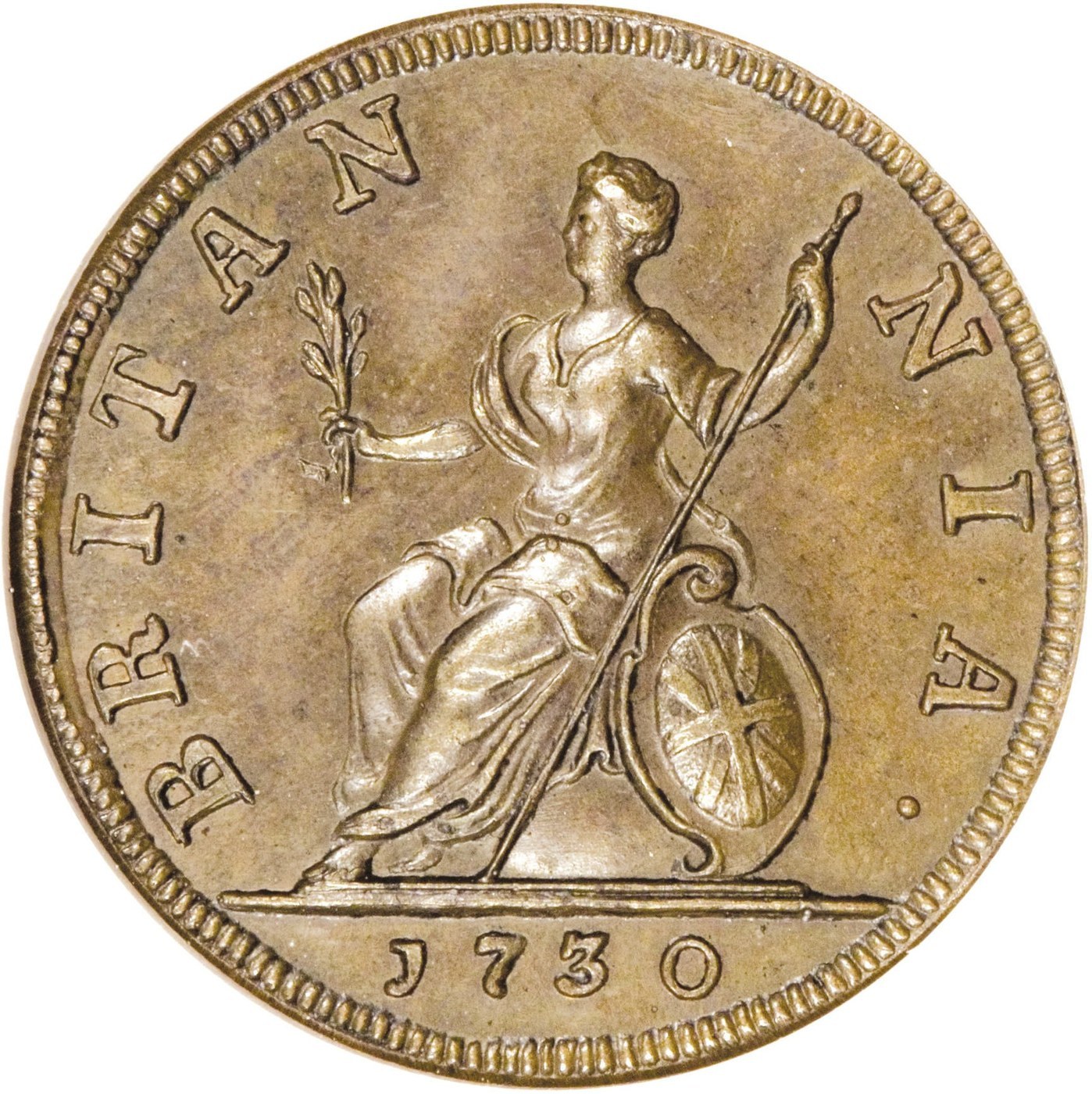
Start with size and metal. The farthing is a small copper coin about 22–23 mm across and only a few grams—clearly smaller and lighter than a penny or halfpenny of the same period. The colour should be a warm brown or chocolate copper, not the white of silver or the yellow of brass. If a small copper coin is much bigger, it is more likely a halfpenny or penny rather than a farthing.
Read the obverse portrait and legend. A George II farthing shows a laureate male bust facing left, with a Latin inscription based on GEORGIVS II REX. The 1730s coins use the earlier 'young head' portrait; a heavier, older-looking bust indicates the later farthings of the 1740s–1750s. The direction the bust faces and the wording of the legend together confirm the monarch.
Check the reverse. The defining image is Britannia: a seated female figure facing left, holding a spray and a spear with an oval shield beside her, the word BRITANNIA above and the date in the exergue below. This Britannia design runs across several reigns of British copper, so the reverse tells you the coin is a farthing or halfpenny but not by itself which king—use the obverse and date to fix that.
Watch for look-alikes and counterfeits. Georgian small change was widely imitated, and lightweight or crudely struck contemporary counterfeit farthings and halfpennies circulated alongside genuine Royal Mint coins; blurry lettering, a soft portrait or an underweight, spongy fabric can betray one. Later bronze farthings of Victoria and after are a different alloy and portrait, and worn halfpennies can be mistaken for farthings if size is not checked.
For authentication, weigh and measure the coin against the copper farthing standard, confirm the GEORGIVS II REX and BRITANNIA legends, and look for even, age-appropriate wear rather than an artificially bright or reddish 'cleaned' surface. On heavily worn pieces the date is often the last detail to settle an identification, so examine the exergue closely; for anything that looks unusually sharp or scarce, compare it to a reliable reference before assuming value.
Frequently asked questions
How do I tell a farthing from a halfpenny?
The farthing is the smaller coin, about 22–23 mm across, while the halfpenny is noticeably larger. Both can show a seated Britannia, so compare size and check the denomination context.
Which way does George II face on the farthing?
He faces left as a laureate bust. Reading the GEORGIVS II REX legend and a date in the 1730s confirms an early 'young head' George II farthing rather than a later issue.
How can I be sure it is copper?
Georgian farthings are struck in copper and usually show a warm brown or chocolate patina, not the white of silver or the yellow of brass. Size and weight help confirm the type.
How do I spot a counterfeit farthing?
Period counterfeits are common. Watch for crude or blurry lettering, a soft or off-centre portrait, and a lightweight or spongy fabric, and compare against a genuine reference when unsure.