
Coin Encyclopedia
Search and identify coins from around the world — with country, denomination, metal, mint, history, and how to tell them apart.
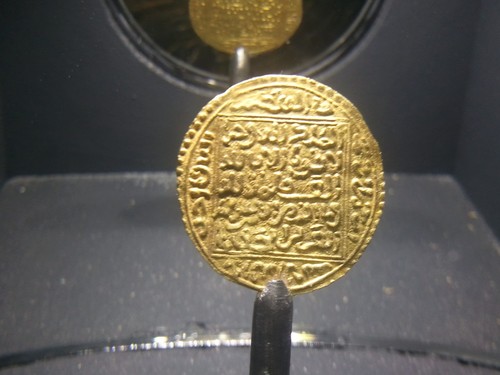
Marinid Gold Dinar
Aniconic Islamic gold dinar of the Marinid dynasty of Morocco, its faces filled with Arabic religious inscriptions framed by geometric border bands.
Medieval Islamic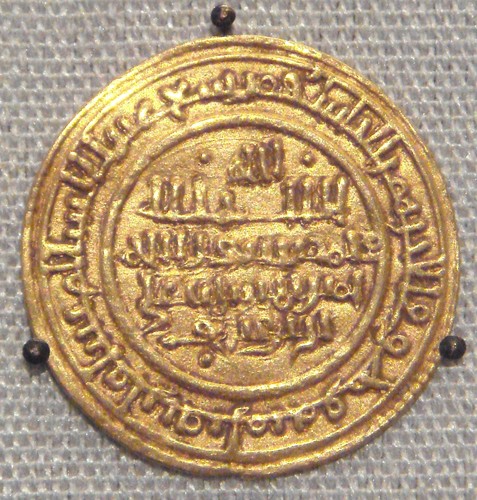
Almoravid Gold Dinar
Pure-gold dinar of the Almoravid dynasty, struck in Islamic Spain and North Africa with concentric Arabic legends; this piece is dated 1116 CE.
Medieval Islamic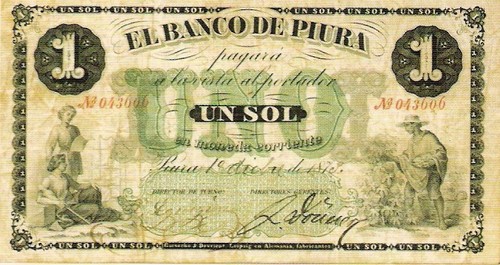
1 Sol (Gold)
A 19th-century Peruvian 1 Sol note from El Banco de Piura, with a seated torch-bearer and a standing laborer flanking a bold UN SOL.
Circulation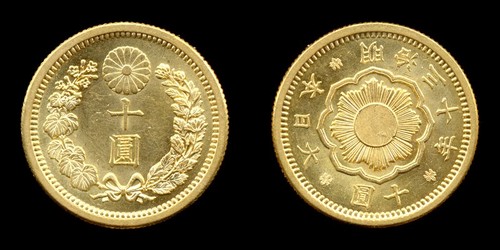
10 Yen (Gold)
A Japanese gold 10 Yen of the Meiji era, its obverse a radiant chrysanthemum sunburst, its reverse a wreath framing imperial crests; dated Meiji 30 (1897).
Circulation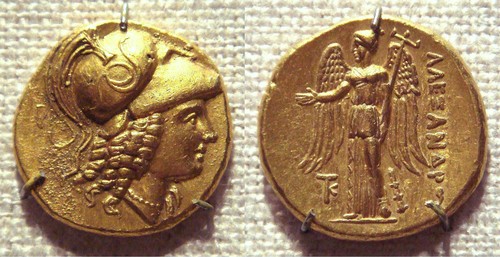
Alexander the Great Gold Stater
Gold stater struck in the name of Alexander the Great, with a helmeted Athena obverse and Nike holding a wreath on the reverse; this example c. 323-315 BC.
Ancient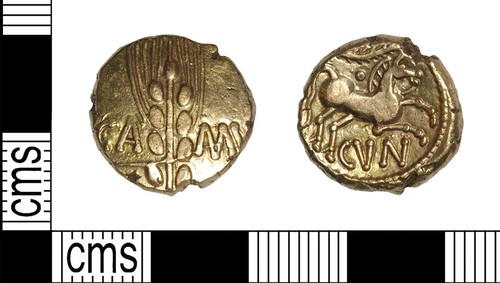
Gold Stater of the Catuvellauni and Trinovantes
An Iron Age British gold stater of the Catuvellauni and Trinovantes, showing stylized wheat/barley ears on one face and a dynamic horse on the other.
Ancient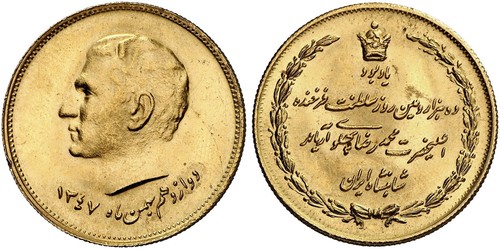
Pahlavi Reign Gold Medal
A gold medal of Pahlavi-era Iran, its obverse a left-facing royal portrait and its reverse the Lion and Sun beneath a crown, dated 1971.
Persia / Iran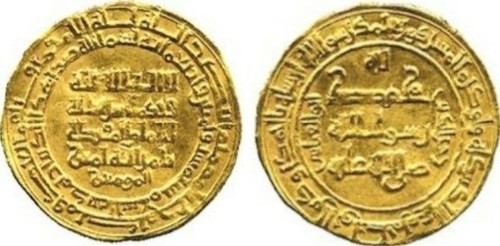
Gold Dinar of al-Muqtadi
An aniconic Abbasid gold dinar of Caliph al-Muqtadi, covered on both faces with Arabic calligraphy and ornamental borders, struck in the later 11th century.
Islamic (Medieval)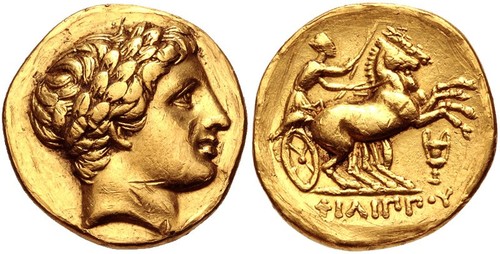
Philip III Gold Stater
A Macedonian gold stater struck under Philip III Arrhidaeus, half-brother of Alexander the Great, showing Heracles and an enthroned Zeus.
Ancient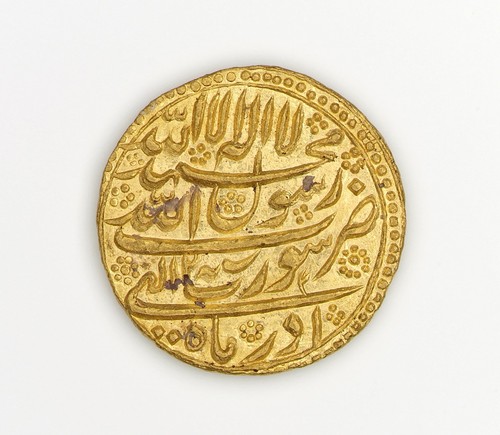
Gold Mohur of Shah Jahan
High-purity gold mohur struck under Mughal emperor Shah Jahan (1628-1658), bearing Persian imperial titles; this example carries the Balkh mint mark.
Mughal India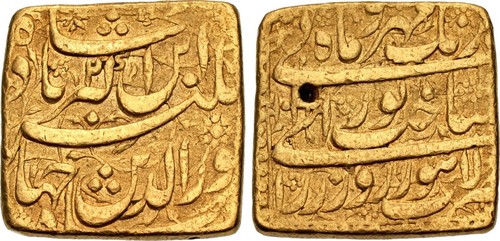
Gold Square Mohur of Jahangir
A square gold mohur of the Mughal emperor Jahangir, bearing Persian calligraphy, the Lahore mint, and regnal-year dating.
Mughal India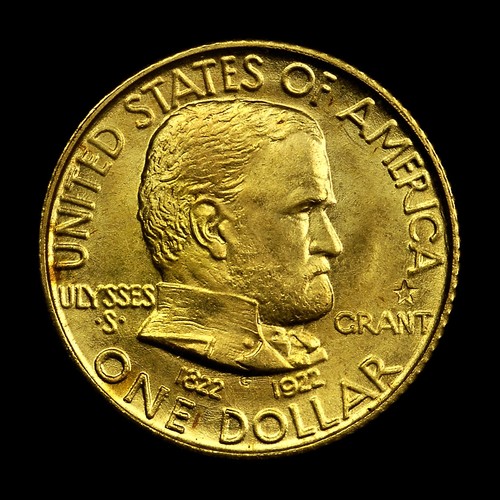
Grant Memorial Gold Dollar
A tiny 1922 U.S. gold dollar honoring Ulysses S. Grant's birth centennial, issued in 'star' and 'no star' varieties from the Philadelphia Mint.
Classic Commemorative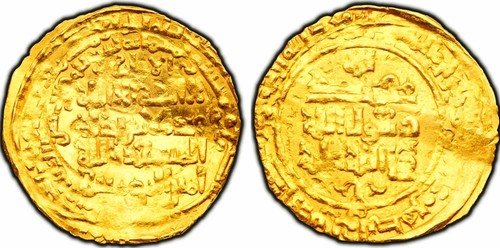
Gold Dinar of al-Mustanjid
A hand-struck Abbasid gold dinar of Caliph al-Mustanjid, bearing only Arabic calligraphy within concentric ring borders and dated AH 557.
Islamic (Medieval)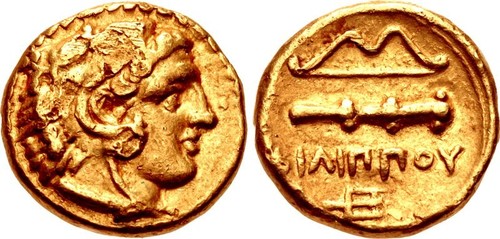
Alexander the Great Gold Quarter Stater
A small gold fraction of the Alexander the Great coinage, showing the head of Heracles and an eagle perched on a thunderbolt, the attributes of Zeus.
Ancient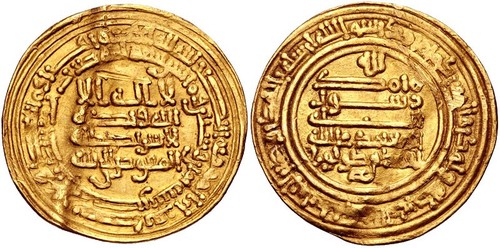
Gold Dinar of Ahmad ibn Tulun
A late-9th-century Islamic gold dinar of the Tulunid ruler Ahmad ibn Tulun, its faces filled with concentric Arabic inscriptions and dated AH 268 (881–882 CE).
Islamic (Medieval)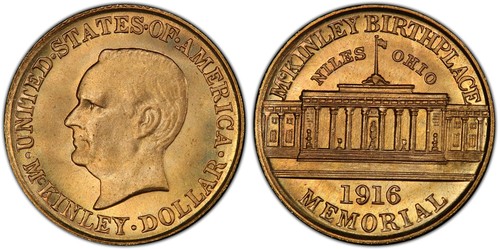
McKinley Memorial Gold Dollar
A small U.S. gold commemorative dollar honoring President William McKinley, sold to fund the memorial at his Niles, Ohio birthplace.
Classic Commemorative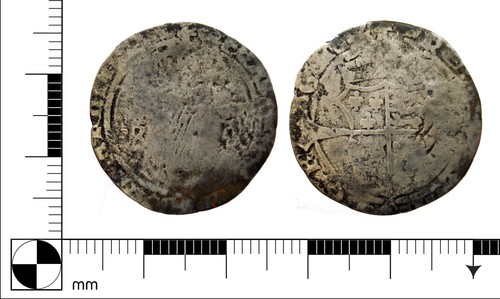
Medieval Coin
A worn hammered silver coin of the medieval era, with faded profile, legends, and a heraldic or emblematic reverse.
Hammered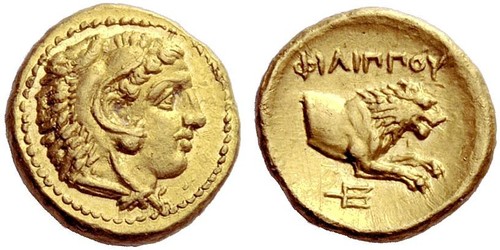
Philip II Gold Half Stater
Gold half stater of Philip II of Macedon, c. 359-336 BC, showing the head of Heracles and an eagle perched on a thunderbolt.
Ancient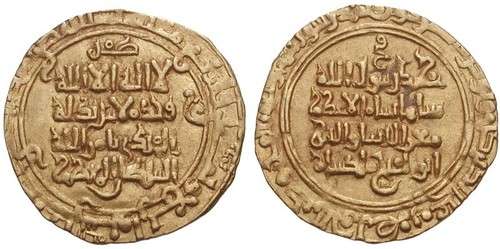
Gold Dinar of Malik Shah I
A hand-struck Seljuk gold dinar naming Malik Shah I (r. 1072–1092), covered in Arabic inscriptions with the ruler's titles and genealogy and an ornamental cartouche.
Islamic (Medieval)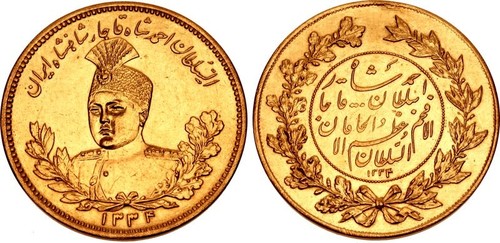
Gold Toman of Ahmad Shah Qajar
A Qajar-era gold toman bearing the portrait bust and tall headdress of Ahmad Shah, with Persian legends, date and mint, and a wreathed calligraphic reverse.
Persia / Iran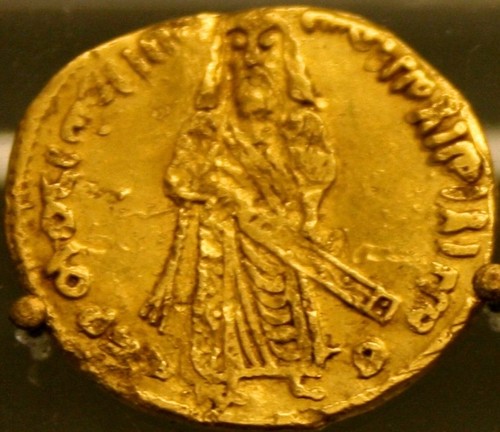
Gold Dinar of Abd al-Malik
An early Umayyad gold dinar of Caliph Abd al-Malik, the 'Standing Caliph' type, bearing a robed standing figure and Arabic religious inscriptions.
Islamic (Medieval)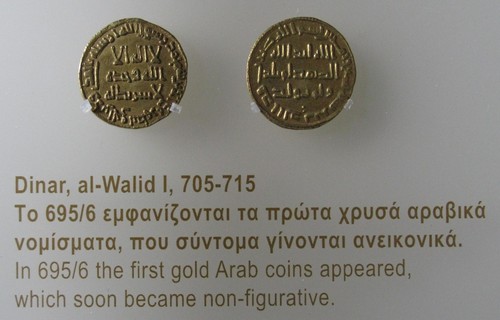
Gold Dinar of Al-Walid I
An early Islamic gold dinar struck under the Umayyad caliph al-Walid I (705-715 CE), bearing only Arabic Kufic inscriptions and no images on either face.
Islamic (Medieval)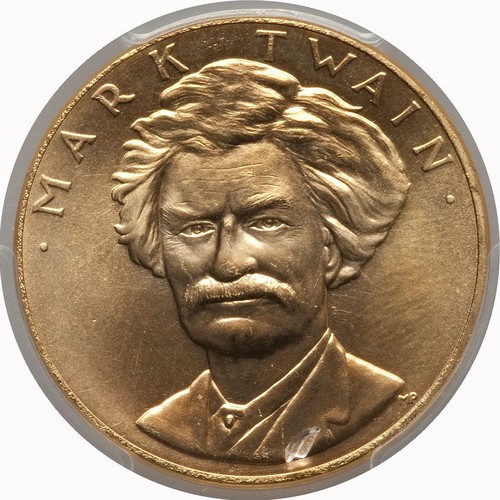
American Arts Commemorative Series Gold Medallion
A U.S. Treasury gold bullion medallion series (1980–1984) honoring American artists; the photographed 1981 one-ounce piece features author Mark Twain.
Bullion Medallion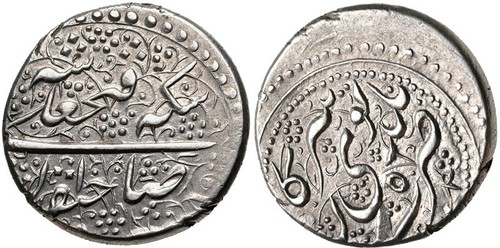
Gold Toman of Fath-Ali Shah Qajar
A hand-struck Qajar gold toman of Fath-Ali Shah dated AH 1226–1227 (1811–1812), covered in ornate Persian calligraphy with no portrait or figural imagery.
Persia / Iran