
1 Sol (Gold)
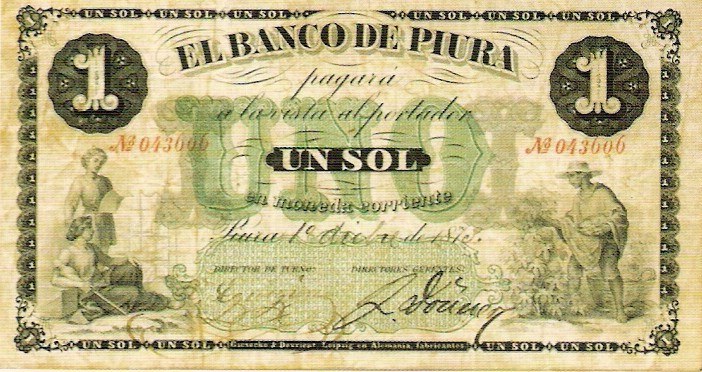
A 19th-century Peruvian 1 Sol note from El Banco de Piura, with a seated torch-bearer and a standing laborer flanking a bold UN SOL.
- Country
- Peru
- Denomination
- 1 Sol
- Metal
- Paper (banknote)
Got a coin like this?
Identify any coin from a photo, free.
Overview
The item pictured is a Peruvian 1 Sol issue of the sol denomination, the unit at the heart of Peru's money since the 1860s. The example here is not a struck gold coin but a nineteenth-century banknote of El Banco de Piura, a regional bank in the northern coastal city of Piura. Its central legend reads pagara a la vista al portador UN SOL en moneda corriente -- a promise to pay one sol in current money to the bearer on demand.
The design shows an allegorical seated female figure holding a torch at the left, a standing laborer at the right, ornate numeral 1 roundels in the upper corners, and a large UN SOL across the center. Serial numbers (here No 043000) appear at both sides, with directors' signatures below the text and a printer's imprint along the bottom edge.
The word "gold" attached to this denomination reflects Peru's sol de oro ("gold sol"), the name of the gold-standard currency unit, rather than the material of this piece, which is printed paper. As a private-bank note of the era, it is collected as a piece of Peruvian financial and design history rather than for any bullion content.
History & Background
Peru adopted the sol as its monetary unit in the 1860s, replacing the older real-based system. During this period, before a fully centralized national bank dominated issue, a number of private and regional banks were authorized to print their own paper money redeemable in coin. El Banco de Piura, based in Piura in Peru's far north, was one such institution, and this 1 Sol note is a product of that decentralized era of Peruvian banking.
The note was manufactured abroad by Giesecke & Devrient of Leipzig, a renowned German security printer, whose imprint appears along the lower edge. Contracting European firms for high-quality engraved notes was common practice for nineteenth-century banks in the Americas, and it accounts for the fine allegorical vignettes and ornate lettering seen here.
Many Peruvian private-bank issues of this era were undermined by economic turmoil, including the financial strains and the disruption surrounding the War of the Pacific (1879-1883), after which note issue was reorganized. Surviving examples of individual regional banks such as Banco de Piura are therefore prized as tangible relics of a short-lived chapter in Peru's monetary story.
How to Identify
Identify this piece first as a banknote, not a coin: it is printed paper bearing text, serial numbers, and signatures. The key legend is EL BANCO DE PIURA across the top and UN SOL in large letters at the center, with the promissory phrase pagara a la vista al portador UN SOL en moneda corriente and a place-and-date line beginning Piura.
The design's diagnostic features are the seated female figure with a torch at one side and a standing laborer at the other, framing ornate numeral 1 medallions in the upper corners. Matching serial numbers appear at left and right, and a printer's imprint referencing Giesecke & Devrient, Leipzig, runs along the bottom margin.
Confirm the denomination through the repeated UN SOL / 1 devices and the country context (Piura, Peru). Because this is a nineteenth-century regional issue, the exact date and any signature or series details should be read directly from the note and checked against specialized Peruvian banknote references.
Value & Collectibility
Value for a nineteenth-century Peruvian private-bank note like the Banco de Piura 1 Sol depends heavily on condition, completeness, and whether it is an issued (signed and numbered) or unissued remainder. Crisp, well-preserved examples with clear vignettes and intact margins command the strongest interest, while pieces with tears, staining, or heavy handling are worth considerably less.
As a regional issue from a single bank, survival numbers are limited and the note appeals to collectors of Peruvian and Latin American paper money. Prices generally sit in the collectible range typical of scarce nineteenth-century private-bank notes rather than the bullion-driven values of gold coins.
Because condition and issue status swing prices widely, treat any single figure with caution and compare against recent auction results for the same bank and denomination. Professional grading and authentication add confidence for higher-value examples.
Frequently asked questions
Is this really a gold coin?
No. Despite the "gold" label, the pictured 1 Sol is a nineteenth-century paper banknote from El Banco de Piura in Peru. The term reflects Peru's sol de oro (gold sol) currency unit, not the material of this piece.
What is the seated figure with the torch?
It is an allegorical vignette, a seated figure holding a torch, a common symbol of liberty or enlightenment on nineteenth-century engraved banknotes. It appears at one side, balanced by a standing laborer at the other.
Who issued this note?
El Banco de Piura, a regional bank in the northern Peruvian city of Piura, issued it during the era when private and regional banks in Peru printed their own paper money redeemable in coin. It was printed by Giesecke & Devrient of Leipzig, Germany.
What does UN SOL mean?
"Un Sol" is Spanish for "one sol," the denomination. The sol was Peru's monetary unit from the 1860s, and this note promised to pay one sol in current money to the bearer on demand.
How old is it?
It dates to the nineteenth century, most likely the 1860s to 1870s, based on the Banco de Piura issue and the Giesecke & Devrient printing. The precise date should be read from the note itself and confirmed against banknote references.
1 Sol (Gold) guides
In-depth guides for identifying, valuing, and collecting 1 Sol (Gold).
Other coins you may enjoy
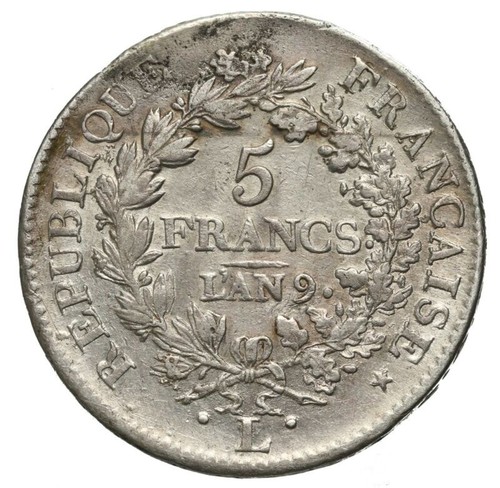
5 Francs (First Republic)
L'an 9 (1800–1801)
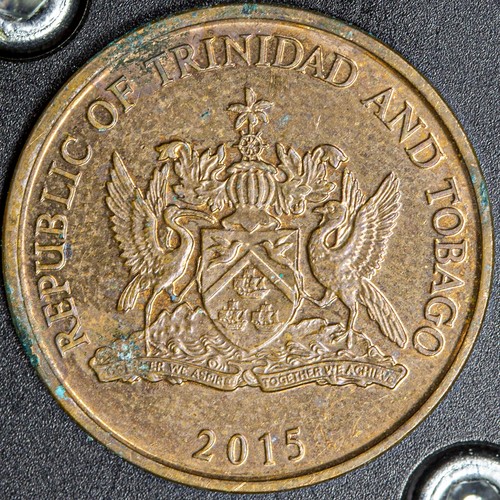
Trinidad and Tobago Dollar
2015
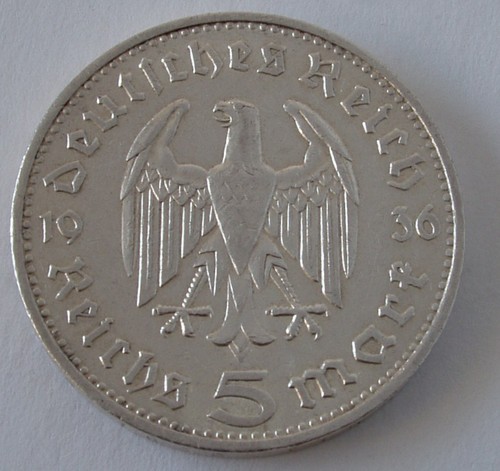
German 5 Reichsmark (Hindenburg)
1935–1936 (Hindenburg type with swastika)
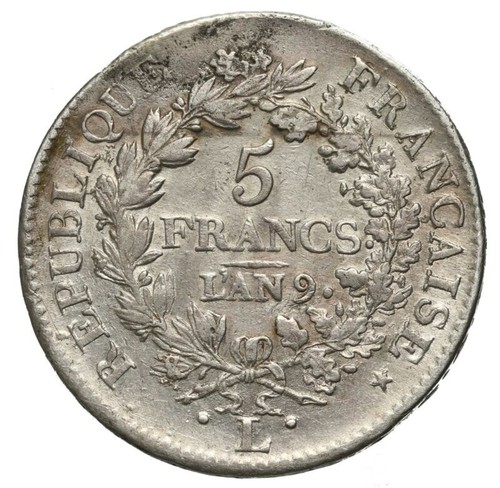
5 Francs Semeuse
1960–1969
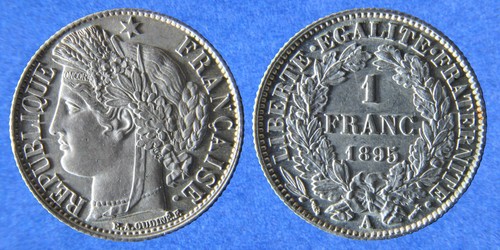
French Cérès 1 Franc
1849–1895
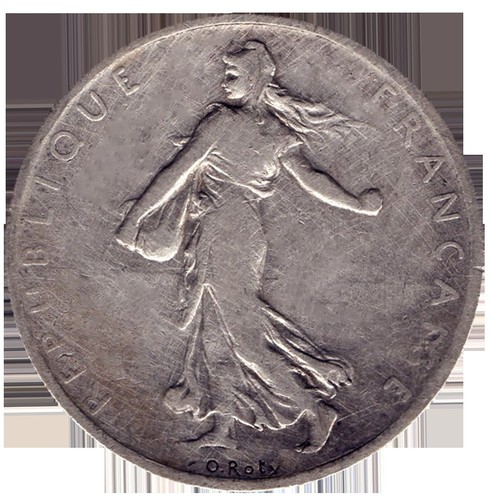
French Semeuse 2 Francs
1898–1920 (silver issues; pictured example dated 1899)
French Semeuse 1 Franc
1898–1920 (silver Semeuse 1 franc type)
France 50 Cent Euro
1999–present
Swiss 1 Franc
1861
France 20 Centimes
1962–2001 (Fifth Republic, Marianne / Lagriffoul type)
Swiss 2 Francs
1860
Austria-Hungary 15 Kreuzer
1807