
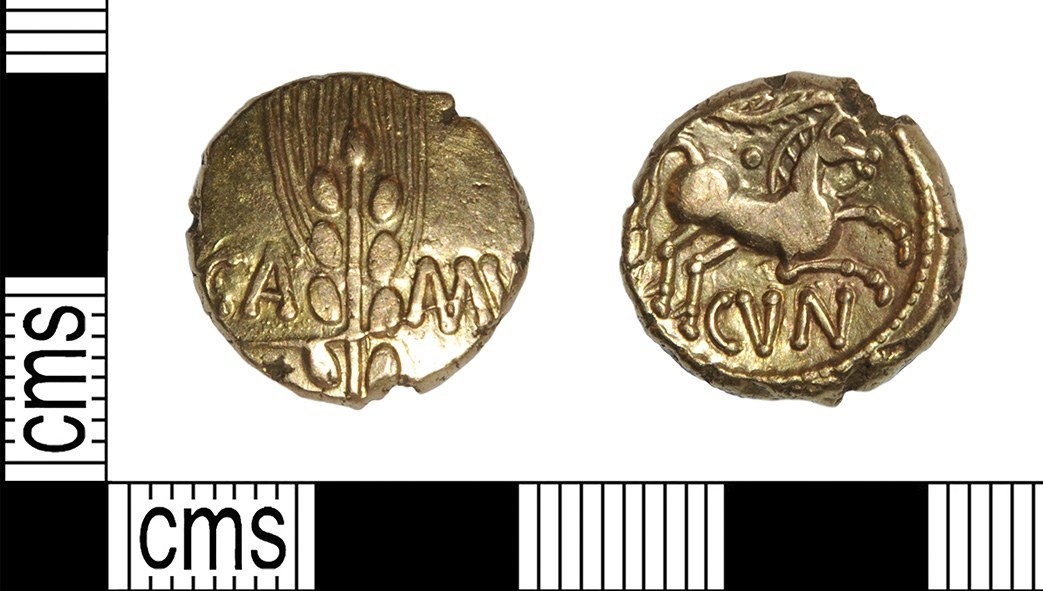
Gold Stater of the Catuvellauni and Trinovantes
An Iron Age British gold stater of the Catuvellauni and Trinovantes, showing stylized wheat/barley ears on one face and a dynamic horse on the other.
- Country
- Ancient Britain
- Denomination
- Stater
- Metal
- Gold
Got a coin like this?
Identify any coin from a photo, free.
Overview
The gold stater of the Catuvellauni and Trinovantes is a Celtic Iron Age coin struck in southeastern Britain, in the region north of the Thames later associated with these two powerful tribal groups. It belongs to the broad family of ancient British gold staters that circulated before and around the Roman conquest.
As seen on the coin, one face carries a stylized arrangement of wheat or barley ears rather than a portrait, while the other shows a spirited horse surrounded by geometric ornaments, pellets, and abstract devices. This wheat-and-horse pairing is the signature look of the type and reflects a design ultimately descended from Greek prototypes that were copied and progressively abstracted by British engravers.
Struck in gold of varying purity, the stater was a high-value piece rather than everyday small change. It would have served roles tied to prestige, tribute, gift-exchange, and elite transactions among the tribal societies of late Iron Age Britain.
History & Background
British gold staters trace their ancestry to the gold coinage of Philip II of Macedon, whose designs spread across Iron Age Europe and were imitated by Gaulish and then British peoples. As the design passed from hand to hand and die to die, the original head and chariot dissolved into the abstract wheat ear and disjointed horse that characterize insular British issues.
The Catuvellauni, centered in the area of modern Hertfordshire, and the neighboring Trinovantes to the east in Essex, were among the dominant powers of southeastern Britain in the 1st century BC. Their territories and coinages overlapped and interacted, and staters of the wheat-and-horse style are broadly attributed to this northern-Thames region during a period of shifting tribal dominance.
These coins were struck in the generations surrounding Julius Caesar's expeditions to Britain in 55 and 54 BC and the decades leading toward the Roman conquest of AD 43. Because they predate reliable written records for the island, precise attributions rest on find-spots, die studies, and stylistic comparison rather than firm documentary evidence.
How to Identify
Start with the two faces. The obverse shows a stylized wheat or barley ear, typically as a central spine with grain and leaf forms branching to either side, a design that stands in place of the human head found on the Greek prototypes. The reverse shows a horse, often lively and disjointed, accompanied by pellets, rings, crescents, and other geometric ornaments in the field.
The coin is a small, thick, roughly circular gold piece, usually in the region of a few grams and often struck on an uneven or slightly domed flan. Color ranges from rich yellow to paler, redder gold depending on the alloy, since many British staters contain silver and copper alongside the gold. Surfaces are frequently off-center, with parts of the design running off the edge.
Because countless related tribal issues share the wheat-and-horse formula, exact attribution to the Catuvellauni or Trinovantes rests on the specific arrangement of ornaments, the style of the horse, and comparison with published die and type studies. Any inscription, when present on later related coins, and the recorded find-spot both help place an individual example within the broader series.
Value & Collectibility
Ancient British gold staters are genuinely collectible and generally carry meaningful value because they are gold, historically evocative, and far scarcer than mass-produced modern coins. Even worn or off-center examples of the wheat-and-horse type are sought after by collectors of Celtic and Iron Age coinage.
Value is driven by gold content, the completeness and centering of the design, the sharpness of the horse and wheat ear, and the specific attribution and rarity of the sub-type. Well-struck, clearly attributed examples command substantial premiums over plain or heavily off-struck pieces, while common styles in modest condition are more affordable.
Because attribution and authenticity strongly affect price, treat any single figure with caution. For a specific coin, seek identification against standard Celtic coin references and, ideally, expert or specialist opinion, and check recent specialist auction results rather than relying on generic bullion or world-coin pricing.
Frequently asked questions
What do the designs on this stater represent?
One face shows a stylized wheat or barley ear and the other a horse with geometric ornaments. Both descend from Greek coin designs that British engravers copied and gradually abstracted into these distinctive insular motifs.
How old is a Catuvellauni and Trinovantes gold stater?
It dates to the Iron Age, broadly the 1st century BC, in the generations surrounding Julius Caesar's expeditions to Britain and before the Roman conquest of AD 43. Exact dates are approximate given the lack of written records.
Is the coin solid gold?
It is a gold coin, but the alloy varies and often contains silver and copper as well, which affects its color. Purity differs between issues, so gold content is judged per coin rather than assumed to be high.
Who were the Catuvellauni and Trinovantes?
They were two powerful tribal groups of southeastern Britain in the late Iron Age, based north of the Thames in the areas of modern Hertfordshire and Essex. Their territories and coinages overlapped in this period.
Why does the coin look off-center or uneven?
It was hand-struck on a small, thick, often irregular flan, so parts of the design commonly run off the edge. This off-center, domed appearance is normal for ancient British staters and not a sign of a fake.
Gold Stater of the Catuvellauni and Trinovantes guides
In-depth guides for identifying, valuing, and collecting Gold Stater of the Catuvellauni and Trinovantes.
Other coins you may enjoy
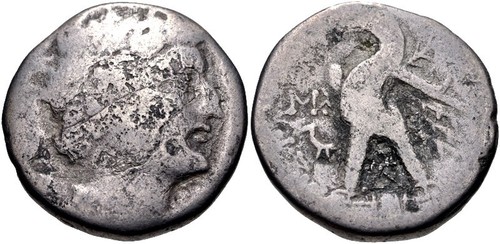
Tetradrachm of Ptolemy XII
80-51 BC
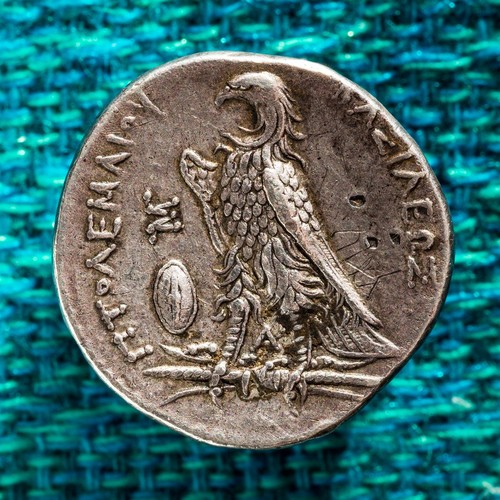
Tetradrachm of Ptolemy I
305-283 BC
Tetradrachm of Antiochos I Soter
281-261 BC
Syracuse Tetradrachm
c. 5th-4th century BC (Classical period)
Solidus of Arcadius
AD 395-402
Philip III Gold Stater
323-317 BC
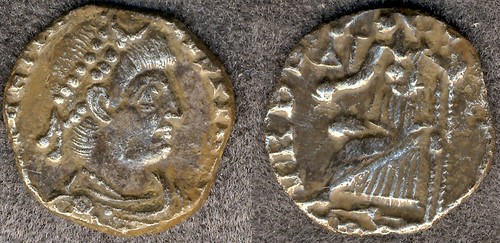
Siliqua of Gratian
AD 367-383
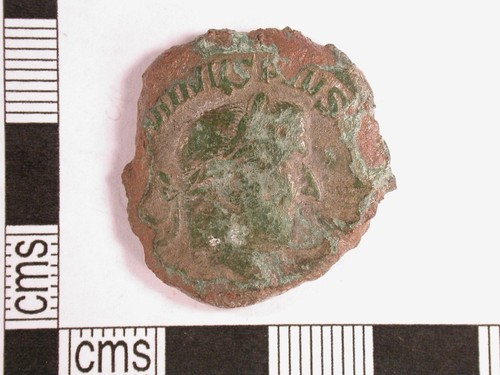
Sestertius of Maximinus Thrax
235-238 AD
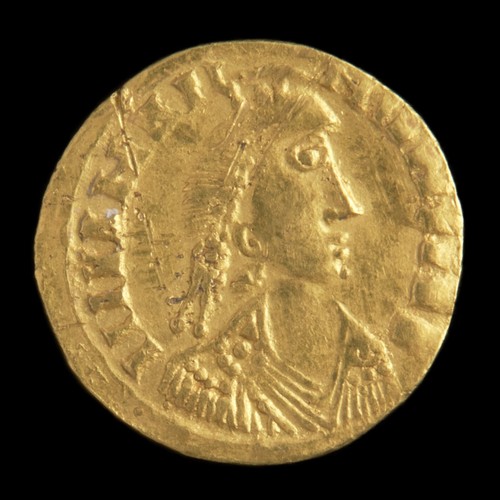
Solidus of Valentinian III
AD 425-455
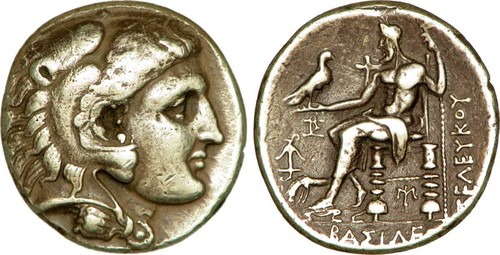
Seleucus I Nicator Tetradrachm
Late 4th-3rd century BC
Nummus of Magnentius
AD 350-353
Follis of Galerius
AD 308-310