
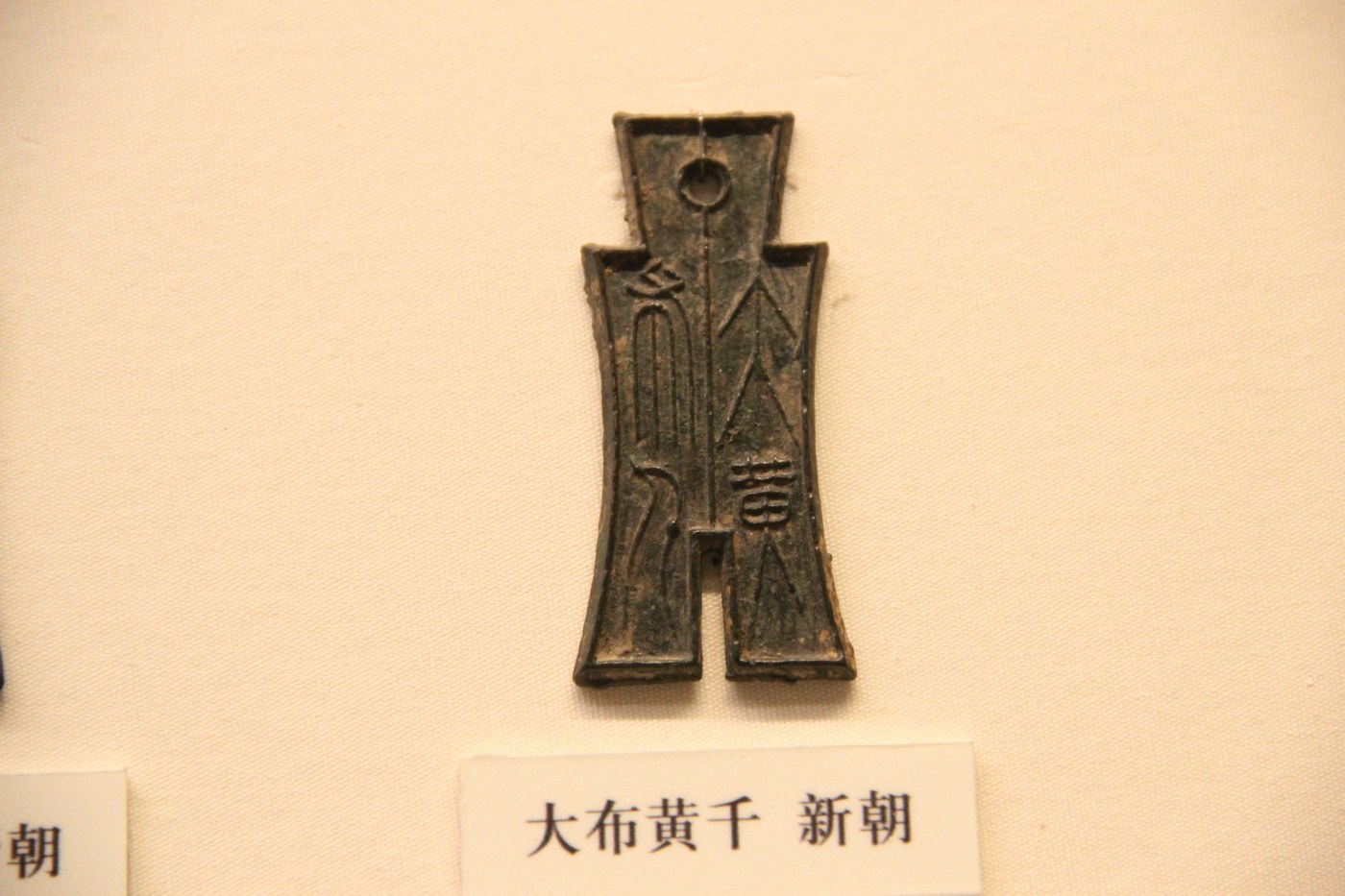
Wang Mang Spade Money
A cast bronze spade-shaped coin of the Xin Dynasty, issued under the reformer Wang Mang, its flat blade bearing raised Chinese inscriptions.
- Country
- China
- Denomination
- Spade
- Metal
- Bronze
Got a coin like this?
Identify any coin from a photo, free.
Overview
Wang Mang Spade Money is a form of ancient Chinese cast bronze currency shaped like a miniature spade or hoe. The pictured example shows the characteristic flat, roughly rectangular blade tapering to a narrow shouldered handle, with raised Chinese inscriptions running vertically down the obverse. The reverse of the spade form is comparatively plain. Rather than a round struck coin, this is a piece of tool-derived money, part of a family of "spade coins" (bu) that circulated in early China.
The type belongs to the short-lived Xin Dynasty (9-23 CE), the interregnum during which Wang Mang seized the throne between the two halves of the Han Dynasty. As part of sweeping currency reforms, Wang Mang revived and standardized archaic-looking spade money alongside other denominations. These coins were cast in bronze from molds rather than hammered, giving them the clean flat surfaces and sharp raised characters that identify the series.
Because the available photographs show a spade-shaped bronze piece with inscriptions on the blade, this entry describes that object: a Xin Dynasty spade coin. It does not describe the round "cash" coins that also came from Wang Mang's reforms, though those are close cousins within the same monetary system.
History & Background
Wang Mang was a Han official who took power and founded the Xin ("New") Dynasty in 9 CE, ruling until his death in 23 CE. His reign is remembered above all for a series of dramatic and often confusing monetary reforms. In an effort to project legitimacy and evoke the idealized institutions of high antiquity, he reintroduced ancient forms of money, including spade-shaped coins that recalled the tool-money of the earlier Zhou period.
Spade money itself long predated Wang Mang; flat bronze pieces derived from the shape of a hoe or spade had served as currency in various Chinese states centuries earlier. Wang Mang's contribution was to revive and systematize the form within a graded scheme of denominations, casting new spade coins with neat calligraphic inscriptions naming their value. His reforms went through several phases and were widely regarded as impractical, contributing to economic disruption during his brief rule.
After Wang Mang fell and the Han Dynasty was restored, his elaborate currency system was abandoned in favor of the simpler round bronze cash. The spade coins of the Xin period therefore represent a distinctive, self-contained episode in Chinese numismatics. Their unusual shape and fine antique-style lettering have made them enduringly popular with collectors of ancient Chinese money.
How to Identify
The defining feature is the shape: a flat bronze spade with a broad, roughly rectangular blade that narrows to a shouldered handle, often with a small opening or hollow socket at the top where the original tool would have been hafted. The overall silhouette is instantly different from the round holed "cash" coins that most people associate with China. Surfaces are flat and the piece is thin, consistent with casting in a mold.
Look for raised Chinese characters, typically arranged as a vertical inscription on the obverse blade, naming the denomination or type. The script is deliberately archaic and finely drawn, a hallmark of Wang Mang-era casting. The reverse of the blade is usually plainer, sometimes with a raised central line or rib but generally without a matching inscription. Genuine ancient examples show a natural bronze patina — greens, browns, and earthen tones — rather than bright metal.
Size and metal are important checks: these are modest hand-sized bronze pieces, light for their footprint because they are thin castings, and non-magnetic. Casting seams, sprue remnants where metal entered the mold, and slightly soft edges are normal for authentic cast coins. Because the photographed reverse is plain, identification rests mainly on the spade outline, the bronze fabric, and the raised inscription on the front.
Value & Collectibility
Value for Wang Mang spade money depends heavily on the specific type, the crispness of the inscription, and the state of preservation. As a class, Xin Dynasty spade coins are sought after for their striking shape and historical interest, and intact examples with clear, sharp characters and attractive patina command the strongest collector interest. Broken, corroded, or heavily encrusted pieces sell for considerably less.
Because the series includes several distinct denominations and varieties — some scarce, some more available — prices span a wide range rather than a single figure. Condition and authenticity are the main drivers: a complete blade with legible legend and stable patina is worth a premium over a damaged or questionable piece. Values are best confirmed against recent sales of the same specific spade type in comparable grade.
Authenticity strongly affects value here, since spade coins are frequently reproduced. Genuine ancient examples with sound provenance or reputable authentication bring more than unattributed pieces, and buyers should weigh the real risk of modern copies when judging any price.
Frequently asked questions
Who was Wang Mang and why is this coin named after him?
Wang Mang was the founder of the short-lived Xin Dynasty (9-23 CE), which interrupted the Han. He carried out sweeping currency reforms that revived ancient spade-shaped money, so this coin type is associated with his name and reign.
Why is the coin shaped like a spade?
The form descends from real bronze farming tools — spades and hoes — that were used as money in early China. Wang Mang deliberately revived this antique shape to evoke the institutions of high antiquity as part of his reforms.
Is this coin made of gold or silver?
No. Wang Mang spade money is cast bronze. Its color comes from a natural patina of greens and browns rather than any precious metal, and genuine examples are non-magnetic.
How was it made — struck or cast?
It was cast in molds, not struck between dies. This is why the surfaces are flat, the raised characters are sharp, and authentic pieces often show casting seams or small sprue remnants.
Are Wang Mang spade coins often faked?
Yes. Their distinctive shape and collector appeal have made them a common target for reproductions. Careful attention to patina, casting details, and provenance — or reputable authentication — is important before buying.
Wang Mang Spade Money guides
In-depth guides for identifying, valuing, and collecting Wang Mang Spade Money.
Other coins you may enjoy
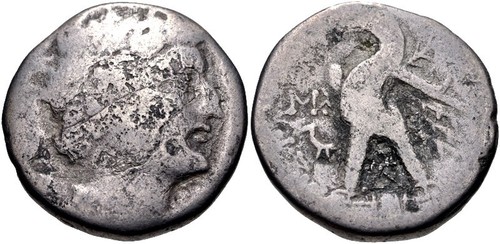
Tetradrachm of Ptolemy XII
80-51 BC
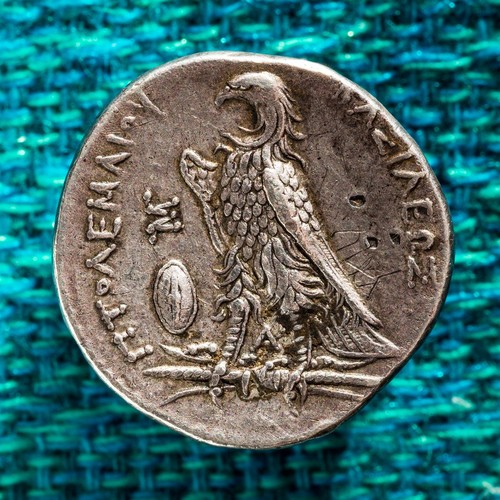
Tetradrachm of Ptolemy I
305-283 BC
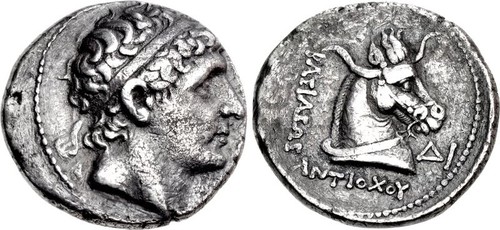
Tetradrachm of Antiochos I Soter
281-261 BC
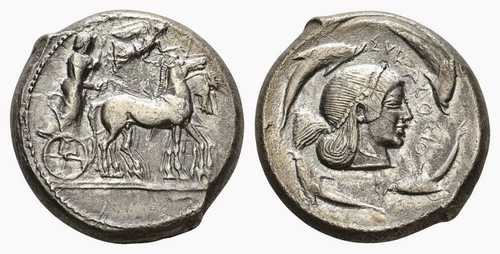
Syracuse Tetradrachm
c. 5th-4th century BC (Classical period)
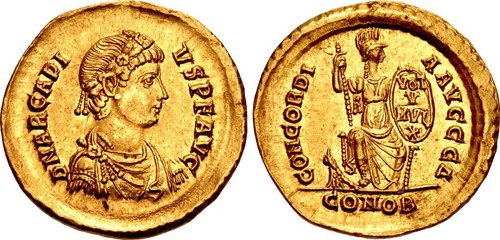
Solidus of Arcadius
AD 395-402
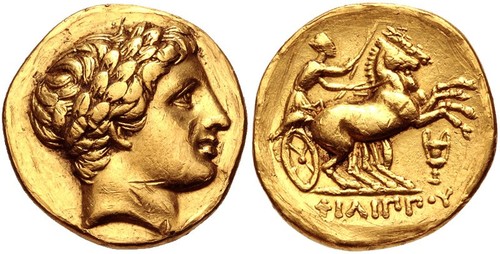
Philip III Gold Stater
323-317 BC
Siliqua of Gratian
AD 367-383
Sestertius of Maximinus Thrax
235-238 AD
Solidus of Valentinian III
AD 425-455
Seleucus I Nicator Tetradrachm
Late 4th-3rd century BC
Nummus of Magnentius
AD 350-353
Follis of Galerius
AD 308-310