
How to Identify the Wang Mang Spade Money
A collector's guide to recognizing Xin Dynasty spade coins: the spade outline, raised blade inscription, bronze fabric, and cautions against modern copies.
Read the full Wang Mang Spade Money encyclopedia entry →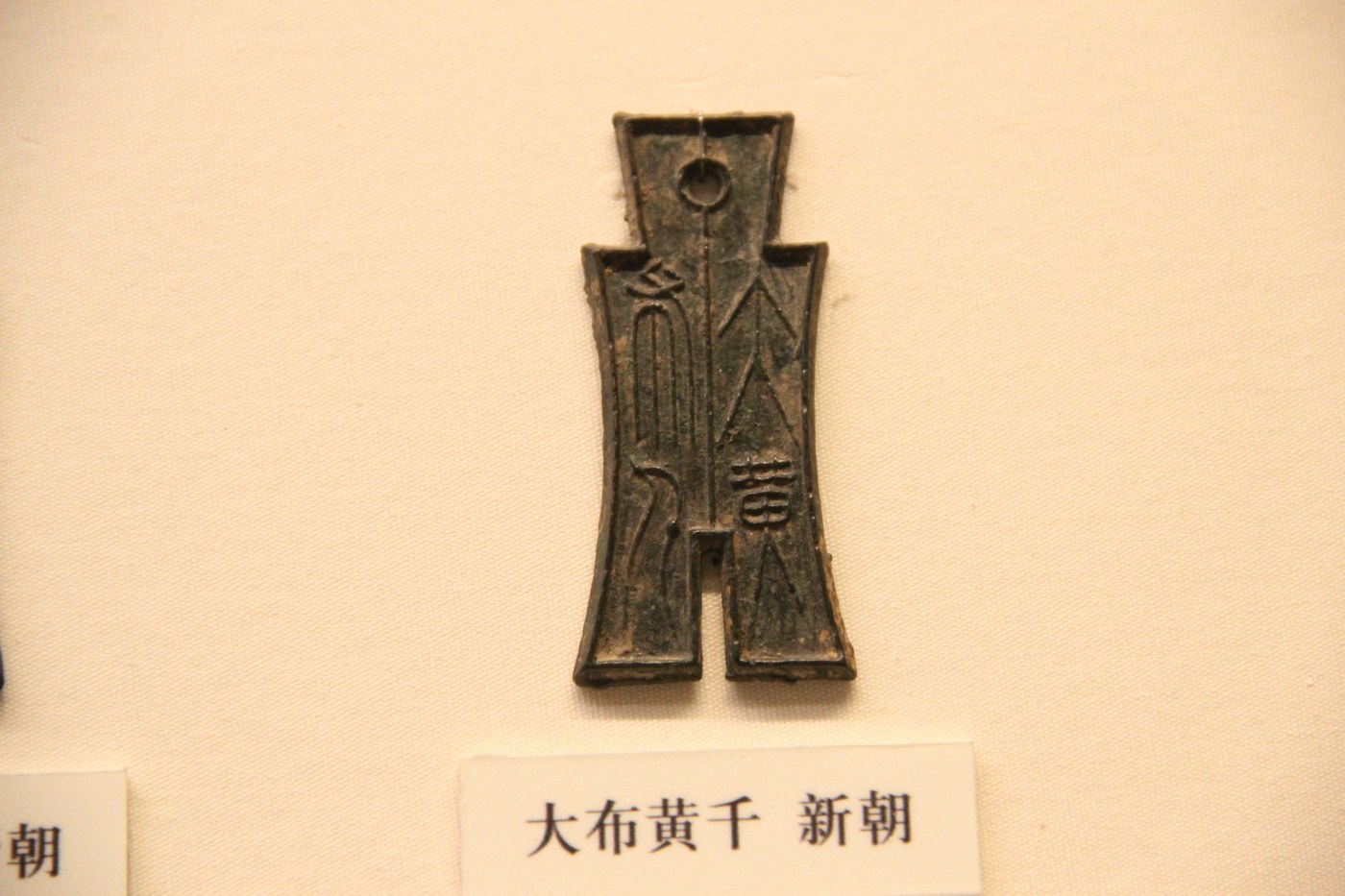
Begin with the silhouette, because it is the single most diagnostic feature. Authentic spade money has a flat, thin blade that is broad and roughly rectangular at the bottom and narrows upward to a shouldered handle, frequently with a small hollow socket or opening at the very top. Set it beside a round holed cash coin and the difference is obvious. If the outline reads as a stylized spade or hoe, you are in the right family.
Next read the obverse blade. Wang Mang-era spades carry raised Chinese characters, usually running vertically, executed in a deliberately archaic, finely drawn script that names the denomination or type. The lettering should stand up cleanly from a flat field. Turn the piece over: the reverse is typically plain, sometimes with a simple raised central rib but generally lacking a matching inscription — exactly as seen on the photographed example. A plain, uninscribed back is normal and is not a fault.
Confirm the metal and feel. These are bronze castings, so expect an earthen patina of greens and browns rather than bright or yellow metal, and a piece that is surprisingly light for its size because the blade is thin. It should be non-magnetic. Look closely at the edges for casting seams and for small sprue remnants where molten bronze entered the mold; soft, slightly rounded edges are consistent with genuine mold casting, whereas machine-sharp uniform edges or file marks are warning signs.
Be alert to look-alikes and copies. Spade money spans many varieties across different periods and states, so the exact type matters — the specific inscription determines which spade you have, and Wang Mang's issues are only one group within the broader spade tradition. More importantly, these coins are heavily reproduced. Modern fakes may show artificial patina, glassy cast surfaces, blurry or incorrect characters, or a metal that looks too clean. Treat any bright, seamless, or suspiciously perfect example with caution.
For anything you intend to buy or value seriously, weigh and measure the piece against references for the specific type, compare the inscription to published examples, and favor coins with sound provenance or reputable authentication. Because attribution here depends on the shape and the front inscription, and the reverse is plain, do not rely on the back to confirm the type — build your identification from the spade form and the blade legend together.
Frequently asked questions
What is the quickest way to recognize spade money?
The shape. A flat, thin bronze piece formed like a small spade or hoe — broad blade tapering to a shouldered handle, often with a socket at the top — is unmistakably spade money, unlike the round holed cash coins of later China.
The back of my coin is plain — is that a problem?
No. On these spades the reverse is normally plain, occasionally with a simple raised rib but usually without an inscription. The identifying legend appears on the obverse blade, so a plain back is expected.
How can I tell a genuine cast coin from a modern fake?
Look for a natural earthen bronze patina, thin light fabric, casting seams, and slightly soft edges. Glassy uniform surfaces, artificial-looking patina, blurry characters, or bright clean metal point toward a reproduction.
Does the inscription matter for identification?
Yes. The raised characters on the blade name the denomination or type and distinguish one spade variety from another. Comparing that inscription to published references is essential to pin down the exact coin.