
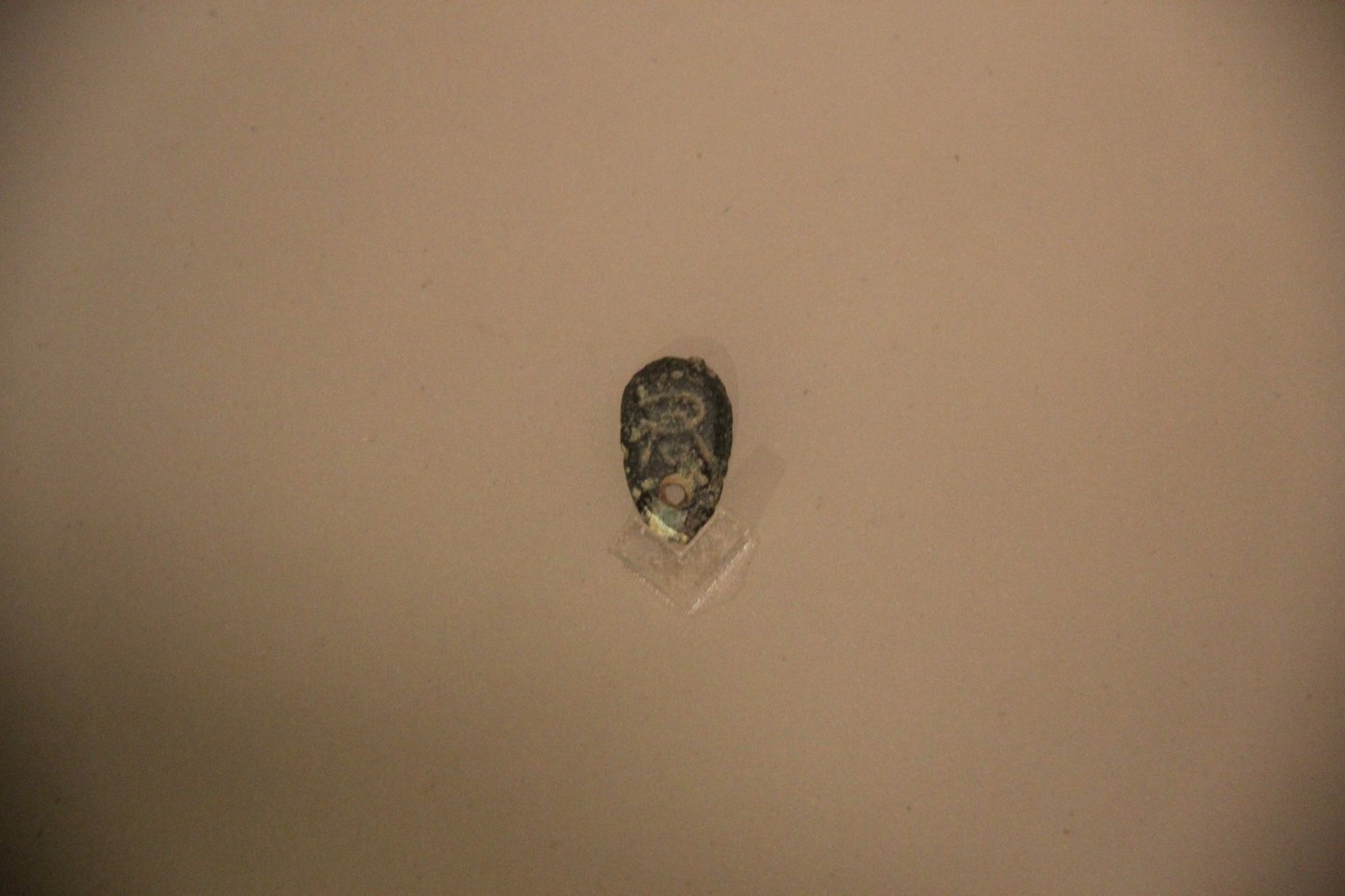
Chu State Ant-Nose Coin
A small cast bronze cowrie-shaped coin of the Chu state, bearing a face-like Chinese inscription in relief, nicknamed ant-nose or ghost-face money.
- Country
- China
- Denomination
- Ant-Nose
- Metal
- Bronze
Got a coin like this?
Identify any coin from a photo, free.
Overview
The Chu State ant-nose coin is a small cast bronze money piece produced by the southern state of Chu during China's Warring States period. Shaped like a stylized cowrie shell, it is domed on the inscribed side and flat on the back, small enough to sit in the palm and carry the raised Chinese character markings seen on the observed obverse.
Its curious nicknames come from the look of the inscription. Read one way the raised marks resemble a tiny face, giving rise to the name ghost-face money (gui lian qian); read another way the strokes suggest the nose and features of an ant, hence ant-nose money (yibi qian). Both names describe the same family of small Chu bronzes rather than separate coins.
These pieces are among the earliest true inscribed coins of China and are closely tied to the older tradition of using cowrie shells as money. They were cast, not struck, so surfaces vary from piece to piece, and they are collected today as tangible relics of the Chu state and of the transition from shell money to metal coinage.
History & Background
Long before coinage, cowrie shells served as money across early China, and their form was imitated in bone, stone, and eventually bronze. The Chu state, a large and wealthy power in the south, carried this tradition into cast metal, producing small bronze pieces in the cowrie shape that we now call ant-nose coins. They belong to the Warring States era, when China was divided among rival states each issuing its own distinctive money.
While many contemporary states favored spade-shaped and knife-shaped bronze money, Chu is notable for this compact cowrie-derived form together with its gold block currency. The ant-nose coins carried short raised inscriptions, of which several different character forms are known; the most familiar is the face-like glyph that inspired the ghost-face nickname. The exact reading and meaning of some inscriptions remain debated by scholars.
As cast objects, the coins were produced in multi-cavity molds, and casting quality, size, and the sharpness of the characters differ considerably. The type circulated until the fall of Chu and the unification of China under the Qin, after which the round holed cash coin displaced the older regional forms. Today ant-nose coins stand as one of the signature currencies of the ancient Chu state.
How to Identify
Look for a small, thick bronze piece shaped like a cowrie shell or a curved bean: rounded and domed on the front, where the raised Chinese character markings appear, and typically flat or slightly hollow on the back. The observed obverse shows these characters in relief; on genuine ant-nose coins the reverse is usually plain, so any apparent pattern there is generally casting texture or the impression of the mold rather than a second inscription.
The defining feature is the single raised inscription that reads as a small face or ant-like glyph. Because several inscription varieties exist, the exact strokes differ from coin to coin, but the face-like or ant-nose impression is the hallmark of the type. The metal is a dark bronze, often with green, brown, or earthen patina from long burial.
These coins are small and light, on the order of a fingertip, far smaller than the large spade and knife monies of other Warring States powers. Identification rests on the combination of the compact cowrie shape, the domed inscribed face over a plain back, the bronze fabric, and the characteristic raised glyph, taken together rather than on any single trait.
Value & Collectibility
As an ancient cast bronze from the Warring States period, the Chu ant-nose coin is a collectible historical piece, and values span a broad range. Common inscription types in worn or corroded condition are relatively affordable, while sharply cast examples with clear characters, pleasing patina, and a scarcer inscription variety command higher prices.
Condition, the specific inscription form, the completeness of the piece, and the quality and originality of the patina all affect value. Because the coins were cast and then buried for two millennia, surface state varies widely, and heavy corrosion, chipping, or damage lowers desirability. Provenance and clear attribution add confidence and value for better pieces.
Ancient Chinese bronzes of this kind are also frequently reproduced and faked, so authentication matters. Any specific figure should be confirmed against recent sales of comparable ant-nose coins of similar type and condition, ideally with reference to specialist catalogs or expert opinion rather than a single quoted price.
Frequently asked questions
Why is it called an ant-nose coin?
The nickname comes from the look of the raised inscription. Read one way the marks suggest the nose and features of an ant, giving ant-nose money (yibi qian); read another way they resemble a small face, giving ghost-face money. Both names describe the same Chu bronze pieces.
Who made these coins and when?
They were produced by the state of Chu, a powerful southern state during China's Warring States period, roughly the era spanning the 7th to 3rd centuries BC. They circulated until China was unified under the Qin, after which round holed cash coins replaced the older regional forms.
What is the coin made of and how big is it?
It is cast bronze, shaped like a small cowrie shell or curved bean. The pieces are small and light, roughly fingertip-sized, much smaller than the large spade and knife monies used by other Warring States powers. Surfaces usually carry green or brown patina.
Does the back have an inscription too?
Genuine ant-nose coins normally have the raised character on the domed front only, with a plain or slightly hollow back. Any pattern on the reverse is generally casting texture or the impression of the mold rather than a true second inscription.
How much is a Chu ant-nose coin worth?
Value varies widely with the inscription type, condition, and patina. Common, worn examples are modest, while crisp coins with clear characters or scarcer inscriptions bring more. Because ancient Chinese bronzes are often faked, confirm authenticity and check recent sales of comparable pieces.
Chu State Ant-Nose Coin guides
In-depth guides for identifying, valuing, and collecting Chu State Ant-Nose Coin.
Other coins you may enjoy
Tetradrachm of Ptolemy XII
80-51 BC
Tetradrachm of Ptolemy I
305-283 BC
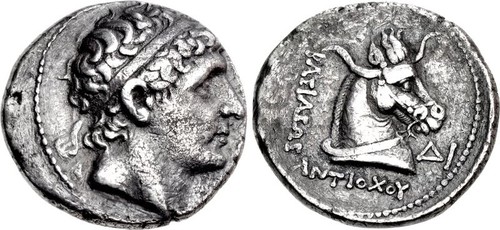
Tetradrachm of Antiochos I Soter
281-261 BC
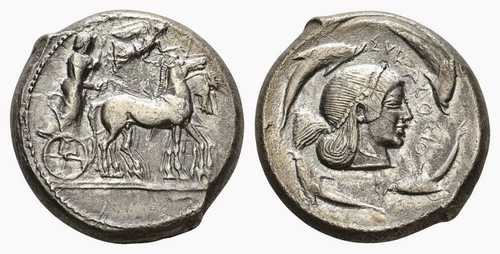
Syracuse Tetradrachm
c. 5th-4th century BC (Classical period)
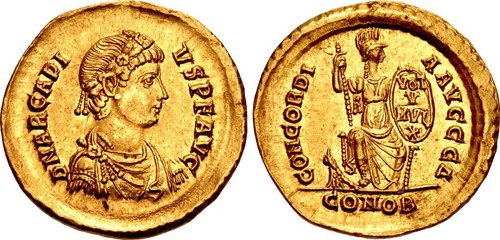
Solidus of Arcadius
AD 395-402
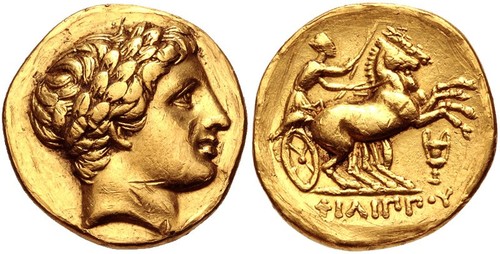
Philip III Gold Stater
323-317 BC
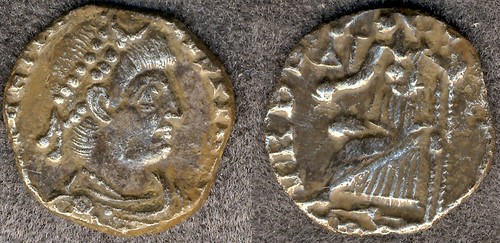
Siliqua of Gratian
AD 367-383
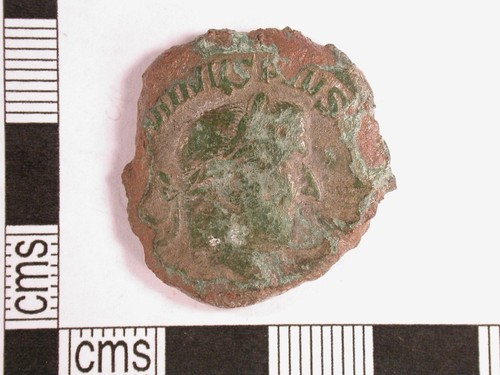
Sestertius of Maximinus Thrax
235-238 AD
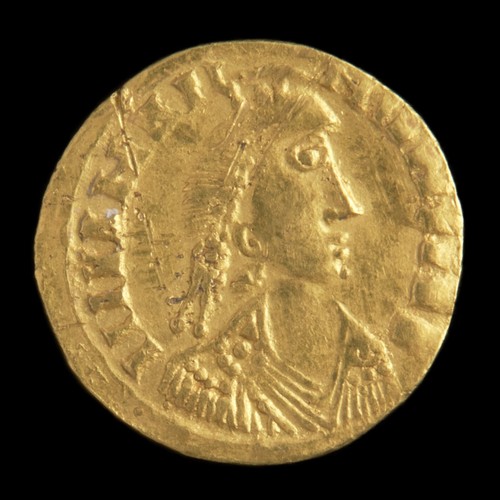
Solidus of Valentinian III
AD 425-455
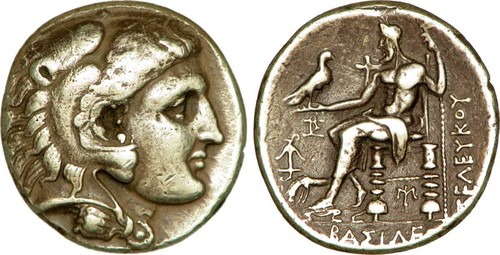
Seleucus I Nicator Tetradrachm
Late 4th-3rd century BC
Nummus of Magnentius
AD 350-353
Follis of Galerius
AD 308-310