
How to Identify the Chu State Ant-Nose Coin
A collector's guide to recognizing the Chu ant-nose coin: cowrie shape, the face-like bronze inscription, size, look-alikes, and authentication cautions.
Read the full Chu State Ant-Nose Coin encyclopedia entry →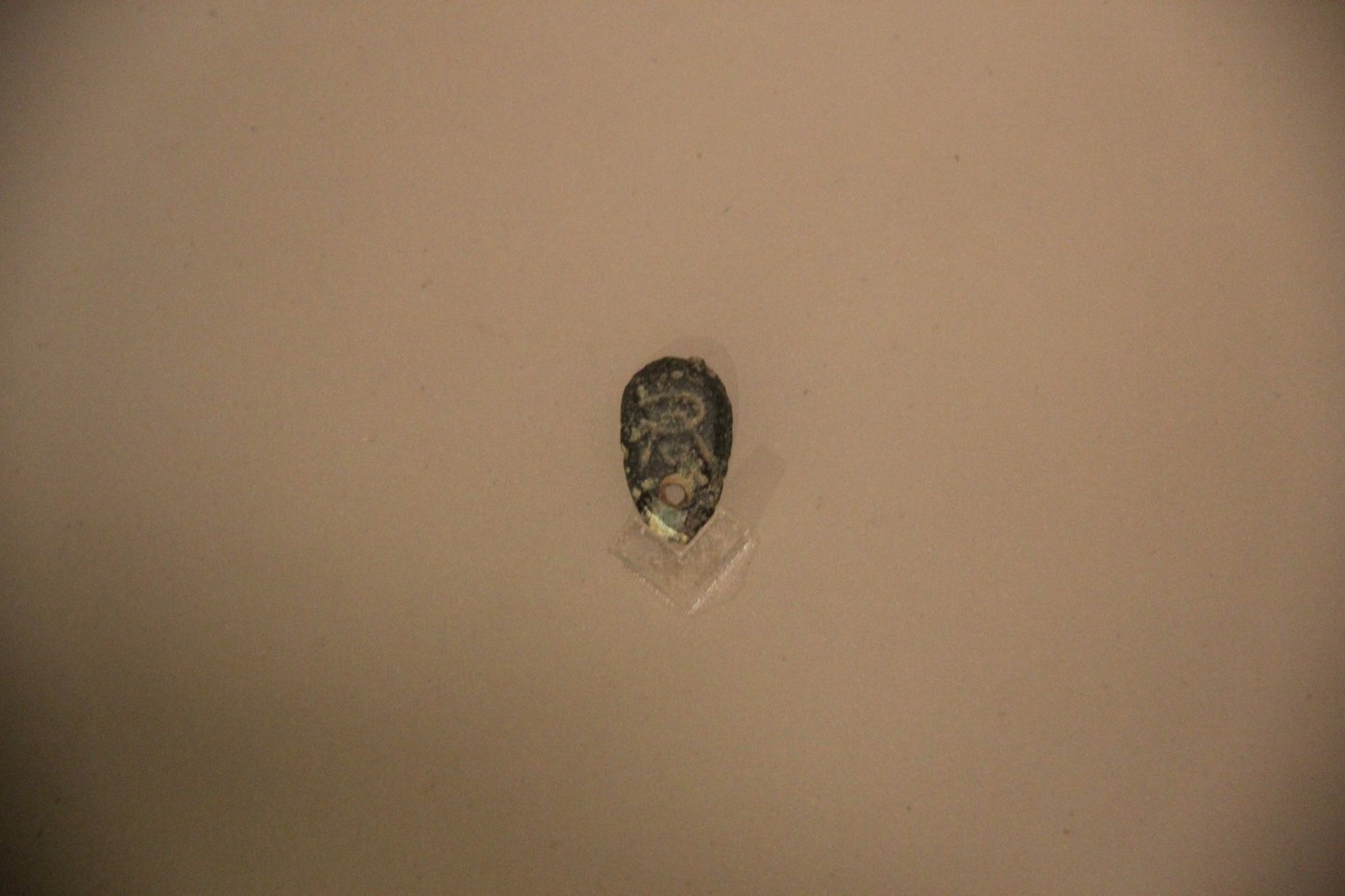
Start with the shape and size, because they narrow the field immediately. The ant-nose coin is a small, thick bronze piece formed like a cowrie shell or curved bean, domed on the inscribed side and flat or slightly hollow on the back. It is only about fingertip-sized and light in the hand. If a small ancient Chinese bronze has this compact shell-like body rather than the flat blade of a knife or spade coin, the ant-nose type is a strong candidate.
Examine the raised inscription on the domed face. The single face-like or ant-nose glyph in relief is the defining diagnostic, and it is what gives the type both its ghost-face and ant-nose nicknames. Several inscription varieties exist, so the exact strokes vary, but you should see one clear raised character or symbol, not a full line of text. Turn the coin over: the reverse should be essentially plain, and on a genuine piece any texture there is from the mold, not a second inscription.
Check the metal and surfaces. Expect a dark cast bronze with green, brown, or earthen patina built up over long burial, and the soft, slightly rounded detail typical of a cast rather than a struck coin. Casting seams, sprue remnants where the coin was cut from the mold tree, and minor porosity are consistent with authentic manufacture; crisp, machine-even edges are not.
Separate it from look-alikes. Do not confuse ant-nose coins with plain uninscribed bronze cowrie imitations, with later round holed cash coins, or with the large spade and knife monies of other Warring States. The combination of small cowrie shape, single face-like glyph, and plain back is what distinguishes the Chu ant-nose piece. Where the inscription is worn away, identification leans on shape and fabric alone and is less certain.
Be cautious about authenticity. Ancient Chinese bronzes of this kind are widely reproduced, and fakes range from casual souvenirs to deceptive aged copies. Watch for suspiciously uniform surfaces, artificial green paint mimicking patina, unnaturally sharp or wrong-looking characters, and weights or dimensions that do not match published figures for the type. When value or originality is in doubt, seek an opinion from a specialist in ancient Chinese coinage before buying or selling.
Frequently asked questions
What is the single most reliable clue that a coin is an ant-nose piece?
The combination of a small cowrie or bean shape with one raised face-like glyph on the domed front and a plain back. That pairing, in cast bronze, is the signature of the Chu ant-nose coin and separates it from other Warring States monies.
How do I tell it apart from a plain bronze cowrie imitation?
Plain bronze cowries carry no inscription. The ant-nose coin has a distinct raised character or symbol on its domed face. If there is a clear face-like or ant-nose glyph in relief, it is the inscribed Chu type rather than a blank cowrie imitation.
Should the coin look cast or struck?
Cast. These were made in molds, so expect soft rounded detail, possible casting seams or sprue marks, minor porosity, and natural burial patina. Sharp machine-even edges or perfectly uniform surfaces are warning signs of a modern reproduction.
How can I guard against fakes?
Be wary of painted-on green patina, unnaturally crisp or incorrect characters, and weight or size that does not match references for the type. Ancient Chinese bronzes are heavily faked, so for any valuable example get an opinion from a specialist in ancient Chinese coinage.