
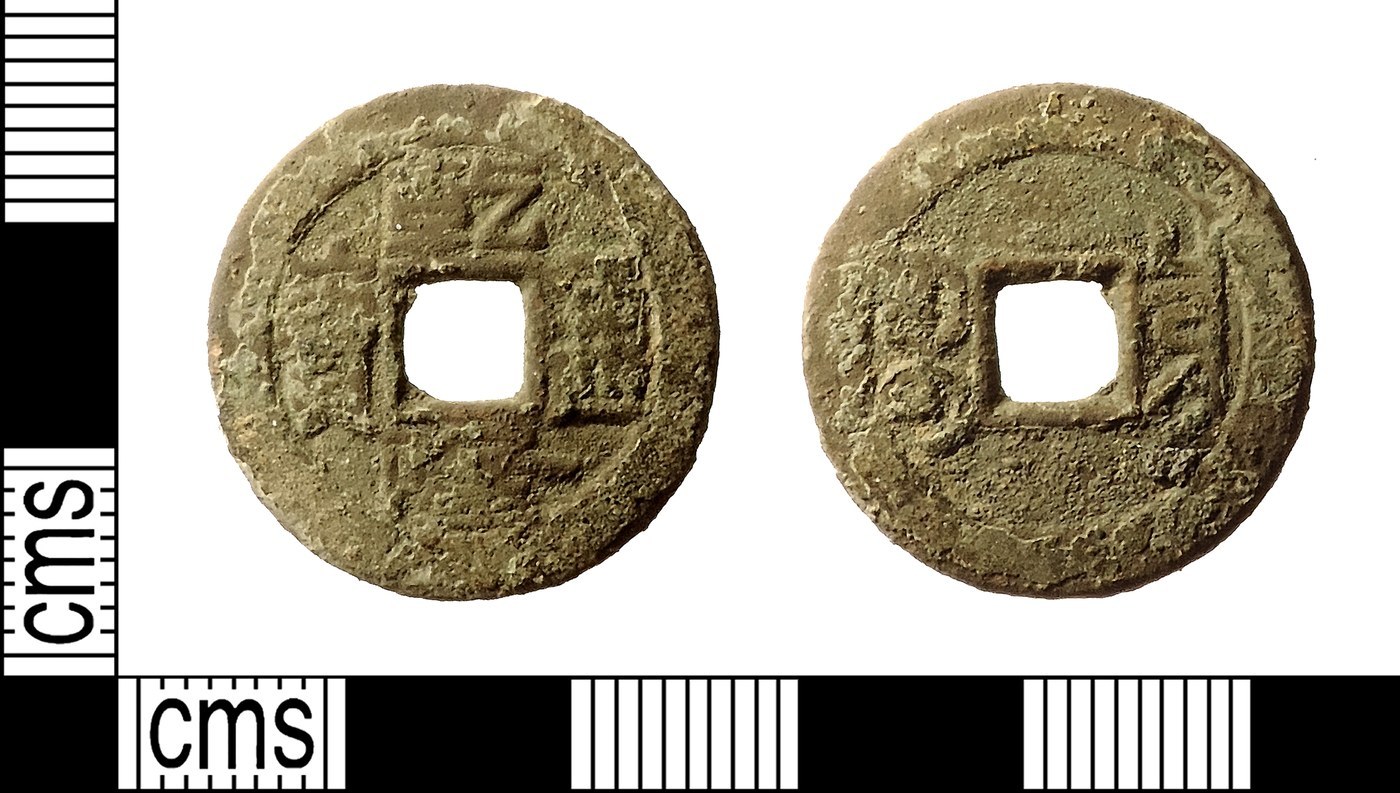
Ban Liang
A round bronze cash coin with a square central hole and two seal-script characters reading Ban Liang, from early imperial China.
- Country
- China
- Denomination
- Half Tael
- Metal
- Bronze
Got a coin like this?
Identify any coin from a photo, free.
Overview
The coin pictured is a Ban Liang (半兩), one of the earliest standardized coins of China. Its name means "half tael" (half liang, or half ounce), the nominal weight it was meant to represent. It is a cast bronze piece in the classic Chinese form: a round disc with a square hole at the center, cast rather than struck.
The coin's defining feature is a pair of seal-script characters, one to each side of the central hole, that read Ban Liang. The character on the right is ban ("half") and the one on the left is liang (the weight unit). The reverse is generally plain and without inscription, so identification rests almost entirely on these two characters and the coin's cast, square-holed shape.
The Ban Liang was the standard coinage of the Qin state and empire and continued through much of the early Western Han period. Because it was produced across a long span and at many foundries, surviving examples vary widely in size, weight, and the style of their characters, from heavy early pieces to thin, lightweight later ones.
History & Background
The Ban Liang originated in the State of Qin during the Warring States period and became China's first empire-wide coinage after Qin Shi Huang unified the country in 221 BCE. As part of the Qin standardization of weights, measures, and script, the round coin with a square hole and the Ban Liang legend was adopted as a uniform currency, displacing the earlier spade-, knife-, and cowrie-shaped monies of the various states.
The form outlived the short Qin dynasty and carried into the Western Han. Over these decades the coin's actual weight drifted well away from a true half tael. Authorities repeatedly reissued lighter versions, and periods of private or loosely controlled casting produced very thin, small "elm-seed" (yuqian) pieces that were Ban Liang in name only. This is why weight alone is an unreliable guide to any single specimen.
The Ban Liang was ultimately replaced during the reign of Emperor Wu of Han, when the Wu Zhu (五銖) coin was introduced in the late 2nd century BCE and became the new standard. The Ban Liang thus marks the foundational chapter of the round, square-holed cash tradition that would endure in China for the next two thousand years.
How to Identify
Identify a Ban Liang first by its shape and manufacture: a round bronze disc with a square central hole, showing the soft, slightly rounded relief and casting seams typical of a cast (not struck) coin. Look for a casting sprue mark or filing on the rim where the piece was removed from its mold tree.
The decisive detail is the two seal-script characters flanking the hole, reading Ban Liang. They are written in an archaic seal style with long, even strokes; ban ("half") sits on one side and liang (the weight unit) on the other. The reverse is typically flat and uninscribed, without rims or characters in most early types. There is no date, ruler name, or mint mark, so attribution to a period is done by fabric, character style, weight, and size rather than by legend.
Expect wide variation. Early Qin and Warring States pieces tend to be larger and heavier with bold, well-spaced characters, while later Han issues are often smaller, thinner, and lighter, some barely larger than the hole. Diameter, weight, rim treatment, and calligraphic style are the tools specialists use to place a given coin within the long Ban Liang series.
Value & Collectibility
The Ban Liang is a historically important but generally affordable ancient coin, since large numbers were cast over a long period and many survive. Common, well-worn later specimens sit at the modest end of the ancient-coin market, while early, heavy Qin-era pieces with bold characters and good surfaces command higher collector interest.
Value turns on type, size, weight, character style, and condition. A large, sharp, well-centered coin with clear seal-script legend is worth considerably more than a small, corroded, or off-center casting. Green patina that is stable and attractive is a plus; active corrosion or repairs detract.
Because values span a broad range, treat any single figure with caution and compare against recent sales of the same type and size. Ban Liang coins are also frequently reproduced and forged, so higher-value examples benefit from expert opinion or third-party authentication before purchase.
Frequently asked questions
What does Ban Liang mean?
Ban Liang (半兩) means "half tael" or "half ounce." It was the nominal weight the coin was meant to represent, and the two characters reading Ban Liang appear on the coin's face beside the central square hole.
How old is a Ban Liang coin?
The type dates to early imperial China. It was standardized by the Qin dynasty after 221 BCE and continued through much of the Western Han period until it was replaced by the Wu Zhu coin in the late 2nd century BCE, making genuine examples roughly two thousand years old.
Why is there a square hole in the middle?
The square hole let many cast coins be strung on a square rod so their rough edges could be filed together, and it allowed coins to be carried on strings. This round-coin-with-square-hole form became the standard for Chinese cash for the next two millennia.
Is my Ban Liang made of gold or silver?
No. The Ban Liang is a cast bronze (copper-alloy) coin. Genuine examples usually show a green or brown patina from age, not the color of precious metal.
Why do Ban Liang coins vary so much in size?
They were cast over a long period at many foundries, and the actual weight drifted far below a true half tael over time. Later Han issues were made lighter and thinner, including tiny "elm-seed" pieces, so size and weight alone do not pin down a single date.
Ban Liang guides
In-depth guides for identifying, valuing, and collecting Ban Liang.
Other coins you may enjoy
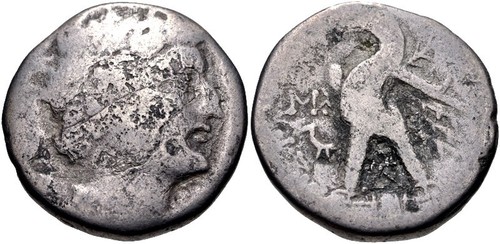
Tetradrachm of Ptolemy XII
80-51 BC
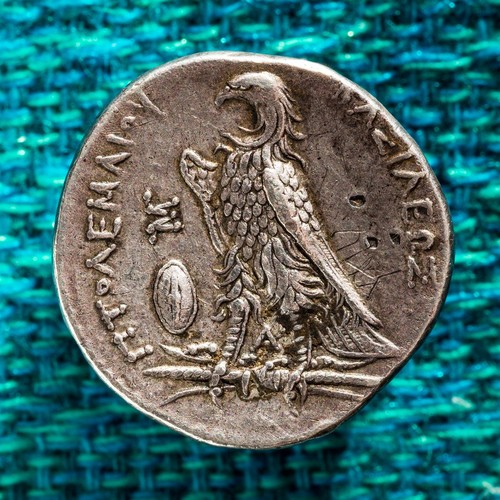
Tetradrachm of Ptolemy I
305-283 BC
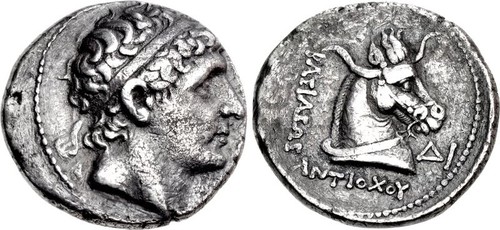
Tetradrachm of Antiochos I Soter
281-261 BC
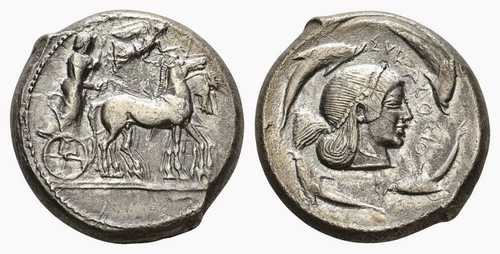
Syracuse Tetradrachm
c. 5th-4th century BC (Classical period)
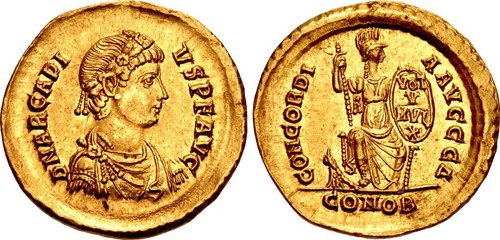
Solidus of Arcadius
AD 395-402
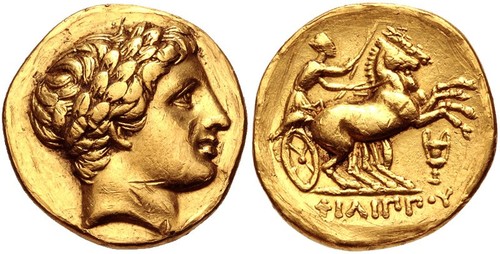
Philip III Gold Stater
323-317 BC
Siliqua of Gratian
AD 367-383
Sestertius of Maximinus Thrax
235-238 AD
Solidus of Valentinian III
AD 425-455
Seleucus I Nicator Tetradrachm
Late 4th-3rd century BC
Nummus of Magnentius
AD 350-353
Follis of Galerius
AD 308-310