
How to Identify the Ban Liang
A collector's checklist for the Ban Liang: reading its two seal-script characters, judging cast bronze fabric, and spotting fakes and look-alikes.
Read the full Ban Liang encyclopedia entry →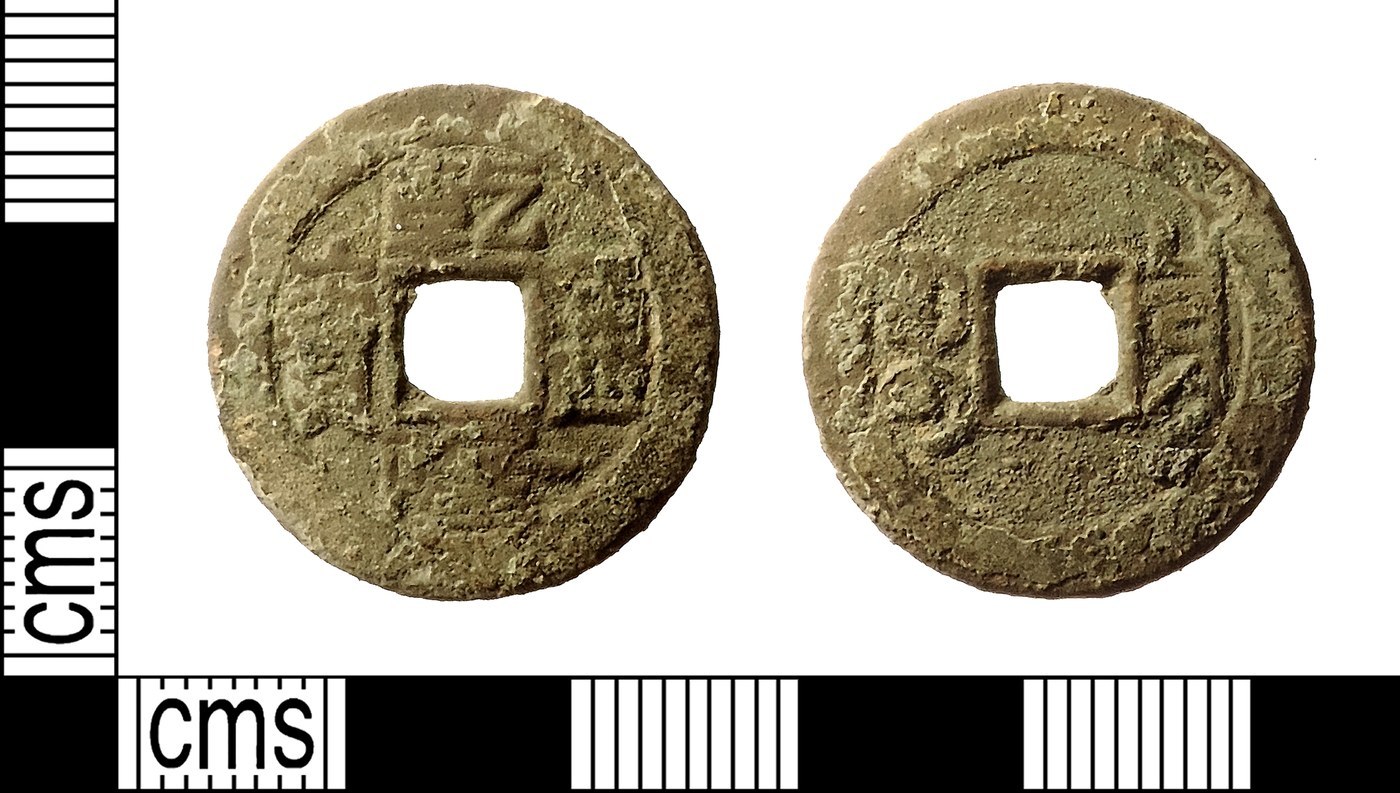
Start with the overall form. A Ban Liang is a round coin with a square hole in the center, made of bronze and produced by casting, not striking. Casting gives softer, slightly rounded relief, and you may see a small sprue tab or filing marks on the rim where the coin was cut from its mold tree. Sharp, machine-even edges or seams from a modern die are warning signs.
Read the two characters. The coin's identity rests on a pair of seal-script characters flanking the hole that read Ban Liang: ban ("half") on one side and liang (the weight unit) on the other. The strokes are long and archaic. There is no ruler's name, date, or mint mark, and the reverse is normally plain, so if a coin carries additional legends or a reign title it is a different type, not a Ban Liang.
Measure size, weight, and calligraphy together. Early Qin and Warring States pieces are typically larger, heavier, and boldly written, while later Han issues are smaller, thinner, and lighter, down to tiny "elm-seed" coins little bigger than the hole. Note the diameter, the weight, and how the characters are spaced and shaped; specialists use these fabric details, rather than any inscription, to place a coin within the long series.
Separate the Ban Liang from look-alikes. Its close successor, the Wu Zhu (五銖), shares the round-with-square-hole form but bears different characters, so read the legend carefully. Also distinguish genuine ancient patina from paint or artificial coloring, and beware later charms, tourist copies, and modern restrikes cast in the same shape.
Apply authentication caution. Ban Liang coins are among the most reproduced Chinese coins, so examine surfaces for stable, ingrained patina versus fresh or powdery corrosion, check that character style and fabric match a known type, and weigh the coin against expected ranges. For any higher-value example, seek expert opinion or third-party authentication before buying.
Frequently asked questions
How can I tell a Ban Liang from a Wu Zhu coin?
Both are round bronze coins with a square hole, but the Ban Liang reads Ban Liang ("half tael") while the Wu Zhu reads Wu Zhu ("five zhu"). Read the two characters flanking the hole to tell them apart; the Wu Zhu replaced the Ban Liang under Emperor Wu of Han.
Which side is the front?
The side bearing the two Ban Liang characters is the obverse. The reverse of most early Ban Liang coins is plain and uninscribed, sometimes without even a rim, so the characters are your main identification point.
Are all Ban Liang coins genuine and old?
No. The type is very widely copied, from old charms to modern tourist casts. Check for cast (not struck) fabric, stable ancient patina, and character and size that match a known type, and get expert authentication for any valuable piece.
Does a heavier Ban Liang mean it is older?
Often, but not always. Early Qin-era pieces tend to be heavier and later Han issues lighter, yet weight varied by foundry and period. Use weight together with size, character style, and overall fabric rather than weight alone.