
How to Identify the Gold Stater of the Catuvellauni and Trinovantes
A collector's guide to recognizing an Iron Age British gold stater by its wheat-ear face, abstract horse, small gold flan, and find context.
Read the full Gold Stater of the Catuvellauni and Trinovantes encyclopedia entry →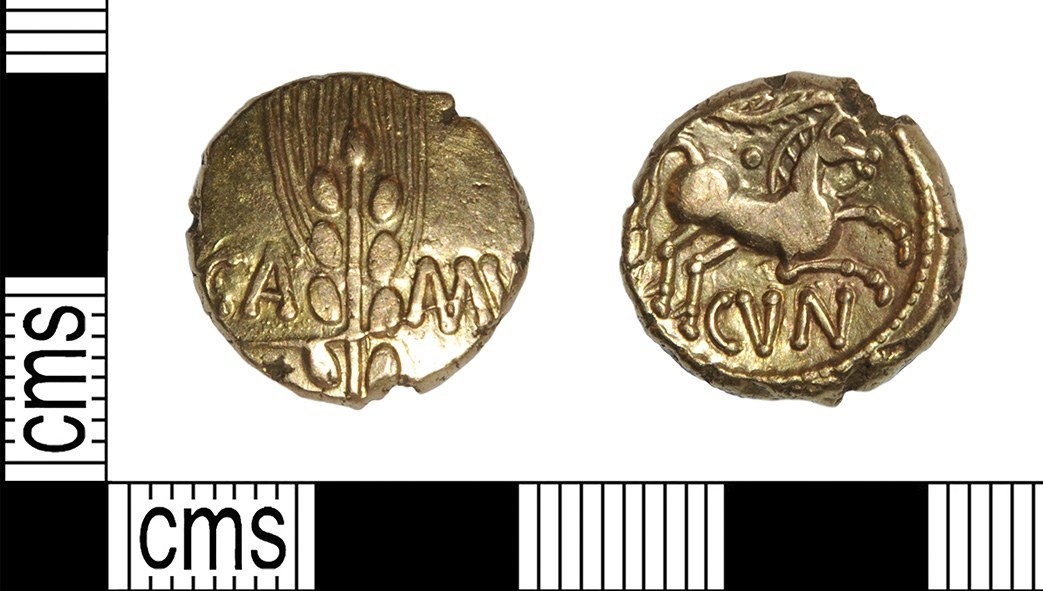
Begin with the two motifs, since they define the type. One face should carry a stylized wheat or barley ear: look for a central spine with grain and leaf shapes branching symmetrically to each side, standing in place of a portrait. The opposite face should show a horse, often energetic and broken into disjointed parts, surrounded by pellets, rings, crescents, and other geometric ornaments filling the field. This wheat-and-horse pairing, rather than any lettering, is the primary diagnostic.
Assess the physical coin next. Genuine staters are small, comparatively thick, and struck on rounded but frequently uneven or slightly domed flans, typically weighing only a few grams. The metal is gold, but the color can range from bright yellow to a paler or redder tone because many issues are alloyed with silver and copper. Expect off-center striking with design elements running off the edge; crisp, perfectly centered, machine-even surfaces are a warning sign rather than a mark of quality.
To move from the general type toward the Catuvellauni or Trinovantes specifically, study the fine details. The exact style of the horse, the configuration of the ornaments around it, and the treatment of the wheat ear all distinguish related tribal issues that otherwise look alike. Compare against published Celtic coin references and die studies, and give strong weight to a documented find-spot in the northern-Thames region, since attribution rests on style and provenance rather than inscriptions.
Be cautious about look-alikes. Numerous other British and Gaulish tribes struck wheat-and-horse or head-and-horse staters that resemble this type at a glance, so a superficially similar coin is not automatically Catuvellaunian or Trinovantian. Later related issues may add names or letters, and some abstract Gaulish imports circulated in Britain as well; matching the precise design scheme is essential before assigning an attribution.
Finally, weigh authentication carefully because these are valuable gold coins and are faked. Cast copies often show soft detail, a seam, bubbles, or a too-regular flan, whereas struck originals show sharp, slightly irregular relief and honest wear. Given the money at stake and the difficulty of attribution, confirm important pieces with a specialist in Celtic coinage or a recognized authentication service before purchase or sale.
Frequently asked questions
What is the single best clue that a coin is this type?
The wheat-and-horse pairing. One face shows a stylized wheat or barley ear instead of a portrait, and the other shows an abstract horse among geometric ornaments. That combination on a small gold flan points to an ancient British stater.
How can I tell it from other Celtic staters?
Many tribes used similar designs, so look at the fine details: the horse's style, the ornaments around it, and the wheat-ear form. Attribution to the Catuvellauni or Trinovantes relies on matching published types and, ideally, a northern-Thames find-spot.
Should off-center striking make me doubt a coin?
No. Ancient staters were hand-struck on small, uneven flans, so off-center designs running off the edge are normal and expected. It is unnaturally perfect, even surfaces that should raise suspicion of a modern copy.
Do I need expert help to authenticate one?
For anything of value, yes. These gold coins are faked and hard to attribute, so cast seams, bubbles, or soft detail are red flags. Confirm important examples with a Celtic-coin specialist or recognized authentication service.