
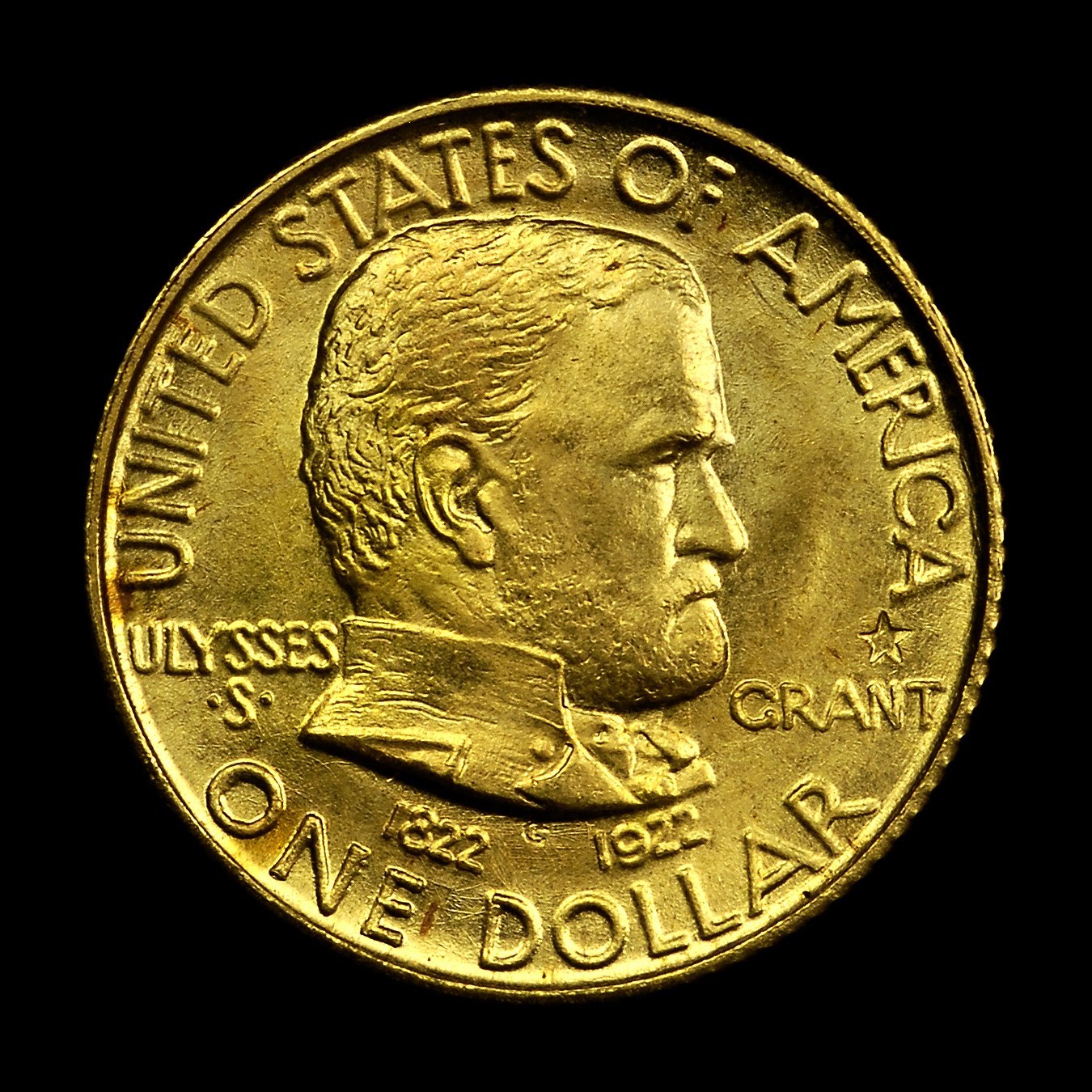
Grant Memorial Gold Dollar
A tiny 1922 U.S. gold dollar honoring Ulysses S. Grant's birth centennial, issued in 'star' and 'no star' varieties from the Philadelphia Mint.
- Country
- United States
- Denomination
- $1
- Metal
- Gold
Got a coin like this?
Identify any coin from a photo, free.
Overview
The Grant Memorial Gold Dollar is a classic United States commemorative coin struck in 1922 to mark the centennial of the birth of Ulysses S. Grant, Civil War general and 18th President. It is a small gold dollar, part of a two-coin Grant commemorative program that also included a silver half dollar of matching design.
The photographed example shows the obverse: a bare-headed profile portrait of Grant facing right, the dual dates 1822-1922 marking his birth and the centennial, and the inscription ONE DOLLAR. The coin was designed by Laura Gardin Fraser and produced at the Philadelphia Mint.
Because it is a commemorative rather than a circulating coin, the Grant gold dollar was sold at a premium to collectors and the public to raise funds tied to the Grant memorial. It exists in two closely related varieties distinguished by the presence or absence of a small incuse star on the obverse.
History & Background
Congress authorized the Grant Memorial coinage in 1922 to commemorate the hundredth anniversary of Ulysses S. Grant's birth on April 27, 1822. The program produced both a gold dollar and a silver half dollar, each issued in a 'with star' and a 'without star' variety, the star being a small five-pointed device placed in the obverse field above the inscription.
The designs were the work of Laura Gardin Fraser, one of the most accomplished American medallic sculptors of the era. Her Grant portrait is a dignified right-facing profile flanked by the commemorative dates. Proceeds from sales were intended to support Grant memorial projects associated with his Ohio birthplace region.
Mintages for the Grant gold dollar were small in absolute terms compared with circulating coinage, and the star and no-star varieties were produced in comparable, limited quantities. As with several commemoratives of the period, distribution was uneven and some coins reached collectors only slowly, which shaped the survival and grade profile seen today.
How to Identify
The obverse is the key identifier: a bare-headed bust of Ulysses S. Grant facing right, with the dual dates 1822-1922 and the words ONE DOLLAR. The photographed coin shows this side clearly. On the reverse (not visible in the photo) is a depiction of the log cabin at Point Pleasant, Ohio, associated with Grant's birthplace, framed by trees, with UNITED STATES OF AMERICA and the motto.
This is a genuinely tiny coin. Like other classic U.S. gold dollars it measures only about 15 mm across and weighs roughly 1.67 grams in .900 fine gold, so it is much smaller than a modern cent. The rich yellow gold color, small diameter, and Grant portrait together confirm the type.
The single most important variety point is the small incuse star in the obverse field, above the word GRANT. Coins bearing this star are the 'with star' variety; those without it are the 'no star' variety. All genuine pieces are Philadelphia issues and carry no mint mark. Confirming whether the tiny star is present is essential, because it materially affects identification and value.
Value & Collectibility
The Grant Memorial Gold Dollar is a scarce and desirable classic commemorative, and both the star and no-star varieties command strong premiums well above their small gold content. Values depend heavily on variety, grade, and eye appeal rather than on melt, since each coin holds only a fraction of a gram of gold.
As a general guide, problem-free examples typically trade in the mid-hundreds to low thousands of dollars, with high-grade certified pieces and the sometimes scarcer variety bringing more. Because market prices move over time and vary by grade, any specific figure should be checked against recent auction results and current dealer listings.
Given the coin's small size, high value, and the existence of counterfeits and altered pieces, buyers usually favor examples certified by a major grading service. Original surfaces, sharp detail on Grant's portrait, and a clearly readable star (when present) all support the higher end of the range.
Frequently asked questions
What is the Grant Memorial Gold Dollar?
It is a 1922 United States commemorative gold dollar honoring the centennial of Ulysses S. Grant's birth. It was issued alongside a matching Grant commemorative silver half dollar and was sold to collectors rather than placed in circulation.
What do the star and no-star varieties mean?
The Grant gold dollar was struck both with and without a small incuse five-pointed star in the obverse field above GRANT. The presence or absence of that star defines the two varieties, which are collected separately and can differ in value.
Why is the coin so small?
It is a classic U.S. gold dollar, a denomination that was always physically tiny — about 15 mm across and under two grams of .900 fine gold. Its small size is normal for the type, not a sign of damage or a fake.
Does it have a mint mark?
No. All Grant Memorial gold dollars were struck at the Philadelphia Mint, which used no mint mark in this period. Any Grant gold dollar showing a mint mark should be treated with suspicion.
Is it made of pure gold?
No. Like other classic U.S. gold coinage it is .900 fine gold (90% gold, 10% copper alloy), which gives it durability. The coin's value comes from its rarity as a commemorative, not from its small gold content.
Grant Memorial Gold Dollar guides
In-depth guides for identifying, valuing, and collecting Grant Memorial Gold Dollar.
Other coins you may enjoy
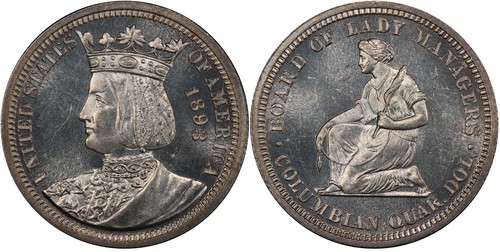
Isabella Quarter
1893
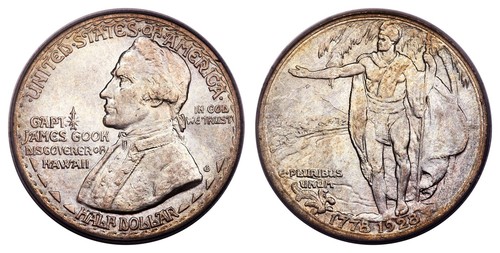
Hawaiian Sesquicentennial Half Dollar
1928
Long Island Tercentenary Half Dollar
1936
Lexington-Concord Sesquicentennial Half Dollar
1925
Louisiana Purchase Exposition Dollar (Jefferson)
1903
Daniel Boone Bicentennial Half Dollar
1934–1938
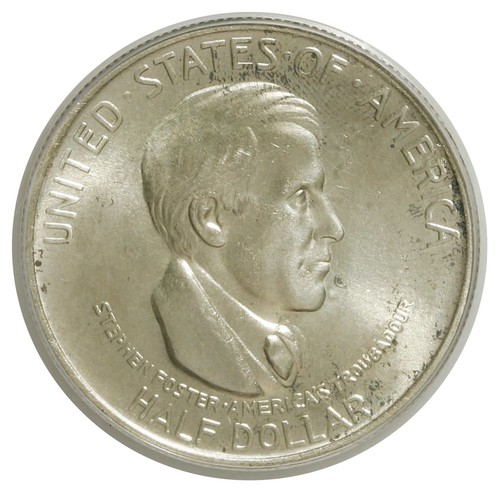
Cincinnati Music Center Half Dollar
1936
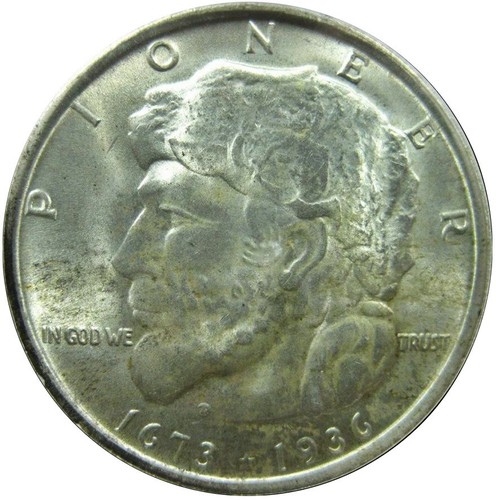
Elgin Illinois Centennial Half Dollar
1936
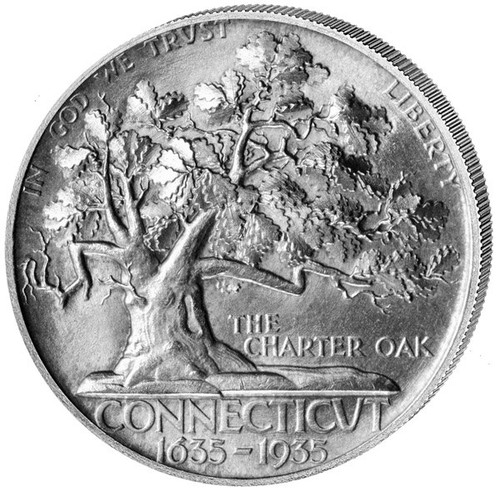
Connecticut Tercentennial Half Dollar
1935
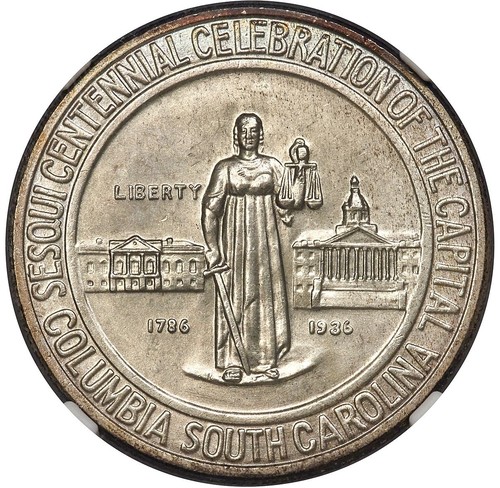
Columbia South Carolina Sesquicentennial Half Dollar
1936
Sesquicentennial of American Independence Quarter Eagle
1926
Pilgrim Tercentenary Half Dollar
1920-1921