
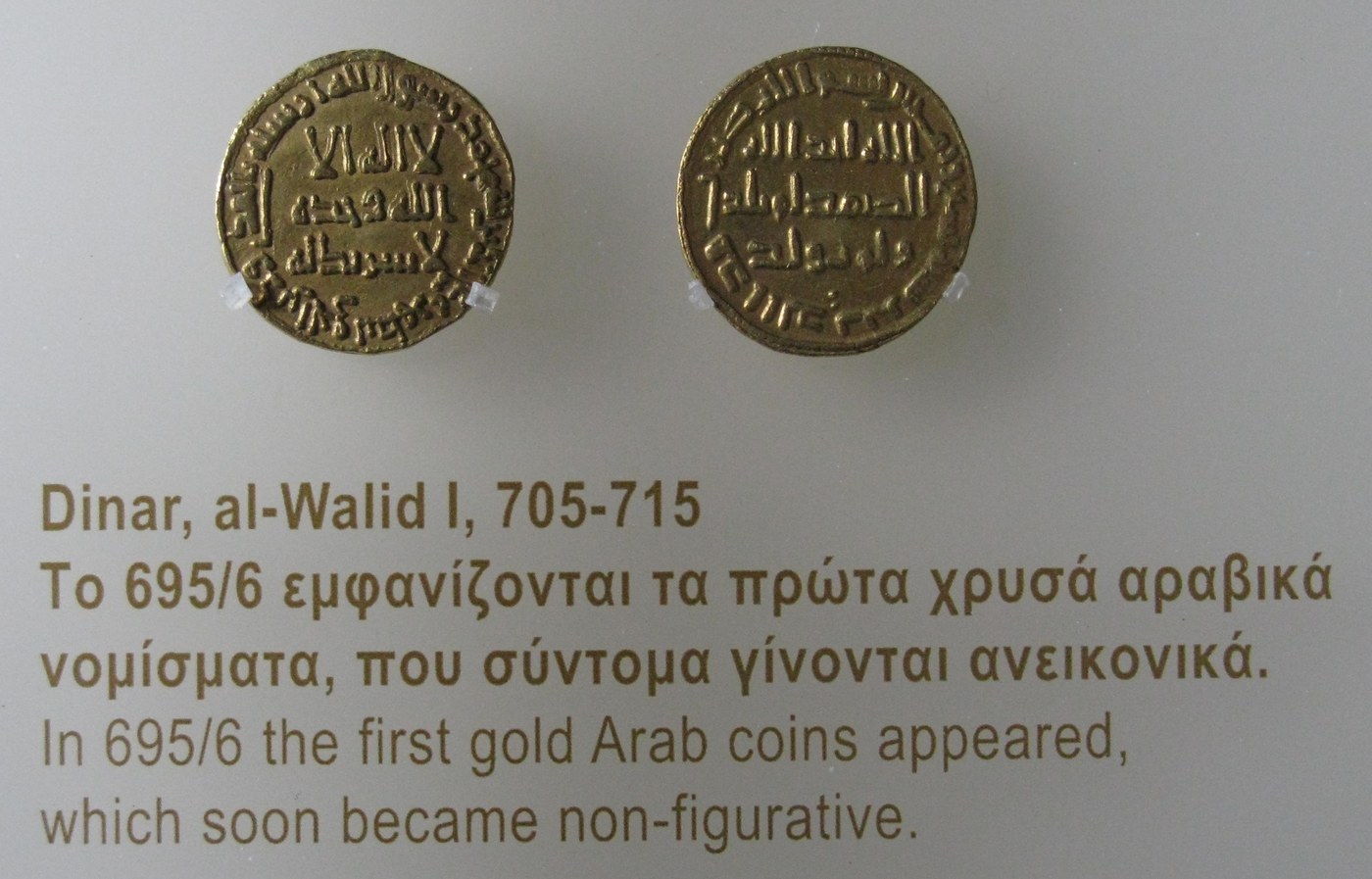
Gold Dinar of Al-Walid I
An early Islamic gold dinar struck under the Umayyad caliph al-Walid I (705-715 CE), bearing only Arabic Kufic inscriptions and no images on either face.
- Country
- Islamic Caliphate (Umayyad)
- Denomination
- Dinar
- Metal
- Gold
Got a coin like this?
Identify any coin from a photo, free.
Overview
The Gold Dinar of al-Walid I is a purely epigraphic Islamic gold coin issued during the reign of the Umayyad caliph al-Walid ibn Abd al-Malik (ruled 705-715 CE / 86-96 AH). Following the coinage reform introduced by his father Abd al-Malik in the 690s, this dinar carries no portrait or figural image at all: both faces are filled entirely with Arabic religious inscriptions in the angular Kufic script, arranged in a central field and a surrounding circular margin, framed by decorative beaded and linear borders as seen on the coin photographed here.
The obverse and reverse each present Islamic profession-of-faith and Qur'anic legends rather than the name or likeness of the ruler. This aniconic design was a deliberate break from the Byzantine and Sasanian coin traditions that had preceded it, and it established the template that Islamic gold coinage would follow for centuries.
Struck to a controlled weight of roughly 4.25 grams of high-purity gold, the dinar was the principal high-value denomination of the Umayyad monetary system and one of the most important gold coins of the early medieval world.
History & Background
Al-Walid I presided over one of the high points of Umayyad power, a period of major expansion and monumental building that included the Great Mosque of Damascus. His coinage continued the reformed, image-free gold standard that his father Abd al-Malik had established around 77 AH (696-697 CE), replacing earlier experimental issues that had still borne human figures.
The reform fixed both the design and the weight of the dinar. By removing all imagery and relying solely on Arabic religious texts, the Umayyad state asserted a distinctly Islamic identity for its money and separated it from the Christian iconography of Byzantine solidi that had circulated in the region. Dinars of al-Walid's reign are typically dated by the Hijri year spelled out in the reverse margin, allowing individual years within the 86-96 AH span to be identified.
These dinars circulated widely across the caliphate and beyond, and their reliable gold content made them a trusted trade coin. They survive today in reasonable numbers and are prized as tangible artifacts of the formative period of Islamic civilization and of one of history's most influential coin reforms.
How to Identify
The defining feature is the complete absence of imagery: there are no portraits, animals or figures anywhere on the coin. Instead, each face carries Arabic Kufic inscriptions in a central field encircled by a marginal legend, with tidy dotted and linear border rings, exactly as on the example shown.
The central obverse field typically bears the Islamic declaration of faith ("There is no god but God, He is alone, He has no associate"), while the surrounding margin often carries a Qur'anic mission statement. The reverse central field continues the religious text, and its margin usually contains the phrase naming the coin and giving the place and Hijri year of striking. Reading that reverse marginal date is the key to placing the coin within al-Walid's 86-96 AH reign.
Physically, the genuine dinar is a small, thick gold disc of about 19-20 mm and close to 4.25 grams, struck on a rich yellow, high-fineness planchet. The script is crisp and evenly spaced, and the flan is comparatively neat for a hand-struck coin. Because the type is unsigned by the ruler, attribution rests on the inscriptions and the date rather than on any name or image of al-Walid himself.
Value & Collectibility
Umayyad gold dinars of al-Walid I are collectible and carry clear value both as high-purity gold and as important historical artifacts. As a rough floor, each coin contains roughly 4.25 grams of near-pure gold, so it always holds significant intrinsic bullion worth; numismatic demand normally pushes the market price well above melt.
Condition, sharpness of the Kufic script, centering and the specific Hijri date all affect desirability. Common dates in circulated grades are the most affordable, while sharply struck, well-centered examples and scarcer years within the reign command higher prices. Full legibility of the inscriptions and margins is especially prized by collectors of early Islamic coinage.
Exact figures vary widely with the market for ancient gold and with each coin's individual quality and provenance, so values should be treated as general context rather than fixed quotes. Because early Islamic gold is actively forged, professional authentication and documented provenance materially support value.
Frequently asked questions
Why doesn't this coin have a picture of the caliph?
The reformed Umayyad coinage was deliberately aniconic. Instead of a ruler's portrait, the dinar carries only Arabic religious inscriptions, expressing an Islamic identity distinct from the Byzantine and Sasanian coins that came before it.
How do I know it belongs to al-Walid I specifically?
Because the type carries no ruler's name, attribution comes from the Hijri year spelled out in the reverse margin. Dates falling within 86-96 AH (705-715 CE) correspond to al-Walid I's reign.
Is it really solid gold?
Yes. The Umayyad dinar was struck in high-purity gold to a controlled standard of about 4.25 grams, which is why it was trusted as a trade coin across the medieval world.
What do the inscriptions say?
They are Islamic religious texts in Kufic Arabic, centered on the profession of faith ("There is no god but God, He is alone") together with Qur'anic phrases, plus the mint-and-date formula on the reverse margin.
Are these dinars rare?
They survive in reasonable numbers and are regularly available to collectors, though sharply struck, well-centered coins and scarcer dates within the reign are harder to find and more valuable.
Gold Dinar of Al-Walid I guides
In-depth guides for identifying, valuing, and collecting Gold Dinar of Al-Walid I.
Other coins you may enjoy
Gold Dinar of Jaqmaq
1438-1453 CE
Ilkhanid Dirham
13th–14th century (Ilkhanate, c. 1256–1335 CE)
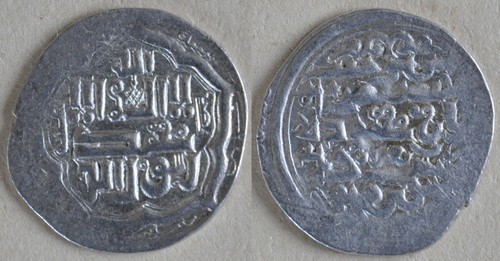
Ilkhanid Dirham of Ghazan
14th century (c. 1295-1304 CE)
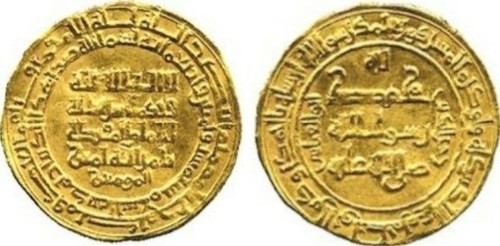
Gold Dinar of al-Muqtadi
c. 467-475 AH (1074-1082 CE)
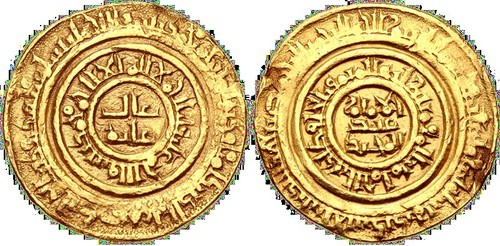
Gold Dinar of al-Hafiz li-Din Allah
AH 544 (AD 1149–1150)
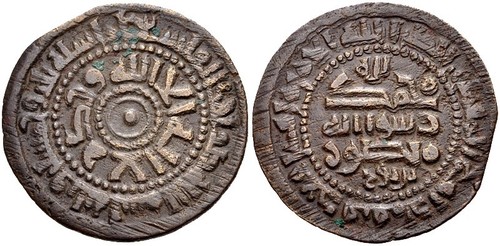
Samanid Dirham
9th–10th century CE (roughly AH 3rd–4th century)
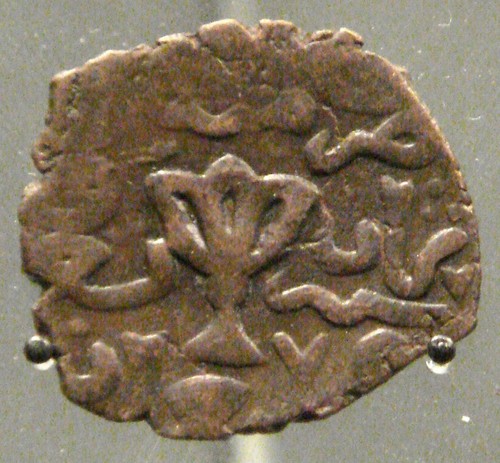
Copper Fals of Barquq
1382–1389 CE (first reign of Barquq)
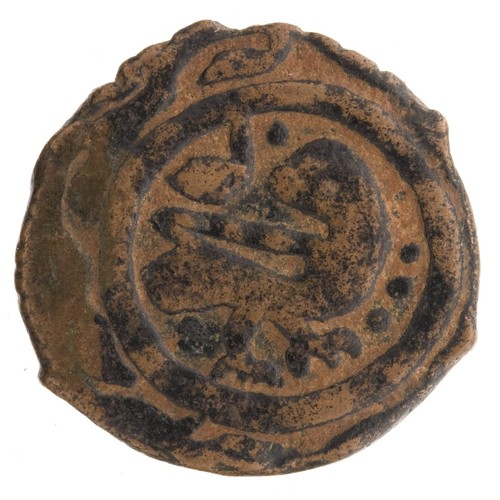
Copper Fals of as-Salih Salih
Mid-14th century CE (reign of as-Salih Salih, AH 752–755 / 1351–1354 CE)
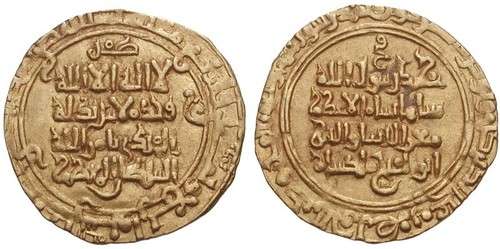
Gold Dinar of Malik Shah I
AH 465–485 (1072–1092 CE)
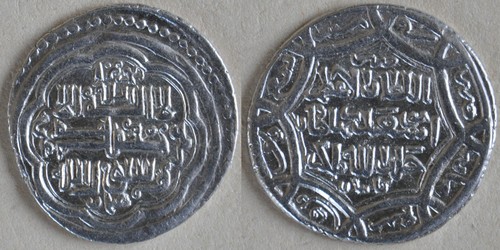
Ilkhanid Dirham of Abu Said
c. 1316-1335 CE (AH 716-736)
Silver Dirham of Salm ibn Ziyad
c. 682-683 CE
Silver Dirham (LACMA M.2002.1.437)
8th century CE (roughly AH 80s–190s)