
How to Identify the Gold Dinar of Al-Walid I
A collector's guide to the reformed Umayyad gold dinar: recognizing its all-Arabic aniconic design, reading its date, and screening for forgeries.
Read the full Gold Dinar of Al-Walid I encyclopedia entry →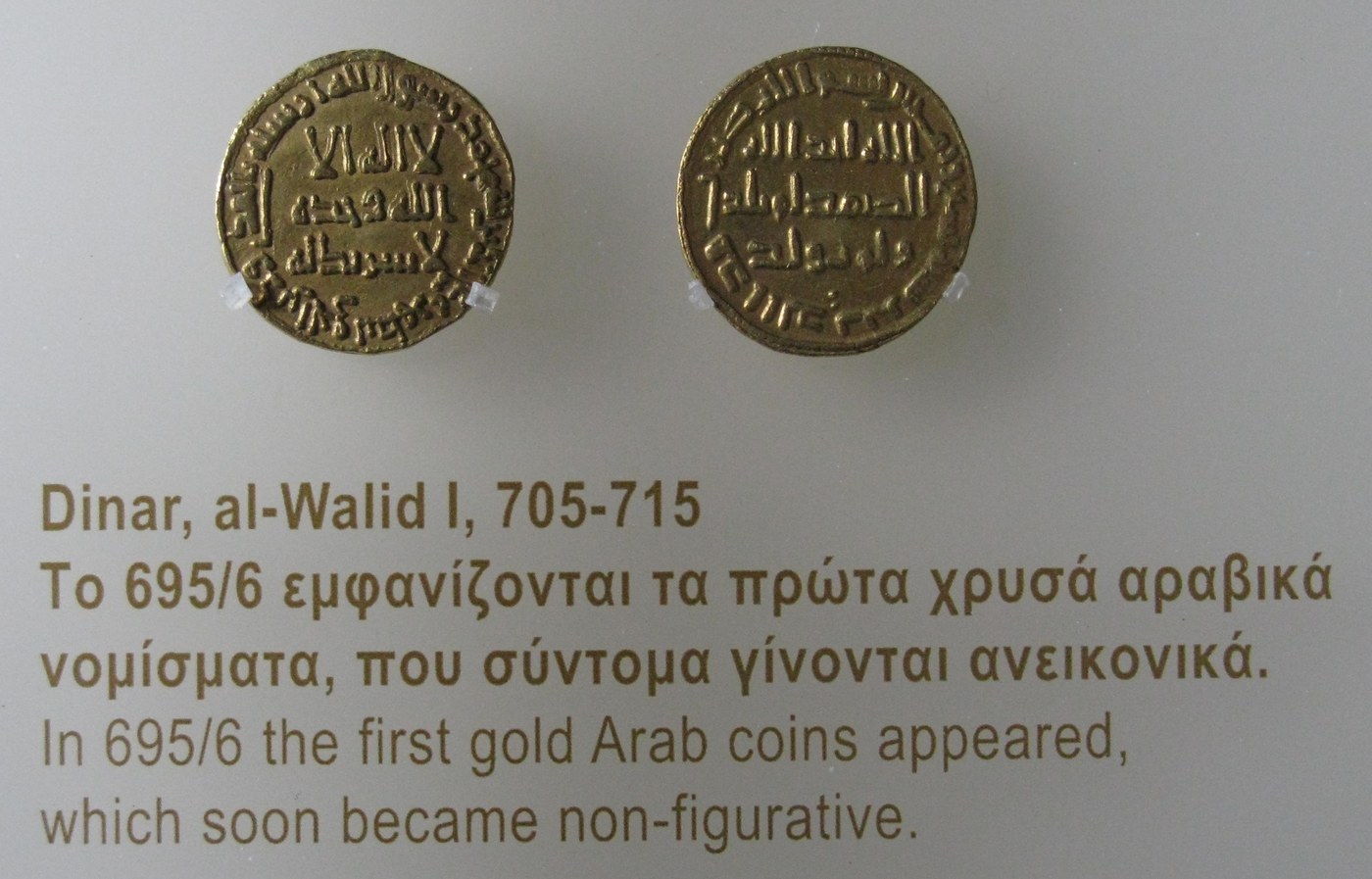
Start by confirming that the coin is entirely inscriptional. A genuine reformed Umayyad dinar of this period shows no portrait, animal or figure of any kind; both faces are filled with Arabic Kufic lettering set in a central field and a circular marginal band, framed by dotted and linear border rings. If the coin bears any human figure, it is not this reformed type and may be an earlier transitional issue or an unrelated coin.
Read the layout of the text. On the obverse, the central field carries the short profession of faith and the margin a longer religious legend; on the reverse, the central field continues the creed while the outer margin gives the coin-and-date formula. The single most useful diagnostic is the Hijri year spelled out in words in the reverse margin: al-Walid I's dinars fall within 86-96 AH (705-715 CE). Because the ruler is never named, this date is how the coin is tied to his reign, so learning to locate and read that marginal year is essential.
Check the metal and dimensions. The dinar should be a thick, rich-yellow gold disc of roughly 19-20 mm and close to 4.25 grams. High, consistent gold color and correct weight are important: underweight, pale, or suspiciously light pieces are red flags. The strike is typically crisp and the flan comparatively neat, with even, well-formed Kufic script rather than crude or blundered lettering.
Be alert to look-alikes and imitations. Dinars of al-Walid I closely resemble those of his father Abd al-Malik and his successors, since all share the same reformed design; only the date and fine points of the legends separate the reigns. Contemporary and later imitations exist, and modern gold and base-metal forgeries of early Islamic dinars are common. Watch for cast surfaces, soft or bubbled detail, seams, incorrect weight, and script that does not match published examples.
Given the value and the prevalence of fakes, treat authentication seriously. Weigh and measure the coin, examine the script and borders under magnification, and compare the legends and date against a standard reference or specialist for Umayyad coinage. For higher-value examples, third-party authentication and documented provenance are strongly advisable before purchase.
Frequently asked questions
How can I tell an al-Walid I dinar from one of Abd al-Malik or a later Umayyad caliph?
The design is essentially identical across the reformed series, so rely on the Hijri date in the reverse margin. Years 86-96 AH correspond to al-Walid I; earlier or later dates belong to other rulers.
What size and weight should a genuine dinar be?
Expect a small, thick gold coin about 19-20 mm across weighing close to 4.25 grams in high-purity gold. Significant deviation in weight, diameter or color is a warning sign.
How do I spot a fake?
Look for casting bubbles, seams, soft or mushy Kufic script, wrong weight, and off-color metal. Genuine coins are struck with crisp, well-formed lettering. When in doubt, seek professional authentication for early Islamic gold.
Do I need to read Arabic to identify it?
It helps but is not strictly required. You can recognize the type by its fully aniconic Kufic design and border rings, then match the marginal legends and date against reference images; for attribution and value, a specialist can confirm the reading.