
Coin Encyclopedia
Search and identify coins from around the world — with country, denomination, metal, mint, history, and how to tell them apart.
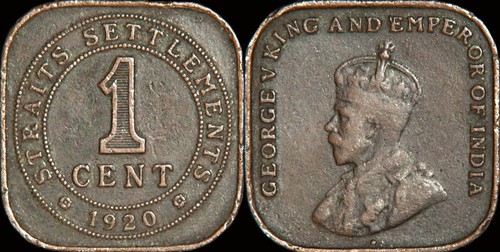
Straits Settlements One Cent
A round bronze one-cent coin of the British Straits Settlements bearing the crowned profile of King George V, dated 1920.
Colonial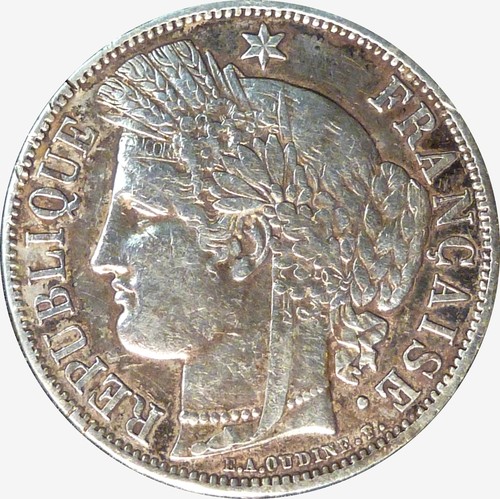
5 Francs Ceres
France's large silver 5 francs bearing the wreathed head of Cérès, goddess of the harvest, with the value framed by laurel on the reverse.
Circulation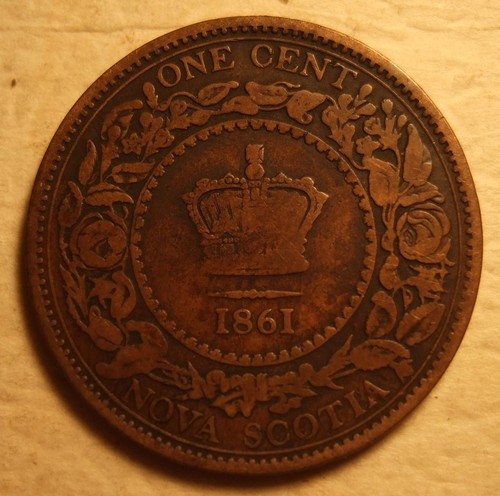
Nova Scotia One Cent
Bronze one-cent coin of the colony of Nova Scotia, with a crowned Queen Victoria obverse and a crown-and-maple-leaves reverse.
Canadian & Provincial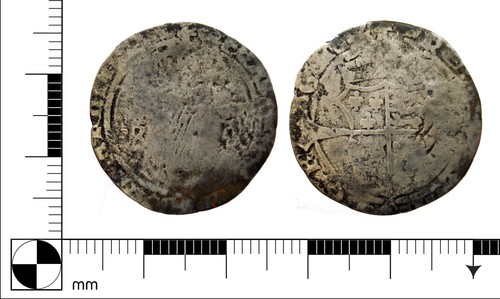
Medieval Coin
A worn hammered silver coin of the medieval era, with faded profile, legends, and a heraldic or emblematic reverse.
Hammered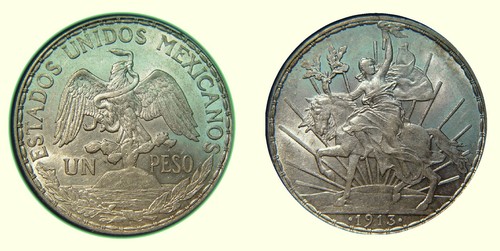
Mexican 1 Peso
Large silver Mexican peso, the famed "Caballito" type, with a winged Victory on horseback and the eagle-and-snake coat of arms.
World Coins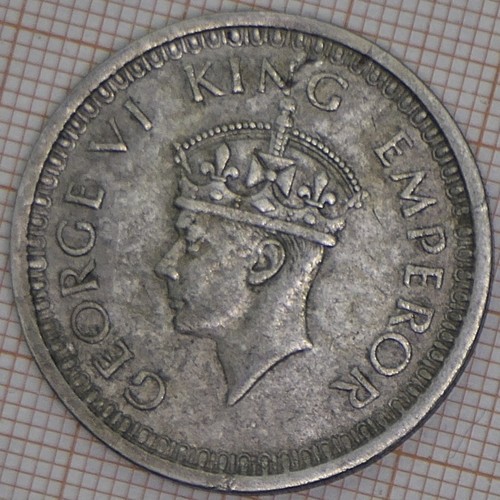
Victoria One Rupee
Silver 1-rupee coin of British India bearing Queen Victoria's crowned bust, struck from 1862 to 1901 under Crown rule.
British India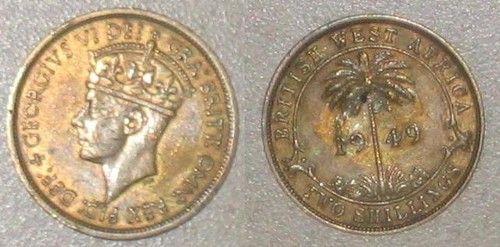
British West Africa 2 Shillings
A colonial copper-nickel two-shilling piece of British West Africa, showing King George VI and a palm-tree reverse.
World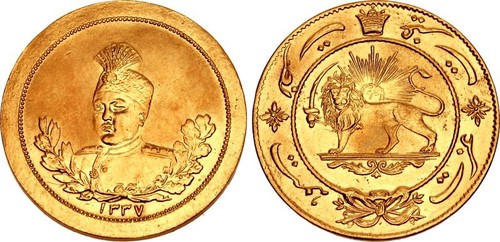
Qajar 5 Tomans Commemorative
A late Qajar gold 5 Tomans of Persia showing Ahmad Shah Qajar in a laurel wreath and the national Lion emblem, dated 1299.
Persia / Iran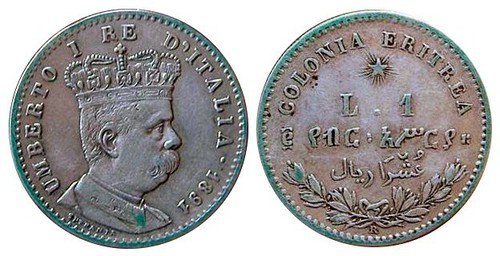
Eritrea 1 Lira
Silver 1 lira struck for Italy's colony of Eritrea, dated 1918, with a crowned heraldic emblem and the legend COLONIA ERITREA L.1.
World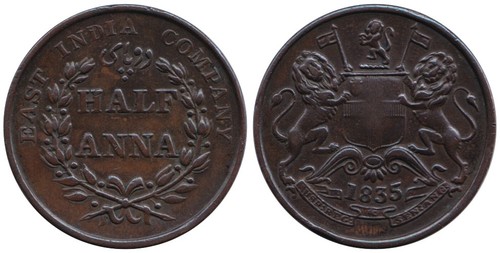
East India Company Half Anna
Large copper Half Anna of the East India Company, dated 1835, with laurel-wreath legend and the Company's heraldic lion-and-shield arms.
British India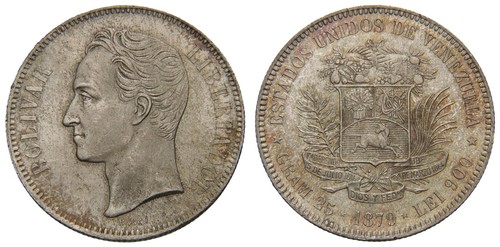
Venezuelan Silver Coin (1879)
An 1879 Venezuelan silver coin: the left-facing head of Simón Bolívar on one side and the national coat of arms in a wreath on the other.
Circulation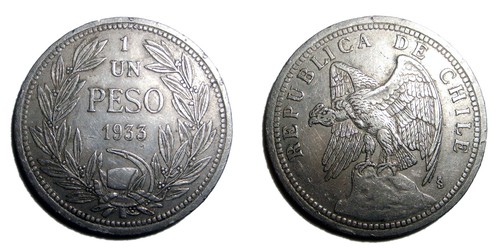
Chilean Peso (1875 Type)
A silver one-peso coin of Chile: the national coat of arms with its lone star and laurel wreaths on one side, and a large bird in flight on the other.
Circulation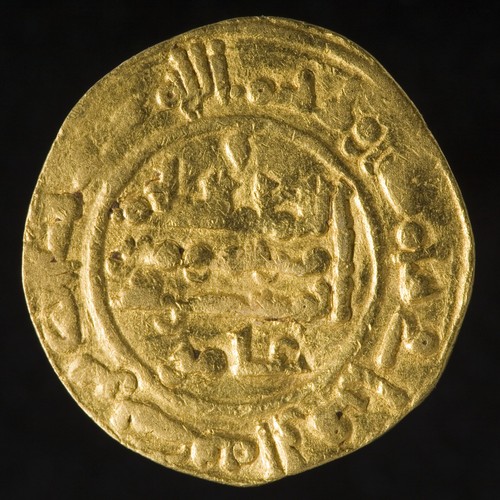
Islamic Gold Dinar (LACMA M.2006.143.8)
A medieval Islamic gold dinar in the LACMA collection, struck with purely calligraphic Arabic legends and a decorative border — the classic imageless coin of the caliphates.
Islamic (Medieval)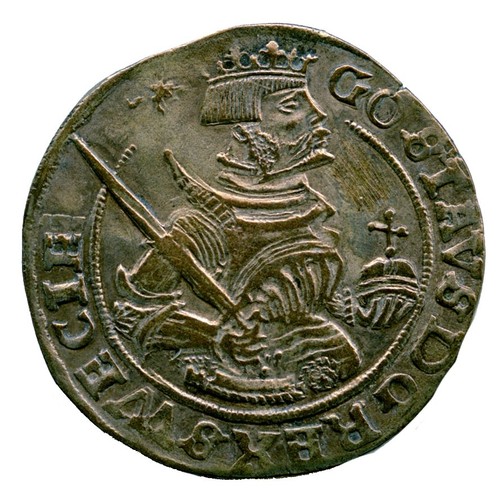
Gustav I Silver Coin
Early-Renaissance Swedish silver of Gustav I Vasa (r. 1523–1560), pairing a crowned armored royal bust with a crowned heraldic lion.
Medieval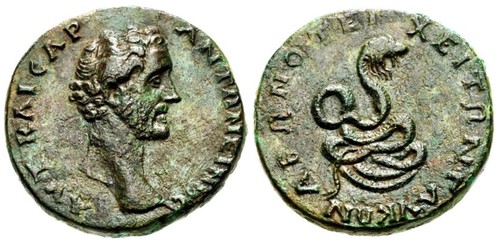
Glycon Bronze Coin
Roman provincial bronze of the 2nd century AD showing the snake-god Glycon: a bearded serpent head on one side and a coiled snake on the other.
Ancient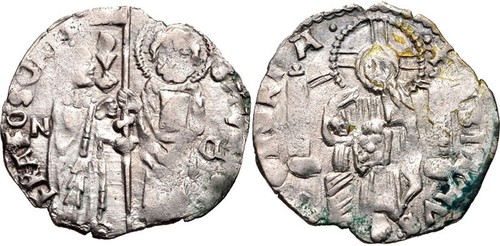
Venetian Grosso (Matapan)
High-purity silver Grosso of medieval Venice: the Doge kneeling before St. Mark on the obverse, an enthroned Christ on the reverse.
Medieval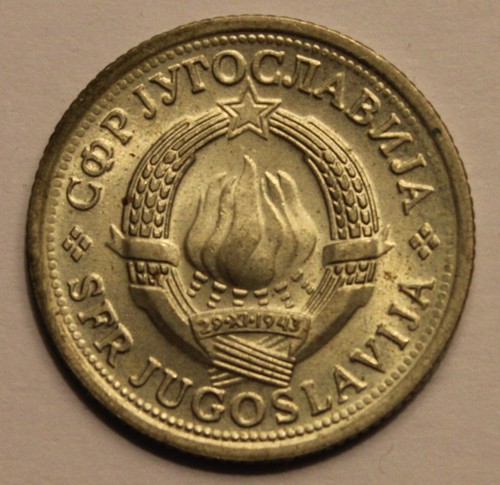
1 Dinar
A base-metal 1 dinar of Socialist Yugoslavia, dated 1978, with a star and SFRJ legend on one side and the socialist state emblem of flaming torches on the other.
Modern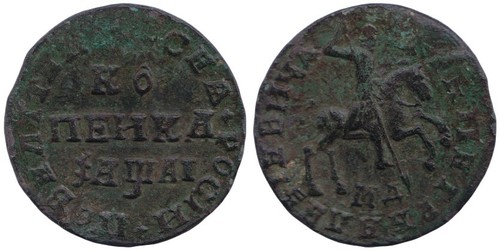
Kopek (Peter I)
An early copper kopek of Peter the Great, showing a profile of Peter I and Cyrillic legends on one side and the Russian double-headed eagle on the other.
Early Modern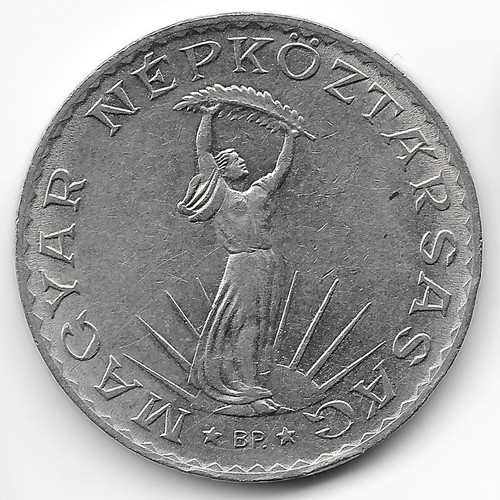
10 Forint
A Hungarian 10 Forint dated 1979, showing a standing allegorical female figure of Liberty holding a palm frond in silver.
Modern
Hryvnia
Medieval silver money unit of Kievan Rus, circulating as cast silver ingots and weight-money rather than as a struck, portrait-bearing coin.
Medieval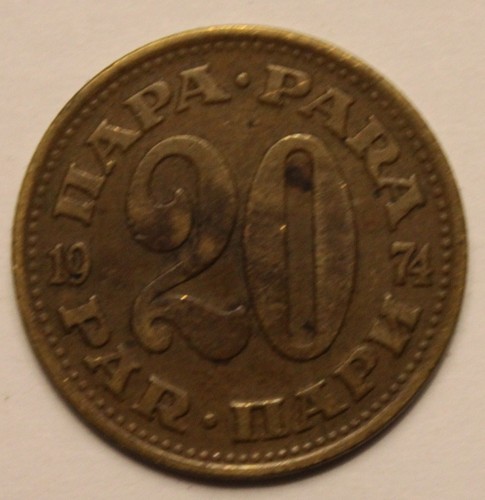
20 Para
A small base-metal coin of socialist Yugoslavia, showing the value 20 with the date 1974 on one side and the six-flame Yugoslav state emblem on the other.
Modern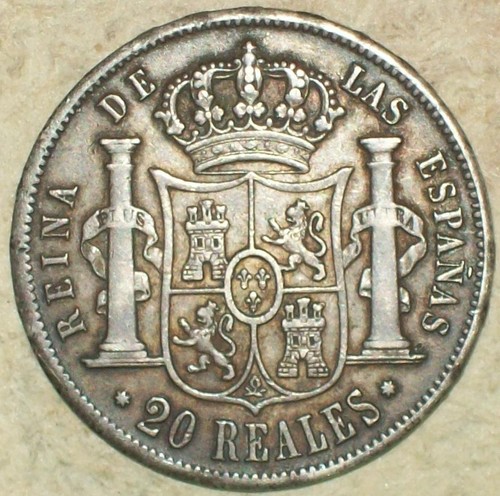
20 Reales (Isabel II)
Crown-sized Spanish silver 20 Reales of Queen Isabel II, with her crowned right-facing profile and a crowned pillared shield, dated 1854.
Modern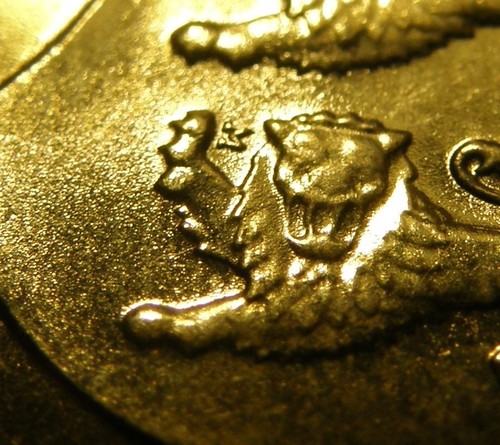
5 Krooni
A silver 5 krooni of the Republic of Estonia dated 1993, carrying the national coat of arms with its three heraldic lions.
Modern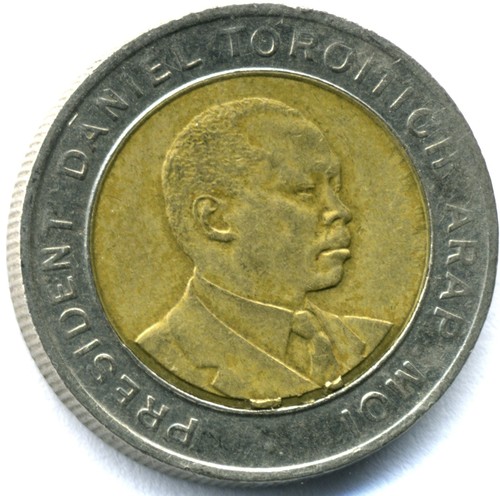
Kenya 5 Shillings
A modern bimetallic Kenyan coin pairing a President's portrait with the national coat of arms and the bold value 5 shillings.
World