
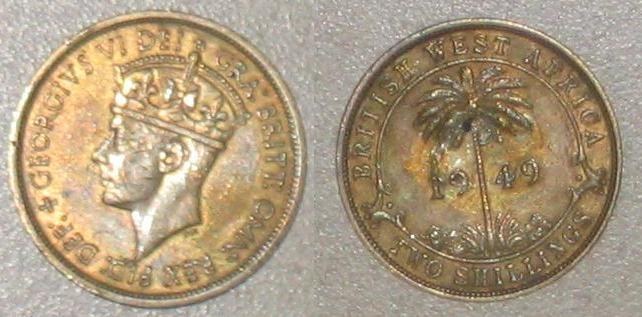
British West Africa 2 Shillings
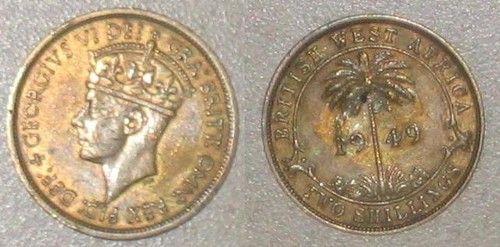
A colonial copper-nickel two-shilling piece of British West Africa, showing King George VI and a palm-tree reverse.
- Country
- British West Africa
- Denomination
- 2 Shillings
- Metal
- Copper-Nickel
Got a coin like this?
Identify any coin from a photo, free.
Overview
The British West Africa 2 shillings, also called a florin, is a colonial-era coin issued for the British possessions along the West African coast, including the Gold Coast, Nigeria, Sierra Leone, and the Gambia. The type shown here dates to the reign of King George VI and pairs his crowned portrait with a distinctive palm-tree reverse.
Struck in copper-nickel, the coin is a larger silver-colored piece meant for everyday commerce across the region. Its design belongs to a shared West African coinage system administered by the West African Currency Board rather than to any single country, so the same coin circulated across multiple colonies.
With its clear royal portrait on one side and a palm tree, denomination, and colonial legends on the other, the George VI 2 shillings is an accessible and recognizable example of mid-20th-century British colonial money.
History & Background
From 1912 onward, coinage for the British West African colonies was managed by the West African Currency Board, which issued a unified series used across the Gold Coast, Nigeria, Sierra Leone, and the Gambia. Denominations ran from tiny holed minor coins up through the shilling and two-shilling pieces.
The two-shilling denomination under George VI was struck after his accession in 1936 and continued through the end of his reign in 1952. Coins of this period carry the king's crowned portrait and Latin-derived royal titles in the surrounding legend, following standard British colonial conventions of the era.
As precious-metal coinage was phased out during and after the Second World War, the region's larger denominations were produced in copper-nickel rather than silver. The West African coinage continued into the reign of Queen Elizabeth II before independence movements led the individual nations to adopt their own national currencies from the late 1950s and 1960s onward.
How to Identify
The obverse shows the bare or crowned head of King George VI facing left, encircled by a royal legend giving his name and titles in abbreviated Latin form. The reverse carries a palm tree as the central motif, with the denomination and "BRITISH WEST AFRICA" in the surrounding inscription and the date below or beside the design.
This is a substantial silver-colored coin struck in copper-nickel, larger than the shilling and clearly showing "TWO SHILLINGS" or the florin value in its legend. Copper-nickel examples have a bright to gray metallic tone and, unlike earlier tickey-style minors, are not center-holed.
To confirm the type, read the date in the George VI range of 1936 to 1952 and check that the reverse names British West Africa rather than a single colony. Small mint marks may appear near the design to indicate the striking mint, and these, together with the date, distinguish individual issues.
Value & Collectibility
The George VI British West Africa 2 shillings is a collectible but generally affordable world coin. Well-worn circulated examples typically trade in the low tens of dollars, while sharp, high-grade or lightly circulated pieces command more, especially for scarcer dates or mint combinations.
Condition is the main driver of value: strong detail in the king's portrait and the palm tree, clean surfaces, and original luster all add to desirability. Because copper-nickel does not carry bullion value the way silver does, price rests on grade, date rarity, and collector demand rather than metal content.
As with any world coin, figures vary with the market and with the specific date and mint, so treat any single number as a rough guide. A specialist dealer or recent auction results give the best sense of current pricing for a particular example.
Frequently asked questions
Is the British West Africa 2 shillings made of silver?
The George VI type shown here is struck in copper-nickel, not silver. It has a silver-colored appearance but carries no precious-metal bullion value.
Which countries used this coin?
It circulated across the British West African colonies administered by the West African Currency Board, including the Gold Coast, Nigeria, Sierra Leone, and the Gambia, rather than a single nation.
What is the palm tree on the reverse?
A palm tree is the standard colonial reverse motif for this West African series, shown together with the denomination and the "British West Africa" legend.
What years was the George VI type made?
This portrait type was issued during the reign of King George VI, from his accession in 1936 through 1952. The exact date appears on the reverse.
Is a 2 shillings the same as a florin?
Yes. In the British system two shillings equalled one florin, so the terms describe the same denomination.
British West Africa 2 Shillings guides
In-depth guides for identifying, valuing, and collecting British West Africa 2 Shillings.
Other coins you may enjoy
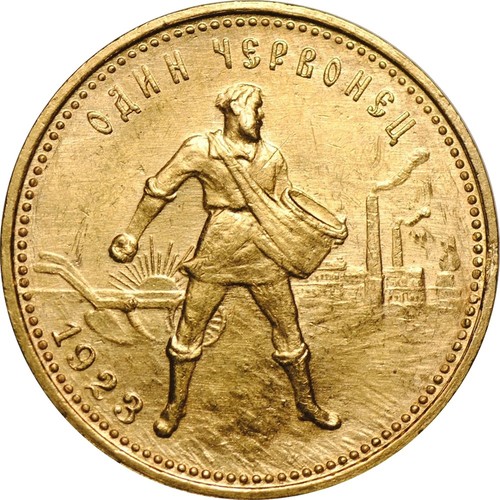
Gold Chervonets
1923
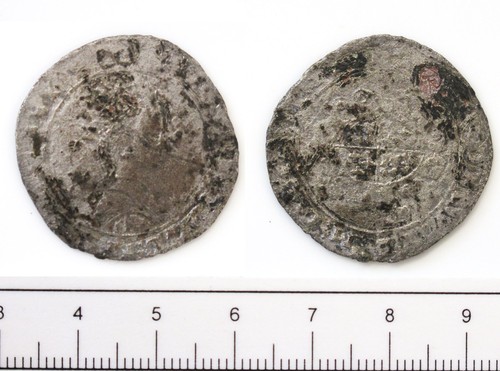
Shilling of Edward VI
1547–1553 (reign of Edward VI)
French Silver Franc
c. 1871–1920 (example dated 1899)
Ghana 20 Pesewas
1967
200 CFA Francs
2003–present
Tunisia 100 Millimes
1983–2005 (this brass type)
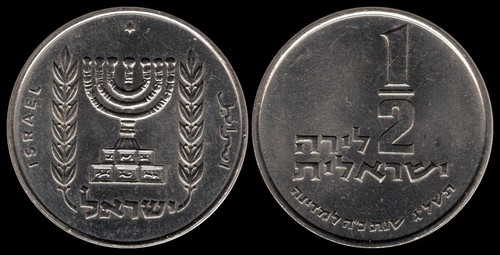
Israel Half Lira (25th Anniversary)
1973 (5733)
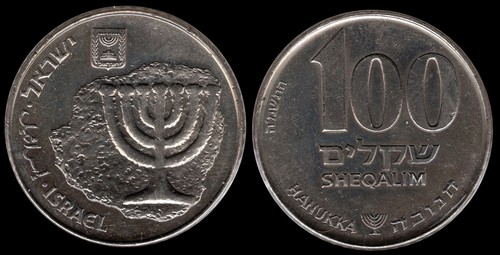
Israel 100 Sheqalim Hanukka Commemorative
1985
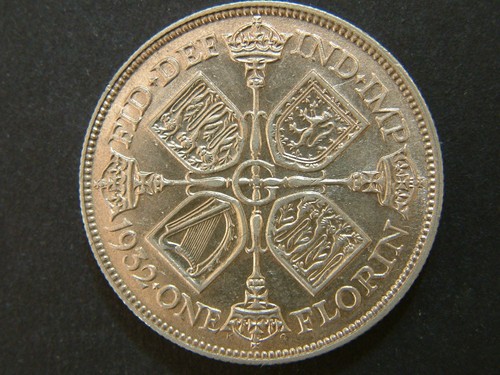
British Florin
Victorian issues c. 1849–1901 (example dated 1890)
Swiss 5 Francs
1888–1916 (this design)
North Yemen 1 Rial
1963 (AH 1382)
Ottoman Silver Coin
Ottoman era (c. 14th–early 20th century)