
Swiss 5 Francs
Large .900 silver Swiss crown of 1888–1916, showing a Helvetia head on one face and the Swiss cross shield within a wreath on the other.
- Country
- Switzerland
- Denomination
- 5 Francs
- Metal
- Silver (.900 fine)
Got a coin like this?
Identify any coin from a photo, free.
Overview
The Swiss 5 Francs is a large silver crown-sized coin struck by the Swiss Confederation. This 1901 example belongs to the long-running design used from 1888 to 1916, which pairs a bust of Helvetia (the female personification of Switzerland) on one face with the Swiss cross shield framed by a wreath on the other. The piece photographed shows the shield-and-wreath side clearly, with the surrounding laurel wreath partially visible.
At roughly 37 mm across and about 25 grams of .900 fine silver, it is a substantial coin that circulated as everyday high-value money and is now popular with world-coin and silver collectors. The Latin legends CONFOEDERATIO HELVETICA and LIBERTAS reflect Switzerland's multilingual tradition of using Latin as a neutral national language on coinage.
Because the same basic type ran for nearly three decades, collectors typically assemble the series by date. Common dates are affordable, while a few low-mintage years and top-grade survivors command strong premiums.
History & Background
Switzerland adopted the franc as its national currency in 1850, aligning with the Latin Monetary Union standard that fixed the 5-franc piece at 25 grams of .900 silver. Early Swiss 5-franc coins of the 1850s–80s used a seated Helvetia design; in 1888 the Confederation introduced the Helvetia (Libertas) head type seen on this 1901 coin.
The design was engraved by Christian Bühler and remained in production, with interruptions, from 1888 through 1916. During these years the coin served as a workhorse of large-denomination commerce alongside gold and smaller silver pieces. Its high silver content tied its value directly to bullion, a hallmark of the Latin Monetary Union era.
Rising silver prices and the disruptions of the First World War effectively ended the union standard. Switzerland later revived the 5-franc denomination with new designs (notably the Alpine herdsman type from 1922), and eventually shifted the circulating 5-franc coin to base metal, leaving the earlier .900 silver crowns as collector items.
How to Identify
Look for a large silver coin about 37 mm in diameter and near 25 grams in weight. One face carries the Swiss cross shield centered within a laurel/oak wreath, the denomination "5 Fr.", and the legend CONFOEDERATIO HELVETICA; the opposite face shows a left-facing female head (Helvetia) with the word LIBERTAS and a border of stars. The date, here 1901, appears on the shield side.
The edge is not plain: genuine pieces bear the incuse motto DOMINUS PROVIDEBIT ("The Lord will provide") with stars. Metal is .900 silver, so the coin has a bright white tone and a solid, ringing heft rather than the duller feel of base-metal issues.
Date placement, wear, and the exact wreath and star arrangement distinguish this 1888–1916 head type from the earlier seated-Helvetia 5-franc coins and from the later 20th-century herdsman design.
Value & Collectibility
Value is anchored to the coin's silver content: each piece contains roughly 0.72 troy ounce of pure silver, so even well-worn common dates trade at a meaningful premium tied to the bullion price. Typical circulated examples of ordinary dates change hands in the range of a large silver crown's melt-plus-modest-premium.
Scarcer dates within the 1888–1916 run, and coins in high (uncirculated) grade with original luster, sell for multiples of common-date prices. Condition, eye appeal, and date are the main drivers.
Because values shift with the silver market and with grade, treat any figure as a range rather than a fixed price, and check recent auction and dealer results for the specific date and grade before buying or selling.
Frequently asked questions
Is the 1901 Swiss 5 Francs made of real silver?
Yes. Coins of this 1888–1916 type were struck in .900 fine silver, about 25 grams total, giving roughly 0.72 troy ounce of pure silver per coin.
Who is the woman on the coin?
She is Helvetia, the traditional female personification of Switzerland. The head type carries the Latin word LIBERTAS ("Liberty") near her portrait.
What do the Latin words mean?
CONFOEDERATIO HELVETICA means "Swiss Confederation," LIBERTAS means "Liberty," and the edge motto DOMINUS PROVIDEBIT means "The Lord will provide." Latin is used as a neutral language among Switzerland's language regions.
How big is the coin?
It is a crown-sized piece, about 37 mm in diameter and close to 25 grams in weight, noticeably larger and heavier than everyday small change.
Is a 1901 date rare?
The 1901 date is one of the more available years of the series. Some other dates in the 1888–1916 run are scarcer and command higher premiums, especially in high grade.
Swiss 5 Francs guides
In-depth guides for identifying, valuing, and collecting Swiss 5 Francs.
Other coins you may enjoy
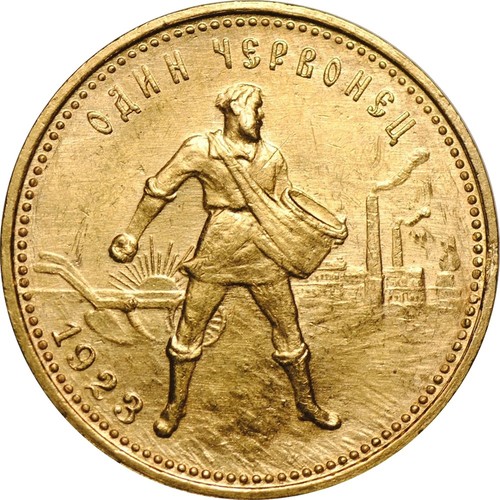
Gold Chervonets
1923
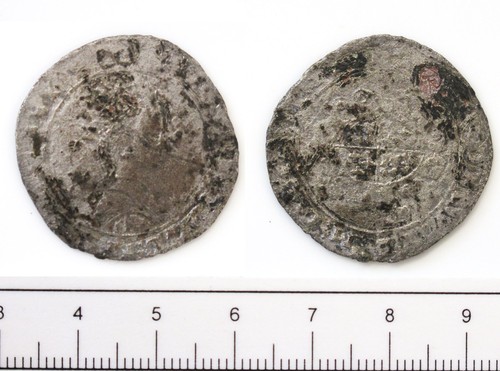
Shilling of Edward VI
1547–1553 (reign of Edward VI)
French Silver Franc
c. 1871–1920 (example dated 1899)
Ghana 20 Pesewas
1967
200 CFA Francs
2003–present
Tunisia 100 Millimes
1983–2005 (this brass type)
Israel Half Lira (25th Anniversary)
1973 (5733)
Israel 100 Sheqalim Hanukka Commemorative
1985
British West Africa 2 Shillings
1936–1952 (George VI type)
British Florin
Victorian issues c. 1849–1901 (example dated 1890)
North Yemen 1 Rial
1963 (AH 1382)
Ottoman Silver Coin
Ottoman era (c. 14th–early 20th century)