
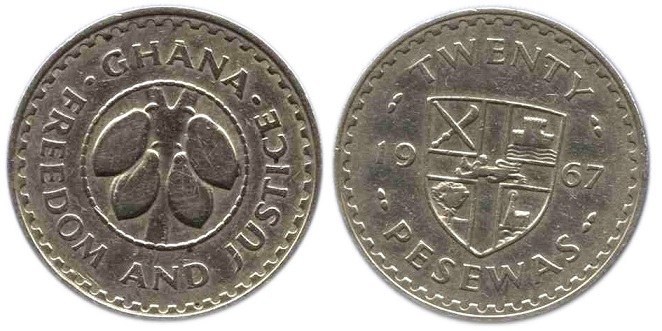
Ghana 20 Pesewas
A one-year 1967 Ghanaian coin bearing a national eagle and the motto FREEDOM AND JUSTICE, with the country's coat-of-arms shield on the reverse.
- Country
- Ghana
- Denomination
- 20 Pesewas
- Metal
- Nickel-Silver
Got a coin like this?
Identify any coin from a photo, free.
Overview
The Ghana 20 pesewas is a base-metal circulation coin dated 1967, part of the decimal pesewa-and-cedi coinage introduced after Ghana moved away from its earlier portrait coins. It is a pale, silvery piece struck in a nickel-type alloy, with no precious-metal content.
One face carries a national eagle together with the inscription FREEDOM AND JUSTICE, Ghana's official motto. The other shows the shield from the Ghanaian coat of arms, the four-digit date 1967, and the value spelled out as TWENTY PESEWAS. The design is emblem-based rather than a ruler's portrait, reflecting the republican coinage adopted in this period.
As a mid-size circulating denomination of its day, the 20 pesewas was produced for everyday commerce. The photographed example is dated 1967 and is typical of the type.
History & Background
Ghana adopted a decimal currency of the cedi divided into 100 pesewas in the mid-1960s, replacing the earlier pound-based system. Following the political changes of 1966, a new coinage was issued in 1967 that set aside the previous portrait design in favour of national emblems: the country's eagle and its coat of arms, paired with the motto FREEDOM AND JUSTICE.
The 20 pesewas belongs to this 1967 emblematic series. Its imagery deliberately emphasises state symbols rather than an individual, in keeping with the republican character of the coinage of that moment. The single 1967 date on the coin reflects its short production for this design.
Ghana's later monetary reforms brought further redenominations and new coin designs in subsequent decades, so the 1967 pesewa coins represent a distinct, self-contained chapter of the country's modern coinage rather than a long-running type.
How to Identify
Identify the coin by its inscriptions first. The eagle side reads FREEDOM AND JUSTICE, Ghana's national motto, while the opposite side shows the coat-of-arms shield with the value written out as TWENTY PESEWAS and the date 1967. Seeing this exact pairing of motto, eagle, shield, and denomination confirms the type.
The coin is round and struck in a pale, silvery base-metal alloy of the nickel family, so it shows no gold or copper colour and contains no precious metal. It is a mid-size circulation piece, larger than the small pesewa fractions but modest overall. There is no ruler's portrait; the identity rests on the national emblems and lettering.
Because the design is dated 1967, the year is fixed rather than variable, unlike coins that change date year to year. Read the full legends and confirm the spelled-out TWENTY PESEWAS to separate it from other pesewa values in the same series.
Value & Collectibility
As a base-metal circulation coin from a single 1967 issue, the Ghana 20 pesewas carries only a modest collector value. In worn, circulated condition it is an inexpensive world coin, typically worth a small sum to collectors of African or Commonwealth coinage rather than commanding a premium.
Better-preserved examples make the difference. Coins with sharp detail, original surfaces, and little wear, and especially uncirculated pieces, can bring a higher figure than heavily circulated ones, though this remains an affordable type overall. Cleaning, corrosion, and rim damage reduce value.
Because there is no precious-metal content, worth is driven entirely by collector demand and condition rather than melt. Treat any figure as a general guide and grade the coin honestly against comparable examples.
Frequently asked questions
What does FREEDOM AND JUSTICE mean on the coin?
It is Ghana's national motto, inscribed alongside the eagle on the obverse. It identifies the coin as a Ghanaian issue and appears on the country's coat of arms.
Is the Ghana 20 pesewas made of silver?
No. Despite its silvery colour it is struck in a base-metal nickel-type alloy and contains no precious metal, so its value comes from collector demand rather than metal content.
Why is my coin dated only 1967?
This emblematic 20 pesewas design was produced for the 1967 coinage. The single date is normal for the type rather than a sign of anything unusual.
What is the shield on the reverse?
It is the shield from Ghana's coat of arms, shown with the date 1967 and the value TWENTY PESEWAS. It is a national emblem rather than a portrait.
Is the 1967 Ghana 20 pesewas valuable?
In circulated condition it is an inexpensive world coin. Well-preserved or uncirculated examples can bring a modest premium, but it is not a high-value piece.
Ghana 20 Pesewas guides
In-depth guides for identifying, valuing, and collecting Ghana 20 Pesewas.
Other coins you may enjoy
Gold Chervonets
1923
Shilling of Edward VI
1547–1553 (reign of Edward VI)
French Silver Franc
c. 1871–1920 (example dated 1899)
200 CFA Francs
2003–present
Tunisia 100 Millimes
1983–2005 (this brass type)
Israel Half Lira (25th Anniversary)
1973 (5733)
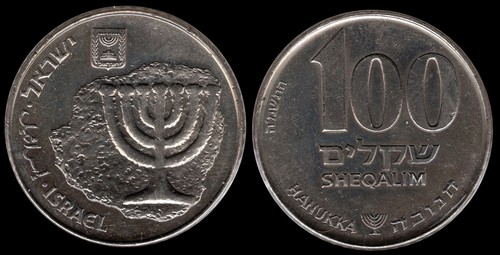
Israel 100 Sheqalim Hanukka Commemorative
1985
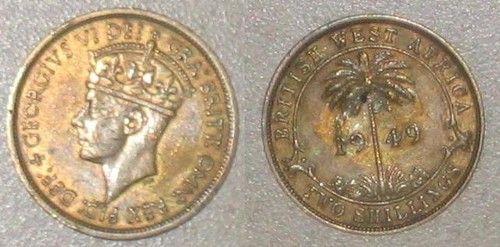
British West Africa 2 Shillings
1936–1952 (George VI type)
British Florin
Victorian issues c. 1849–1901 (example dated 1890)
Swiss 5 Francs
1888–1916 (this design)
North Yemen 1 Rial
1963 (AH 1382)
Ottoman Silver Coin
Ottoman era (c. 14th–early 20th century)