
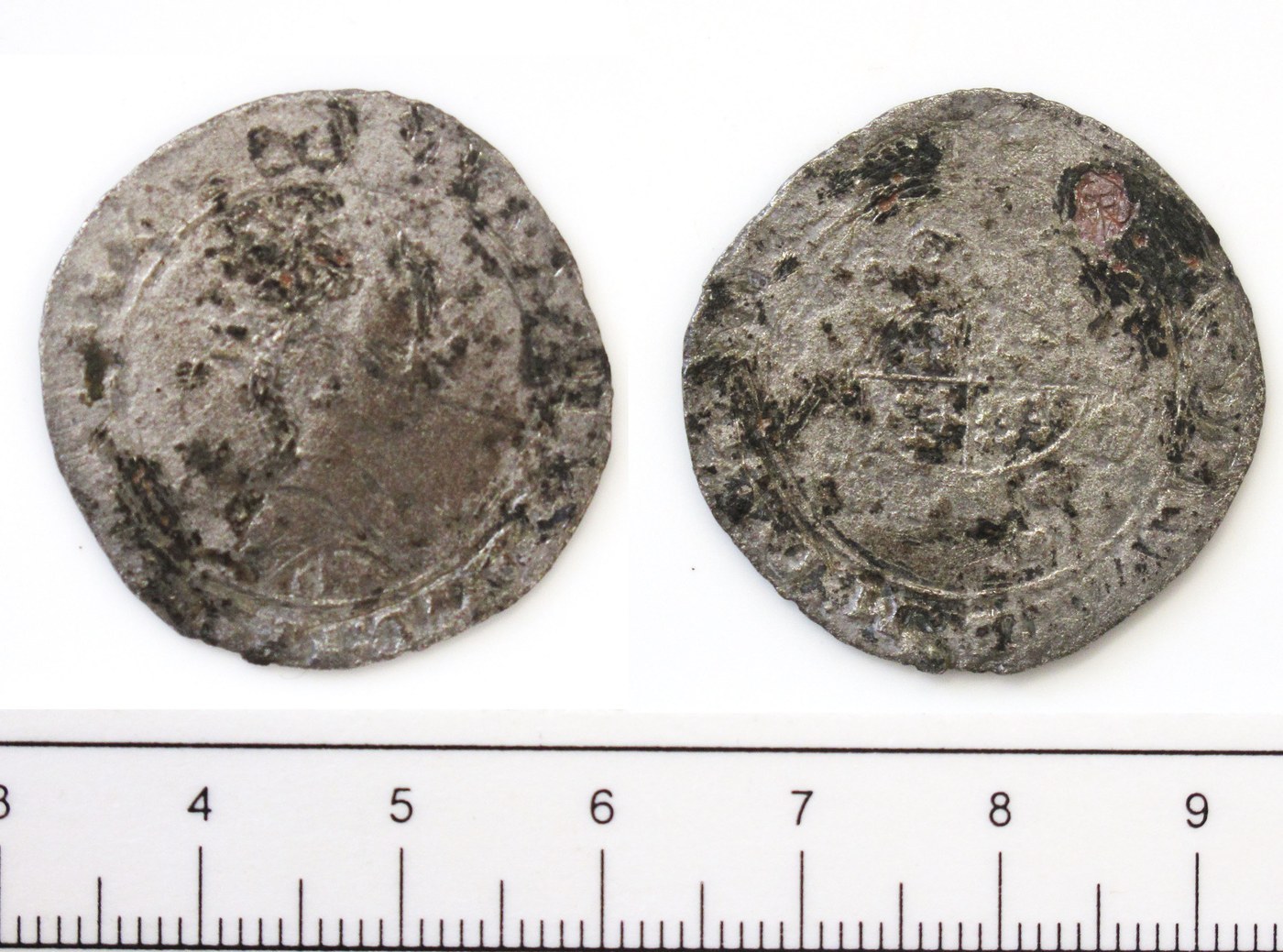
Shilling of Edward VI
A hammered Tudor silver shilling of Edward VI, showing the young king's crowned profile and a reverse cross over the quartered royal-arms shield.
- Country
- United Kingdom
- Denomination
- 1 Shilling
- Metal
- Silver
Got a coin like this?
Identify any coin from a photo, free.
Overview
The shilling of Edward VI is a large hammered silver coin of Tudor England, struck during the short reign of Henry VIII's only son (1547–1553). The example photographed here shows the young king in left-facing profile on the obverse and a reverse dominated by a heraldic shield of the royal arms — quartered with fleurs-de-lis and heraldic lions (leopards) — set over a long cross. As a shilling it was valued at twelve pence.
These are hand-struck (hammered) coins, so each piece is slightly irregular in shape and centering, with the design and Latin legends often running unevenly to the edge. They are among the earliest English shillings and are prized as accessible, genuinely 16th-century Tudor artifacts.
History & Background
Edward VI came to the throne in 1547 as a child, and his coinage was issued in his name while the country was governed by a regency. His reign fell during the tail end of the 'Great Debasement,' a period begun under Henry VIII in which the crown reduced the silver content of the coinage to raise revenue. As a result, Edward VI shillings exist both as heavily debased base-silver pieces and, later in the reign, as restored 'fine' silver issues struck in higher-quality metal.
The shilling itself was a comparatively new denomination in English coinage — the twelve-penny 'testoon' introduced under Henry VIII evolved into the shilling of Edward's period. Struck mainly at the Tower Mint in London (with some issues from other mints), these coins carry Latin legends naming Edward as king and, on the fine issues, a date and a mint mark. They circulated as substantial money in mid-Tudor England before being superseded by the coinage of later monarchs.
How to Identify
Look for a large, thin hammered silver coin, broadly in the range of about 30–33 mm across and roughly 5–6 grams, with an irregular hand-struck outline rather than a perfectly round machine-made edge. The obverse shows the young king's crowned bust in profile (facing left on the pictured coin), encircled by a Latin legend giving his name and titles as EDWARD VI. The lettering style is Gothic/Roman blackletter typical of Tudor hammered coinage.
The reverse carries a shield of the royal arms — quartered fleurs-de-lis (for the French claim) and passant lions (for England) — placed over a long cross that divides the legend. A mint mark (a small symbol at the start of the legend) helps identify the mint and issue period, and fine-issue shillings also show a date and often the value mark XII. Because the coins are hand-struck, expect uneven strike, some flatness, and legends that trail off the flan; this is normal and not itself a sign of a fake.
Value & Collectibility
Edward VI shillings are collectable Tudor coins, and value depends heavily on issue type, condition, and eye appeal rather than on silver weight alone. Heavily worn, debased base-silver examples with weak strike sit at the affordable end, while sharp fine-silver issues with clear portrait and legends command substantial premiums. Rare mint marks, better-preserved portraits, and problem-free surfaces all push prices higher.
Because these are individually hand-struck and roughly 470 years old, no two are identical, and condition grading is central to pricing. For a specific coin, identify the issue (base vs. fine, mint mark, date if present), assess wear and any damage such as bending, cracks, or cleaning, and compare against recent auction results for the matching type rather than relying on a single catalogue value.
Frequently asked questions
Who is shown on the Shilling of Edward VI?
It depicts Edward VI, the young Tudor king who reigned from 1547 to 1553 as the son and successor of Henry VIII. He appears here as a crowned profile bust.
How much was a shilling worth?
A shilling was valued at twelve pence in the pre-decimal English system. Fine-issue examples often show the Roman numeral XII to mark that value.
Why do some Edward VI shillings look poorer quality than others?
His reign spanned the end of the 'Great Debasement.' Earlier base-silver issues used a debased alloy, while later 'fine' issues restored higher-quality silver, so quality and appearance vary by issue.
Why is the coin not perfectly round?
It is a hammered coin, struck by hand between two dies rather than machine-made. Irregular shape, uneven centering, and legends running off the edge are normal for the period.
Shilling of Edward VI guides
In-depth guides for identifying, valuing, and collecting Shilling of Edward VI.
Other coins you may enjoy
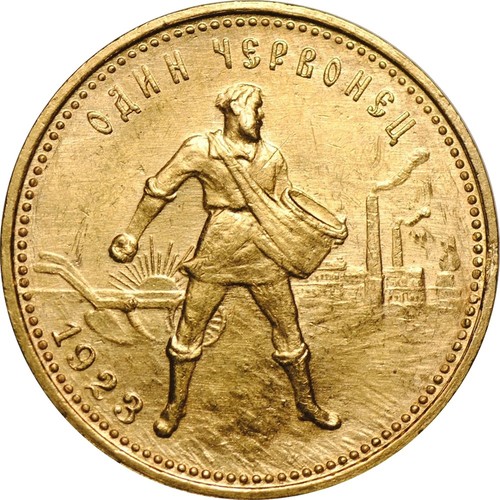
Gold Chervonets
1923
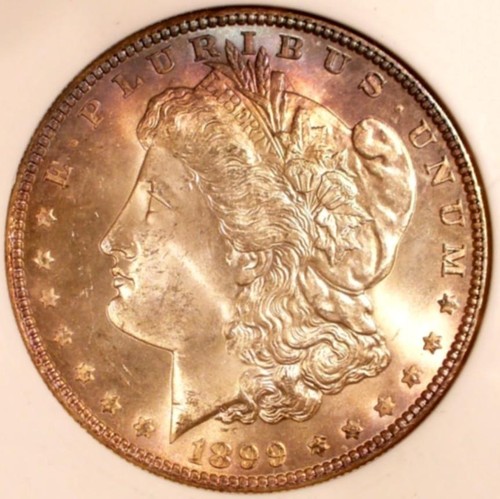
French Silver Franc
c. 1871–1920 (example dated 1899)
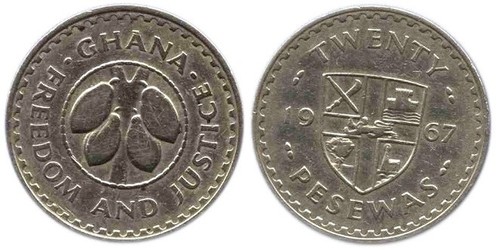
Ghana 20 Pesewas
1967
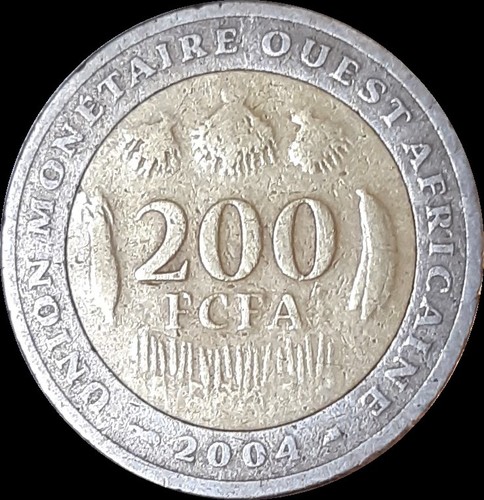
200 CFA Francs
2003–present
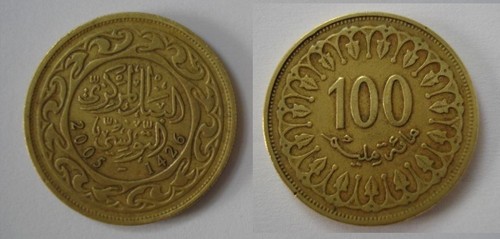
Tunisia 100 Millimes
1983–2005 (this brass type)
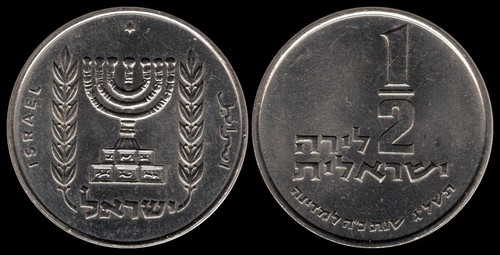
Israel Half Lira (25th Anniversary)
1973 (5733)
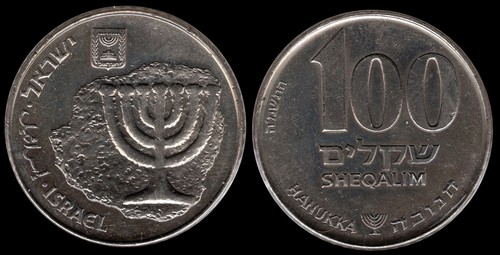
Israel 100 Sheqalim Hanukka Commemorative
1985
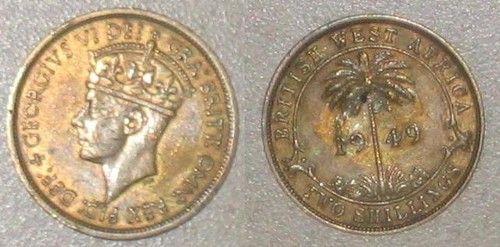
British West Africa 2 Shillings
1936–1952 (George VI type)
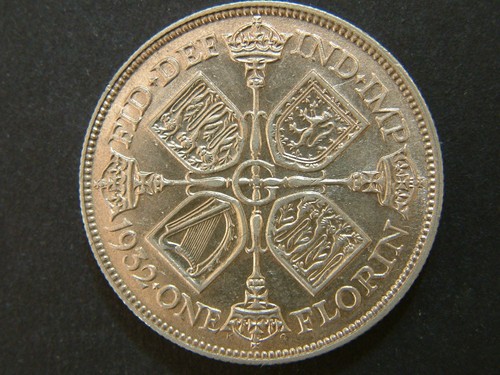
British Florin
Victorian issues c. 1849–1901 (example dated 1890)
Swiss 5 Francs
1888–1916 (this design)
North Yemen 1 Rial
1963 (AH 1382)
Ottoman Silver Coin
Ottoman era (c. 14th–early 20th century)