
How to Identify the Shilling of Edward VI
A collector's guide to recognizing a hammered Tudor shilling of Edward VI — the crowned profile, royal-arms reverse, size, mint marks, and authentication cautions.
Read the full Shilling of Edward VI encyclopedia entry →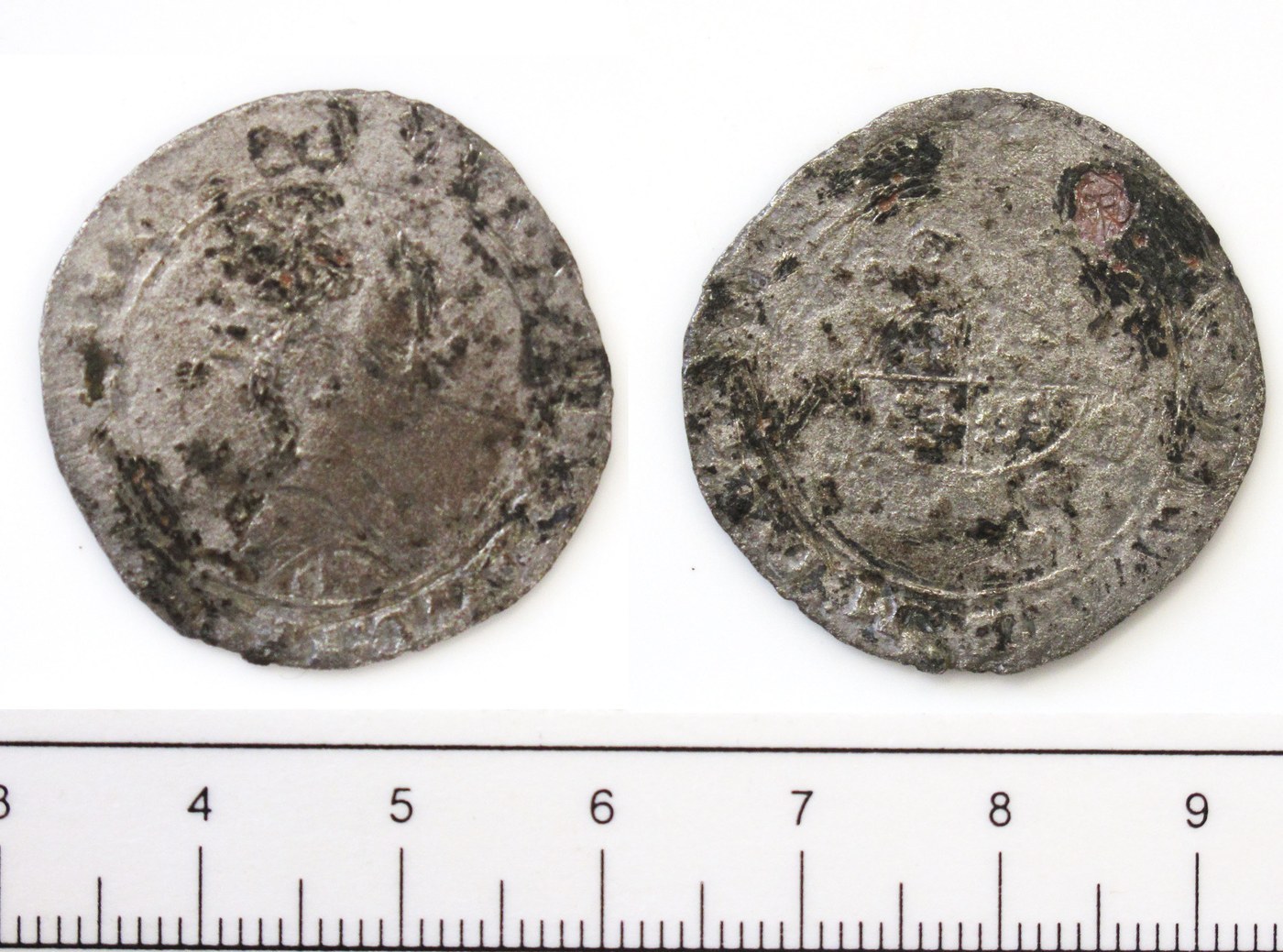
What It Is
The shilling of Edward VI is a large hammered silver coin of the mid-16th century, worth twelve pence. Identifying one means reading the portrait, the reverse shield and cross, the Latin legends, and the small mint mark, then checking that the physical coin matches a hand-struck Tudor piece rather than a cast copy.
Obverse (Front)
Look for a crowned bust of the young king in profile — facing left on the pictured coin — surrounded by a Latin legend naming EDWARD VI with royal titles. On fine-silver issues a value mark (XII, for twelve pence) may appear in the field beside the bust. The engraving is comparatively bold for a hammered coin, but expect areas of flatness where the strike was weak.
Reverse (Back)
The reverse shows a heraldic shield of the royal arms — quartered fleurs-de-lis and passant lions — set over a long cross that splits the surrounding legend into segments. On fine issues you may also find a date. Read the shield carefully: the combination of French lilies and English lions is the key diagnostic that separates the royal-arms reverse from other Tudor reverse types.
Size, Metal, Edge, and Mint Marks
Expect a broad, thin silver coin roughly 30–33 mm across and about 5–6 grams, with an irregular hand-struck (not milled) edge. A small mint mark appears at the start of the legend and identifies the mint and issue; note it, because base and fine issues differ sharply in silver quality and value. Genuine pieces are non-magnetic and should show crisp, struck detail rather than the soft, grainy surface of a cast reproduction.
Look-alikes and Authentication
Other Tudor and Stuart hammered shillings — including issues of Mary, Elizabeth I, and later monarchs — share the general layout, so always confirm the name in the legend and the specific portrait and mint mark rather than relying on the shape alone. Be wary of cast copies, tooled or smoothed surfaces, added or altered mint marks, and modern replicas sold as 'museum' pieces. Because authentic examples can be valuable and forgeries exist, have any high-value or doubtful coin examined by a specialist dealer or a professional grading service.
Frequently asked questions
How do I tell an Edward VI shilling from an Elizabeth I or Mary shilling?
Read the Latin legend for the ruler's name and check the portrait; Edward is shown young and crowned. Confirm with the mint mark and, on fine issues, the date, since several Tudor shillings share a similar royal-arms reverse.
Where is the mint mark and why does it matter?
It is a small symbol at the beginning of the legend. It identifies the mint and issue period, which in turn tells you whether the coin is a debased base-silver piece or a higher-value fine-silver issue.
Is an irregular, off-center coin likely a fake?
Not necessarily. Hammered coins were struck by hand, so uneven shape, weak areas, and legends running off the flan are normal. Cast texture, seams, or a soft grainy surface are more reliable warning signs of a copy.
Should I clean an old shilling before identifying it?
No. Cleaning can permanently reduce a coin's value and damage original surfaces. Identify it as-is and consult a specialist before doing anything to the surface.