
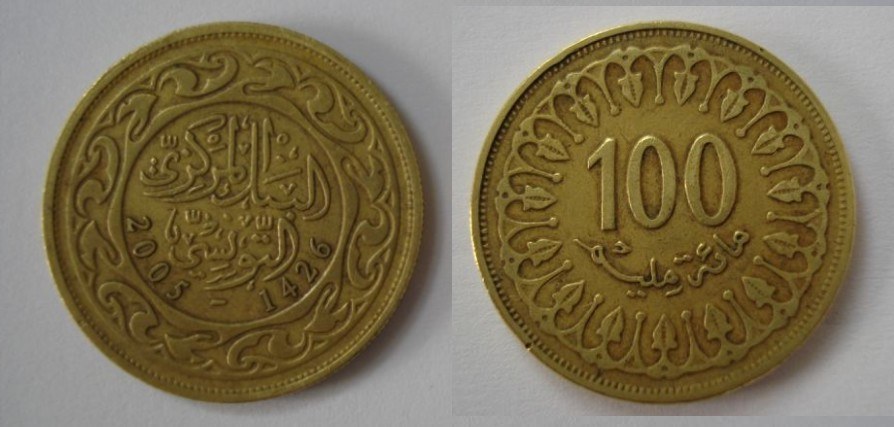
Tunisia 100 Millimes
A brass Tunisian coin worth 100 millimes, with flowing Arabic calligraphy inside an ornate border on one side and a large 100 on the other.
- Country
- Tunisia
- Denomination
- 100 Millimes
- Metal
- Brass
Got a coin like this?
Identify any coin from a photo, free.
Overview
The Tunisia 100 millimes is a circulating coin of the Republic of Tunisia, issued by the Banque Centrale de Tunisie. It is denominated in millimes, the small unit of the Tunisian dinar: 1,000 millimes make one dinar, so 100 millimes is one-tenth of a dinar.
The photographed piece is struck in brass, giving it a warm golden-yellow tone. One face carries flowing Arabic calligraphy framed by an ornate decorative border, while the other displays a large numeral 100 accompanied by Arabic script and a patterned design. The example shown is dated 2005 and is typical of the brass type circulated in that era.
As a mid-range base-metal denomination, the 100 millimes was an everyday workhorse of Tunisian commerce, produced in quantity and encountered constantly in daily transactions across the country.
History & Background
Tunisia introduced the dinar and its subdivision the millime in 1960, a few years after independence, replacing the earlier franc-based coinage. The Banque Centrale de Tunisie has issued the country's coins since then, with the millime denominations forming the small change of the system.
The 100 millimes has been struck in several successive designs and alloys over the decades. The brass type seen here, with its Arabic calligraphy and bold 100, belongs to the modern circulating series carried through the 1980s to the mid-2000s, with the four-digit year marking each production run. Tunisian coins of this period are dated in the Gregorian calendar, so the 2005 on the pictured coin is read directly as a year.
Because the designs are national issues of a single country, the inscriptions are in Arabic and identify the Tunisian republic and its central bank. Later dinar reforms and newer coin designs eventually followed, but brass 100-millimes pieces like this one remain common survivors of everyday circulation.
How to Identify
Identify this coin first by its metal and color: it is brass, with a golden-yellow appearance rather than the silvery look of cupro-nickel coins. One face shows Arabic calligraphy set within an ornate border; the other bears a large numeral 100, the value, in Arabic script alongside a decorative pattern.
The presence of the Western numeral 100 makes the denomination easy to read even without knowing Arabic, and the four-digit Gregorian date—2005 on the photographed example—sits with the design and is the main feature that changes from year to year. The coin is round with a plain or reeded edge and is a mid-size circulation piece, larger than the small millime coins but modest overall.
Because the inscriptions are entirely in Arabic, the script itself is a key identifier that distinguishes this Tunisian issue from look-alike brass coins of other Arab or North African countries. Reading the value 100 together with the Tunisian legend confirms the type.
Value & Collectibility
As a modern base-metal circulation coin, the Tunisia 100 millimes carries little collector premium in ordinary worn condition; its worth is essentially its small face value as spending money in Tunisia. Common dates in circulated grades are inexpensive and widely available to world-coin collectors.
Uncirculated examples, better-preserved older dates, and pieces still holding original mint luster can bring modest premiums among collectors of North African or Arab-world coinage, but these remain low-cost coins overall. Condition and eye appeal matter more than any single year for most issues of the type.
Brass contains no precious metal, so there is no melt value to underpin the coin. Treat any figure as a rough guide; prices are driven by collector demand and preservation rather than by metal content.
Frequently asked questions
How much is 100 millimes worth in Tunisian money?
The millime is the small subunit of the Tunisian dinar, with 1,000 millimes to one dinar. So 100 millimes equals one-tenth of a dinar—a small everyday denomination.
What is the coin made of?
This type is struck in brass, a copper-zinc alloy that gives it a golden-yellow color. It contains no silver or other precious metal.
Who issued the Tunisia 100 millimes?
It is a national coin of the Republic of Tunisia, issued by the country's central bank, the Banque Centrale de Tunisie.
How do I read the date on my coin?
Tunisian coins of this era use the Gregorian calendar, so a four-digit year such as 2005 is read directly. The date sits alongside the design and identifies the year of striking.
Is my 2005 coin valuable?
In circulated condition it is worth little beyond its small face value. Uncirculated or well-preserved examples may carry a modest collector premium, but this is an inexpensive modern coin.
Tunisia 100 Millimes guides
In-depth guides for identifying, valuing, and collecting Tunisia 100 Millimes.
Other coins you may enjoy
Gold Chervonets
1923
Shilling of Edward VI
1547–1553 (reign of Edward VI)
French Silver Franc
c. 1871–1920 (example dated 1899)
Ghana 20 Pesewas
1967
200 CFA Francs
2003–present
Israel Half Lira (25th Anniversary)
1973 (5733)
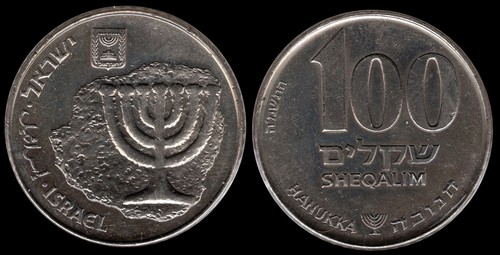
Israel 100 Sheqalim Hanukka Commemorative
1985
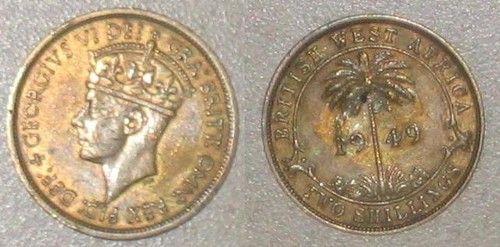
British West Africa 2 Shillings
1936–1952 (George VI type)
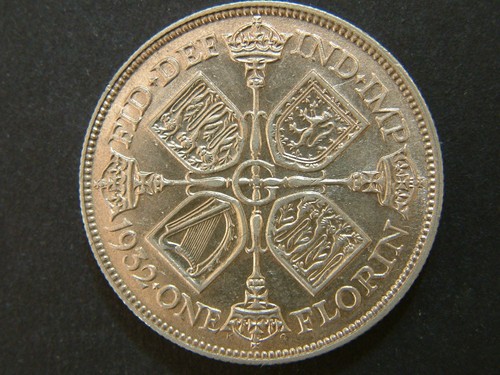
British Florin
Victorian issues c. 1849–1901 (example dated 1890)
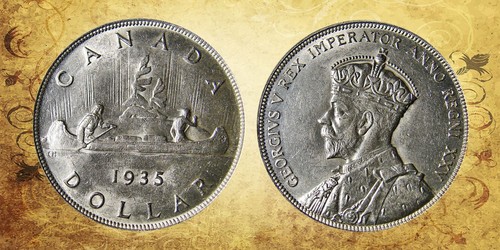
Swiss 5 Francs
1888–1916 (this design)
North Yemen 1 Rial
1963 (AH 1382)
Ottoman Silver Coin
Ottoman era (c. 14th–early 20th century)