
How to Identify the British West Africa 2 Shillings
A collector's guide to spotting the George VI West African florin by portrait, palm-tree reverse, metal, and legends.
Read the full British West Africa 2 Shillings encyclopedia entry →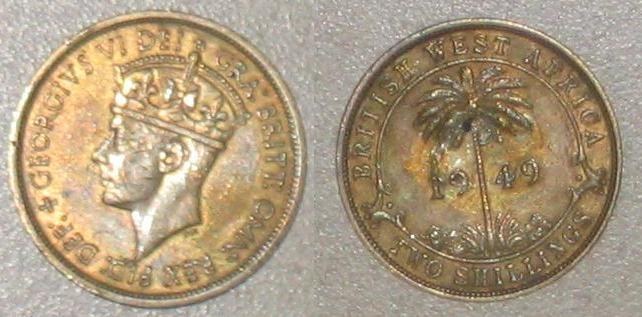
Begin with the two sides. A genuine British West Africa 2 shillings of this era shows the head of King George VI on the obverse, facing left, with a Latin royal legend running around the rim. Flip the coin and you should find a palm tree as the central reverse device, surrounded by the words identifying British West Africa and the two-shilling value, with the date placed near the design.
Confirm the metal and size. This denomination in the George VI period is copper-nickel, giving a bright silver-gray look without the heavier, softer feel of a true silver coin. It is one of the larger circulating pieces of the series, clearly bigger than the shilling, and it is a solid, un-holed coin, unlike the small center-holed minor denominations of the same currency board.
Read the legends carefully. The key phrase is that the reverse names "BRITISH WEST AFRICA" rather than an individual colony such as Nigeria or Ghana, because this was a shared regional coinage. The obverse legend abbreviates the king's name and titles in Latin, a normal British colonial convention. A date within roughly 1936 to 1952 places the coin firmly in the George VI reign.
Check for mint marks and match the date. Small letters near the reverse design can indicate the mint that struck the piece, and combined with the date they separate one issue from another. Cross-reference the exact date and any mint mark against a standard world-coin catalog to pin down the specific variety and its relative scarcity.
Be cautious with worn or altered coins. Heavy wear can blur the portrait or the palm tree, making the legends and shape your best guide. As with any collectible coin, watch for tooling, re-engraved dates, or cast copies; genuine strikes show crisp, evenly raised detail and a consistent copper-nickel tone rather than the seams, bubbles, or off-color surfaces of a fake.
Frequently asked questions
How do I know it is George VI and not another monarch?
Read the obverse legend, which names the king in abbreviated Latin, and check the date. A left-facing male portrait with a date between 1936 and 1952 indicates George VI rather than the earlier George V or later Elizabeth II.
What distinguishes the 2 shillings from the smaller West African coins?
It is one of the larger, solid, un-holed pieces of the series and states two shillings or florin in its legend, unlike the small center-holed minor denominations of the same currency board.
Does the coin name a specific country?
No. The reverse reads British West Africa, a shared regional coinage, so it will not name a single colony such as Nigeria or the Gold Coast.
How can I tell a genuine coin from a copy?
Look for crisp, evenly raised detail on the portrait and palm tree and an even copper-nickel tone. Casting seams, surface bubbles, off weight, or an odd color suggest a reproduction and warrant a closer look.