
Chilean Peso (1875 Type)
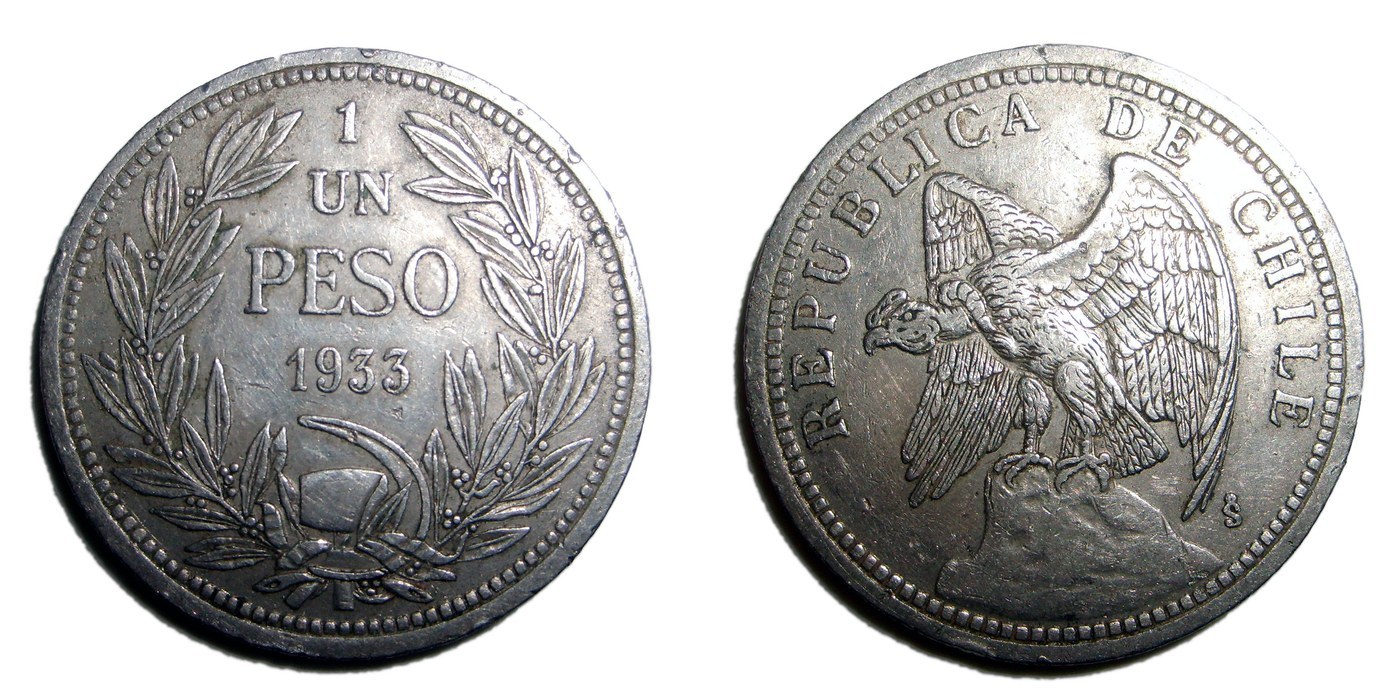
A silver one-peso coin of Chile: the national coat of arms with its lone star and laurel wreaths on one side, and a large bird in flight on the other.
- Country
- Chile
- Denomination
- 1 Peso
- Metal
- Silver
Got a coin like this?
Identify any coin from a photo, free.
Overview
The Chilean Peso of the 1875 type is a large silver one-peso coin issued by the Republic of Chile. One face carries the national coat of arms, centered on a single star and flanked by laurel-style wreaths, while the other shows a great bird of the Andes shown in flight with wings spread. The wide-winged bird is Chile's national bird, the Andean condor, though at a glance it is often described as an eagle.
As a crown-sized silver piece, this peso represents the standard high-value circulating currency of Chile in the 1870s. Its bold heraldic and animal imagery reflects the young republic's national symbolism — the lone star of Chile and the soaring condor that also appears on the country's arms.
The example pictured is dated 1875, placing it firmly within this classic era of Chilean silver coinage. It is valued today both for the silver it contains and as a tangible artifact of nineteenth-century Chilean monetary history.
History & Background
By the 1870s Chile had a well-established national coinage built around the decimal peso, and the silver peso stood at the top of the everyday silver denominations. Coins of this period were struck at the Santiago Mint (Casa de Moneda de Santiago), the republic's principal coining facility, and carried the standardized national emblems adopted after independence: the single star, the wreaths, and the condor.
The 1875 date belongs to a run of Chilean silver pesos of broadly similar design produced in the third quarter of the nineteenth century. These coins circulated widely as hard currency in an economy that, in this era, was buoyed in part by mining wealth, and they were part of a monetary system anchored to silver.
Over the following decades Chile revised the weight, fineness, and imagery of its peso coinage, so the large silver peso of the 1870s eventually gave way to lighter and later base-metal issues. That evolution makes the 1875-type silver peso a marker of the earlier, full-size silver phase of the denomination.
How to Identify
Look first at the coat-of-arms side. The central device is the Chilean national shield with a prominent single star, set between two curved wreaths of laurel-like foliage, and surrounded by Spanish-language legends naming the Republic of Chile. The lone star is a key Chilean marker and appears on much of the country's coinage.
The other side is dominated by a single large bird in flight, wings outstretched — the Andean condor, which many observers read simply as an eagle. The denomination (one peso) and the date, here 1875, appear in the design along with the surrounding legend. The pairing of the star-and-wreath arms with the flying condor is the signature of the type.
Physically this is a large, heavy silver coin of crown size struck at the Santiago Mint. Genuine pieces have the heft and ring associated with high-fineness silver. Confirm the type by the combination of the lone-star coat of arms, the wide-winged bird, the one-peso denomination, and an 1870s date such as 1875.
Value & Collectibility
The 1875-type Chilean silver peso carries value from two directions: its silver content and its appeal as a nineteenth-century world coin. Even circulated examples are worth a meaningful multiple of face value because of the bullion alone, while cleaner, better-detailed coins draw additional collector interest.
Condition is the main driver of price. The high points of the coat of arms and the raised wings and body of the bird are the first areas to wear, so coins that retain sharp feather and shield detail and original surfaces sit at the top of the range. Cleaning, scratches, and edge damage reduce desirability.
Actual prices depend on grade, eye appeal, any scarce varieties, and the prevailing silver market, so values are best checked against recent sales of comparable Chilean pesos rather than a fixed figure. For higher-grade or higher-value pieces, independent authentication is worthwhile.
Frequently asked questions
What is the bird on the Chilean peso?
It is the Andean condor, Chile's national bird, shown in flight with its wings spread. Because of its size and outstretched wings it is often mistaken for an eagle, but the condor is the emblem that appears on Chile's coinage and coat of arms.
What does the star on the coat of arms mean?
The single star is a longstanding symbol of the Republic of Chile and features on the national flag and arms. On this peso it sits at the center of the shield, flanked by wreaths, and is a quick way to recognize a Chilean coin.
Is the 1875 Chilean peso made of silver?
Yes. It is a large, crown-sized silver one-peso coin, which gives it intrinsic bullion value on top of its collector appeal. Genuine examples feel heavy for their size and ring true.
Where was it minted?
Chilean pesos of this era were struck at the Santiago Mint (Casa de Moneda de Santiago), the republic's principal coining facility.
How can I tell it apart from other Latin American silver pesos?
Use the imagery: the lone-star coat of arms with laurel wreaths paired with a single large condor in flight is distinctively Chilean, along with Spanish legends naming the Republic of Chile and an 1870s date such as 1875.
Chilean Peso (1875 Type) guides
In-depth guides for identifying, valuing, and collecting Chilean Peso (1875 Type).
Other coins you may enjoy
5 Francs (First Republic)
L'an 9 (1800–1801)
Trinidad and Tobago Dollar
2015
German 5 Reichsmark (Hindenburg)
1935–1936 (Hindenburg type with swastika)
5 Francs Semeuse
1960–1969
French Cérès 1 Franc
1849–1895
French Semeuse 2 Francs
1898–1920 (silver issues; pictured example dated 1899)
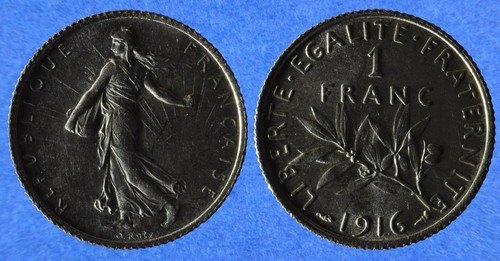
French Semeuse 1 Franc
1898–1920 (silver Semeuse 1 franc type)
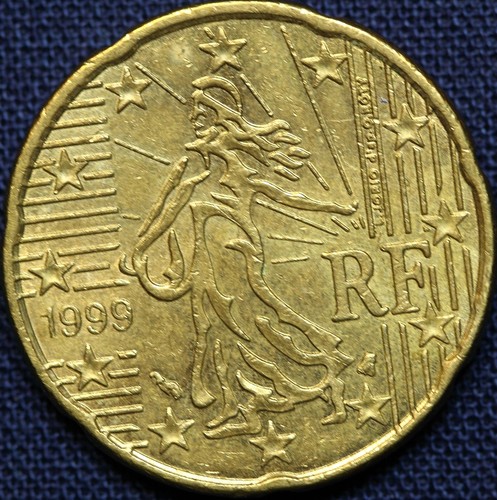
France 50 Cent Euro
1999–present
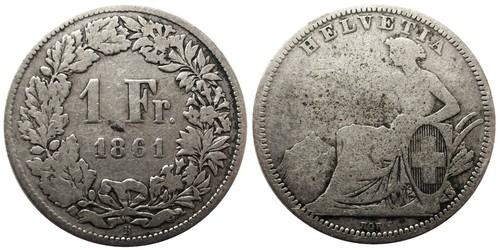
Swiss 1 Franc
1861
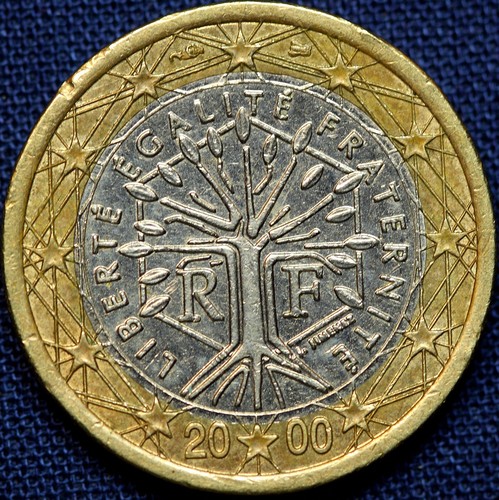
France 20 Centimes
1962–2001 (Fifth Republic, Marianne / Lagriffoul type)
Swiss 2 Francs
1860
Austria-Hungary 15 Kreuzer
1807