
How to Identify the Chilean Peso (1875 Type)
A collector's checklist for the silver Chilean peso: the lone-star coat of arms, the condor in flight, size and metal, and cautions on look-alikes and fakes.
Read the full Chilean Peso (1875 Type) encyclopedia entry →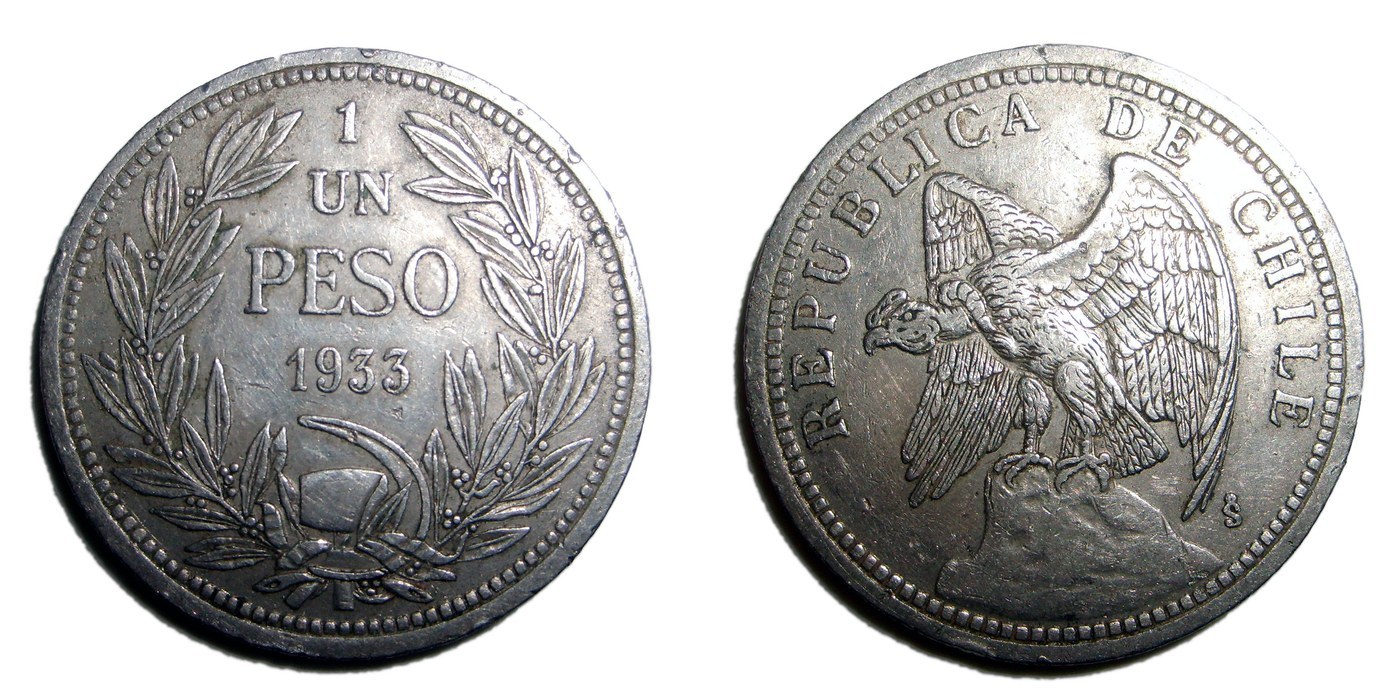
Start with the coat-of-arms side, because its symbols are distinctly Chilean. Look for a shield built around a single star, set between two curved wreaths of laurel-like foliage, and encircled by a Spanish legend naming the Republic of Chile. That lone star is the fastest tell that you are holding a Chilean coin rather than a peso of another Latin American republic.
Turn to the other side and identify the bird. It is a single large Andean condor in flight, wings spread wide, and it is frequently read as an eagle at first glance. What matters is that there is one big bird filling the field, not a perched eagle-on-cactus (as on Mexican coins) or a heraldic double eagle. The denomination for one peso and the date — here 1875 — accompany the design, so read the year carefully to place the coin in the 1870s silver series.
Confirm the physical traits next. This is a large, heavy silver coin of crown size struck at the Santiago Mint. Weigh and measure it against published specifications for the type and expect a clean ring characteristic of high-fineness silver. A coin that is noticeably light, undersized, or dull-sounding should be treated with caution.
Be careful not to confuse it with other nineteenth-century silver pesos and 8-reales-style crowns from across Latin America, which share a similar size and silver look. The specific pairing of the lone-star arms with a single condor in flight, plus Chilean legends and an 1870s date, is what separates this type from Mexican, Peruvian, Bolivian, and other regional silver.
Finally, watch for authenticity problems common to popular silver crowns. Inspect the condor's feathers and the shield's detail for the crispness of a struck coin rather than the soft, grainy look of a cast copy, and check the edge and fields for tooling, added or altered digits in the date, or filed seams. For any valuable example, favor coins authenticated by a reputable grading service and compare weight and diameter to trusted references before buying.
Frequently asked questions
What is the quickest way to recognize this coin?
Match two things: a coat of arms centered on a single star with laurel-style wreaths on one side, and one large bird in flight with outstretched wings on the other. Together with Spanish legends naming Chile and an 1870s date, that pairing identifies the type.
Is the bird an eagle or a condor?
It is the Andean condor, Chile's national bird, though its size and spread wings make many people call it an eagle. Either way, a single large flying bird — rather than a perched or heraldic eagle — is the correct feature for this Chilean peso.
How do I keep from confusing it with other silver pesos?
Other Latin American silver crowns are similar in size and metal, so rely on the imagery and legends. The lone-star Chilean arms plus a single condor in flight, with wording naming the Republic of Chile, distinguish it from Mexican, Peruvian, and Bolivian issues.
What should I check to guard against fakes?
Confirm weight and diameter against published figures, listen for a true silver ring, and inspect the condor and shield for sharp struck detail rather than soft cast surfaces. Examine the date for altered digits, and for valuable pieces buy coins authenticated by a reputable grading service.