
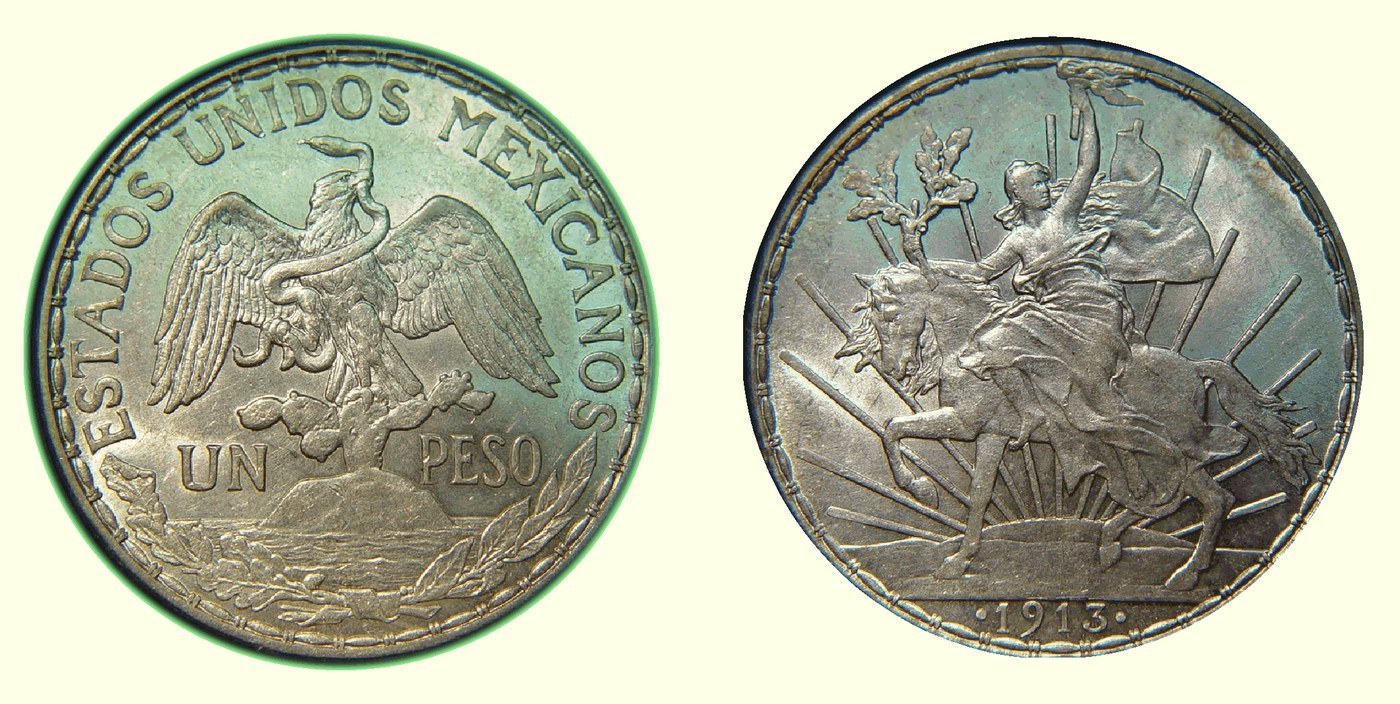
Mexican 1 Peso
Large silver Mexican peso, the famed "Caballito" type, with a winged Victory on horseback and the eagle-and-snake coat of arms.
- Country
- Mexico
- Denomination
- 1 Peso
- Metal
- Silver
Got a coin like this?
Identify any coin from a photo, free.
Overview
The Mexican 1 Peso shown here is the celebrated "Caballito" type, a large silver coin struck by the Republic of Mexico. The obverse carries the national coat of arms, an eagle with spread wings perched on a cactus and grasping a serpent, while the reverse shows a winged Victory figure riding on horseback, from which the coin takes its nickname ("caballito" means "little horse").
This particular example is dated 1913, one of the years the type was produced. Widely regarded as one of the most beautiful coins in Mexican numismatics, the Caballito peso combines classical allegory with the emblem of the Mexican nation and is a cornerstone piece for collectors of early 20th-century world silver.
History & Background
The Caballito peso was introduced in 1910, during the final years of the Porfirio Diaz era, and continued to be struck through the political upheaval of the early Mexican Revolution until 1914. All examples were produced at the Mexico City mint. The reverse design, a winged Victory holding a torch and a laurel branch while mounted on a rearing horse, was created by the French sculptor Charles Pillet, and its neoclassical style set the coin apart from earlier peso issues.
Because the type spanned a turbulent period, mintages varied sharply from year to year, and the coin was struck in high-grade silver as a full-value circulating peso. The design was retired after 1914 as wartime pressures and rising silver prices reshaped Mexico's coinage, making the Caballito a brief but iconic series that has remained prized ever since.
How to Identify
Look for a large silver coin about 39 mm in diameter and noticeably heavy in hand. The reverse (the "Caballito" side) shows a winged female Victory on a horse, holding a torch aloft, with the sun's rays behind and the date below; the year on this example reads 1913. The obverse bears the Mexican coat of arms, an eagle with outspread wings standing on a cactus and holding a snake, encircled by the legend "ESTADOS UNIDOS MEXICANOS."
The denomination "UN PESO" appears on the coin, and genuine pieces are struck in high-grade silver with a reeded edge. Wear typically shows first on the high points of the horse and the Victory figure and on the eagle's breast and wing tips.
Value & Collectibility
As a large, popular silver type struck over only five years, the Caballito peso is actively collected, and value is driven mainly by date, condition, and eye appeal. Common dates in worn to lightly circulated grades are among the more accessible large silver world coins, while sharp, lightly worn examples and problem-free uncirculated pieces command substantial premiums.
Some years and die varieties within the 1910-1914 span are considerably scarcer than others, and those can bring much higher prices. Because the type is desirable and has been counterfeited, condition and authenticity have a large effect on realized value. Treat any single figure as approximate and check recent auction results for the specific date and grade.
Frequently asked questions
Why is it called the "Caballito" peso?
"Caballito" is Spanish for "little horse." The nickname comes from the reverse design, which shows a winged Victory figure riding on horseback.
Is the coin made of real silver?
Yes. The Caballito peso is a large coin struck in high-grade silver, roughly 39 mm across and heavy in hand, which is part of why it is prized by collectors.
What years was it made?
The type was struck from 1910 to 1914 at the Mexico City mint. The example shown here is dated 1913, one of the years in that span.
What is the figure on the front?
The coat of arms shows the Mexican eagle with spread wings, standing on a cactus and holding a serpent, surrounded by the legend "Estados Unidos Mexicanos."
Are all dates equally common?
No. Mintages varied year to year during the Revolution, so some dates and varieties are much scarcer than others, which affects value significantly.
Mexican 1 Peso guides
In-depth guides for identifying, valuing, and collecting Mexican 1 Peso.
Other coins you may enjoy
8 Reales (Portrait/Bust Type)
1759-1788
Napoleon III 20 Francs
1852-1870
British Penny
1937-1952
Shilling of James I
1603-1625
British Shilling
1837-1901 (Victoria); example dated 1887
Australian Florin
1910-1963
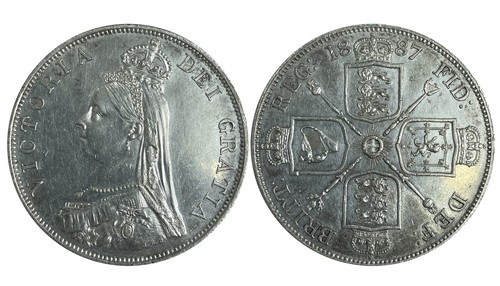
British Double Florin
1887-1890
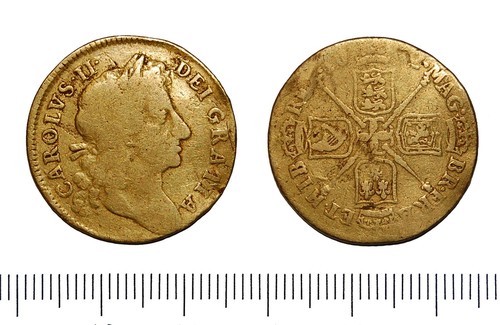
Gold Guinea
1663-1813
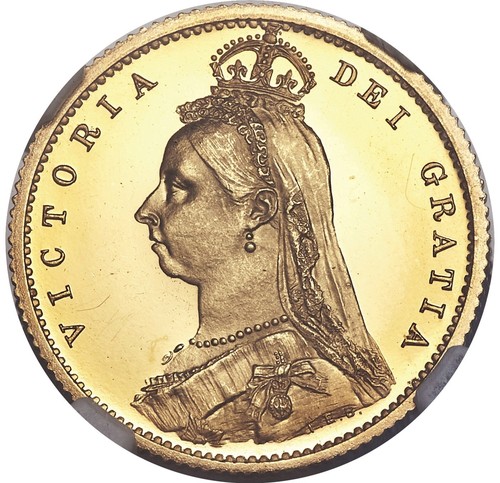
Half Sovereign
1817-1937
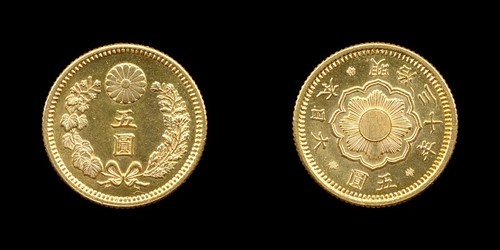
Japanese 5 Yen
Meiji era (example dated Meiji 30 / 1897)
Japanese 20 Yen
1870 (Meiji 3)
Australian Penny
1911-1964