
How to Identify the Mexican 1 Peso
Collector checks for the Caballito silver peso: the Victory-on-horseback reverse, eagle coat of arms, size and metal, date, and authentication.
Read the full Mexican 1 Peso encyclopedia entry →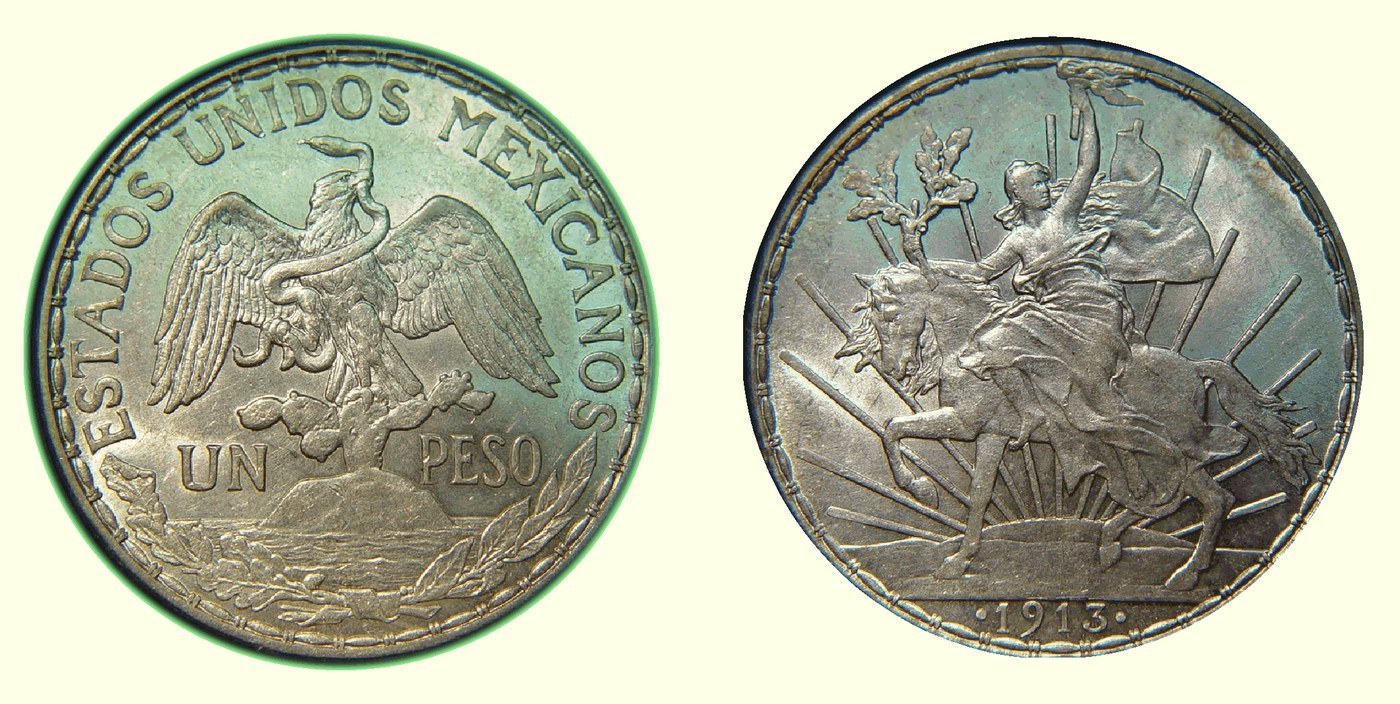
Start with size and metal. The Caballito peso is a large silver coin, about 39 mm in diameter and clearly heavy in the hand, with a reeded (grooved) edge. A much smaller or lighter piece with a similar design is likely a lower silver denomination or a modern copy rather than the full peso.
Identify the signature reverse. The defining feature is the winged Victory figure seated on a horse, holding a torch or flame aloft with a burst of sun rays behind. The date sits below the design; on this example it reads 1913. This "caballito" scene is unique to the 1910-1914 peso and is the fastest way to confirm the type.
Check the obverse. You should see the Mexican national coat of arms, an eagle with outspread wings perched on a cactus and grasping a serpent, ringed by the legend "ESTADOS UNIDOS MEXICANOS." The denomination "UN PESO" should also be present. Confirm the date falls within the 1910 to 1914 range, since the type was not struck outside those years.
Distinguish look-alikes. Later Mexican pesos abandoned the horseback design, using instead a Cap-and-Rays (Liberty cap) motif or, still later, portrait busts such as Jose Morelos, so a peso without the mounted Victory is a different type. Be aware that the eagle coat of arms appears on nearly all Mexican coinage, so the reverse Victory scene, not the eagle, is what pins down the Caballito.
Authenticate with caution. Because the type is desirable, cast and struck counterfeits exist. Weigh and measure the coin, inspect the edge reeding, and look for casting seams, a soft or "soapy" surface, or incorrect detail on the horse and Victory. When value is significant, seek an experienced dealer or third-party grading before buying or selling.
Frequently asked questions
What is the quickest way to recognize this peso?
Look for the winged Victory riding a horse on the reverse. That mounted "caballito" scene is unique to the 1910-1914 peso and instantly separates it from other Mexican pesos.
How big and heavy should it be?
Expect a large silver coin about 39 mm across and distinctly heavy, with a reeded edge. Smaller or lighter pieces are usually a different denomination or a copy.
Does the eagle side help identify it?
Not by itself. The eagle-and-serpent coat of arms appears on almost all Mexican coins, so rely on the Victory-on-horseback reverse and the 1910-1914 date to confirm the Caballito.
How do I guard against fakes?
Check weight, diameter, and edge reeding, and look for casting seams or mushy detail on the horse and figure. For valuable dates, use a reputable dealer or third-party grading service.