
Coin Encyclopedia
Search and identify coins from around the world — with country, denomination, metal, mint, history, and how to tell them apart.
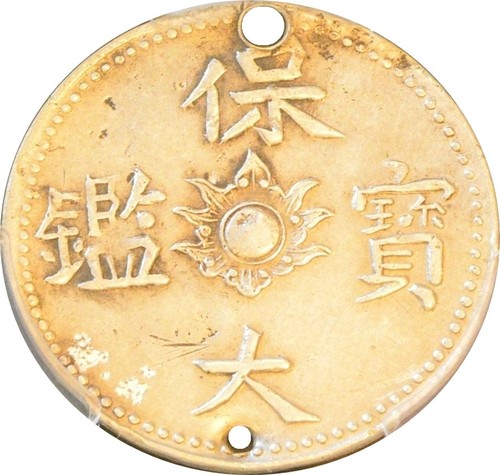
Vietnam 2 Tien - Bao Dai
A gold 2 Tien of Vietnam's last emperor, Bao Dai (1926-1945), its face bearing a radiant sun motif and Chinese-Vietnamese court inscriptions.
Southeast Asia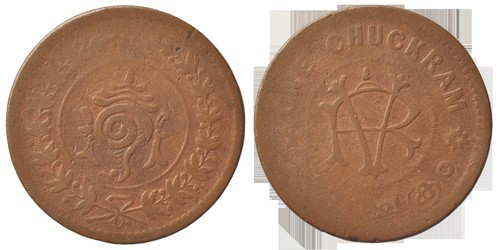
Travancore One Chuckram
Small copper one-chuckram coin of the princely state of Travancore, with the royal conch-shell emblem and a local-script denomination reverse.
Princely & Presidency States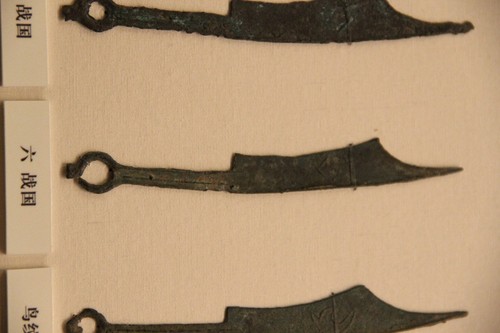
Warring States Knife Coin
A cast bronze knife coin (dao bi) of China's Warring States period, shaped like a small blade with a ringed handle and cast inscriptions.
Ancient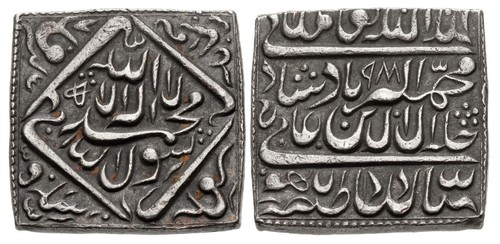
Mughal Square Rupee Token
A square silver-colored token copying a Mughal square rupee, with Persian and Islamic inscriptions and an AH 988 date, produced as a later reproduction.
Token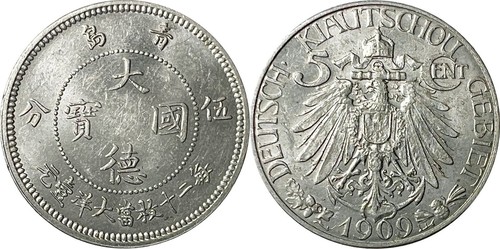
Kiautschou 5 Cents
A 1909 nickel 5 Cent coin of the German-leased Kiautschou Bay territory in China, pairing Chinese characters with the German imperial eagle.
Colonial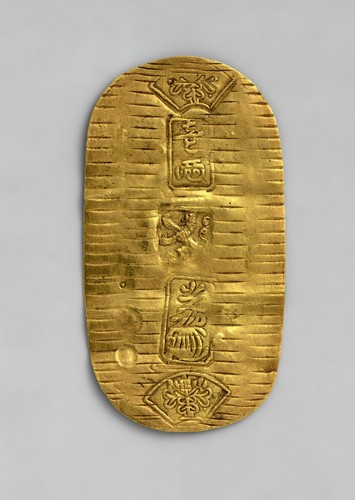
Koban with Dutch East Indies Counterstamp
An Edo-period Japanese gold koban bearing later punched marks, including a Japanese character cartouche and a Dutch coat-of-arms counterstamp.
Colonial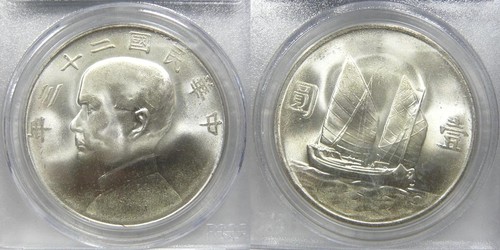
Junk Dollar
China's Republic-era silver dollar with Sun Yat-sen facing left and a Chinese junk under sail on the reverse; the pictured coin is Year 23 (1934).
Circulation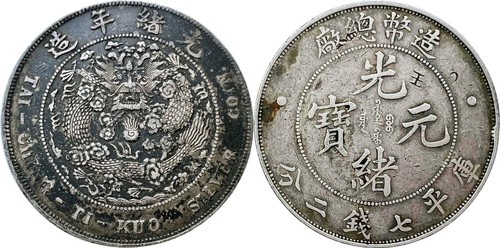
Guangxu Yuanbao 7 Mace 2 Candareens
A silver Chinese dragon dollar of the Guangxu era, marked Guangxu Yuanbao and valued at 7 Mace 2 Candareens, with a coiled dragon on one face and Chinese legends on the other.
Circulation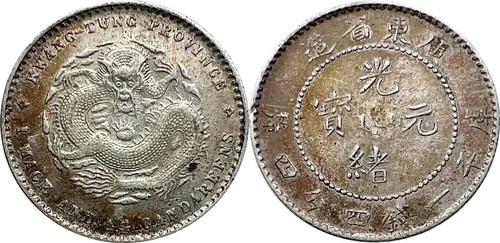
Guangdong 20 Cents
A silver 20-cent coin of Kwangtung (Guangdong) province, struck under the Guangxu Emperor with a coiled dragon on one side and Chinese legends on the other.
Circulation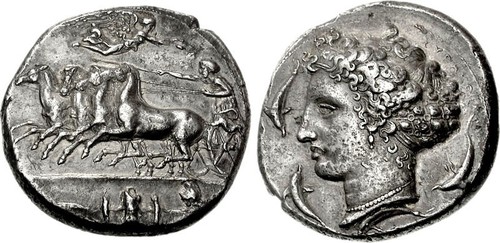
Syracuse Dekadrachm
Large silver dekadrachm of Syracuse, c. 405-380 BC, showing a racing quadriga crowned by Victory and a head of the nymph Arethusa with flowing hair.
Ancient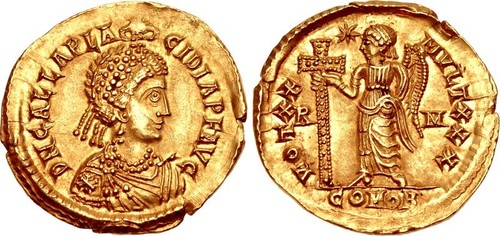
Solidus of Galla Placidia
A late Roman gold solidus struck in the name of Galla Placidia, empress and regent, showing her diademed bust and a Victory holding a long cross.
Ancient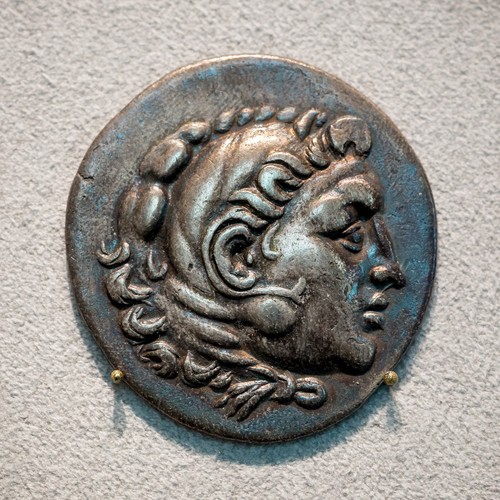
Macedonian Silver Tetradrachm
Large silver tetradrachm of ancient Macedon in the Alexander type, c. 188-170 BC, with the head of Heracles in a lion skin and Zeus enthroned holding an eagle.
Ancient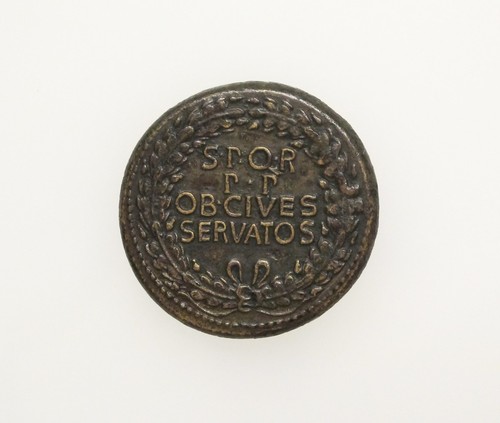
Sestertius of Caligula
Large Roman imperial bronze sestertius bearing the head of Gaius, better known as Caligula, struck during his short reign from 37 to 41 AD.
Ancient Coins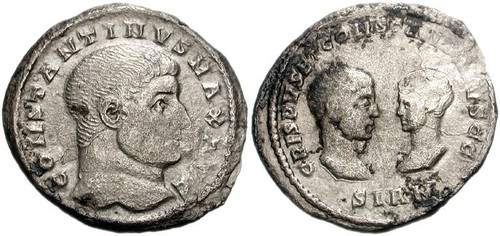
Follis of Constantine I and Crispus
A late-Roman bronze follis linking Constantine the Great to his son Crispus, with the emperor's right-facing portrait and a paired father-and-son bust reverse.
Ancient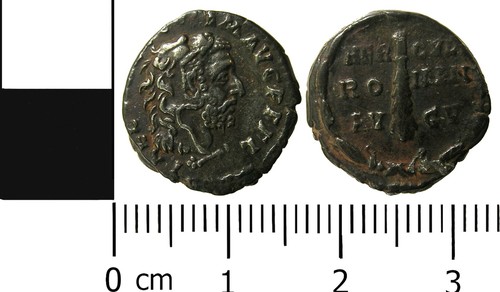
Denarius of Commodus
A silver denarius of the Roman emperor Commodus (180–192 AD), with his laureate bearded portrait and a standing deity or personification on the reverse.
Ancient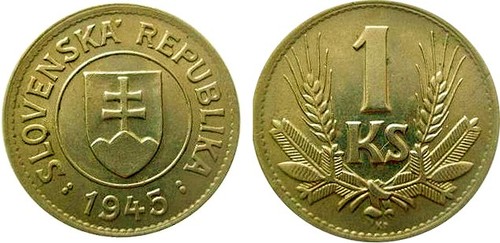
1 Koruna
A lightweight aluminum 1 Koruna of the wartime Slovak state, showing the double-cross national shield on one side and the value 1 Ks flanked by wheat ears.
Modern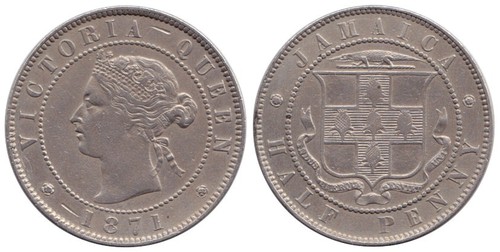
Jamaica Half Penny
An 1871 colonial Jamaica halfpenny in copper-nickel: young Queen Victoria facing left on the obverse, the crowned Jamaican shield of arms on the reverse.
Colonial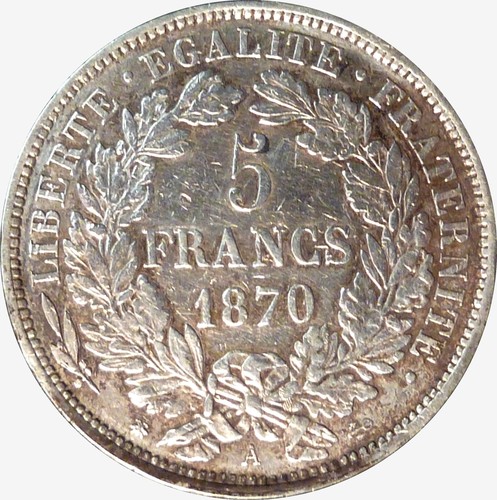
French Cérès 5 Francs
A large silver French 5 francs showing the head of Cérès, goddess of the harvest, wearing a liberty cap, with the republican motto LIBERTÉ ÉGALITÉ FRATERNITÉ.
Circulation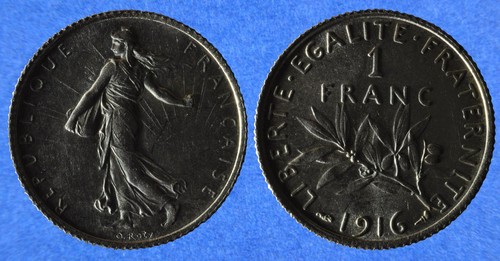
1 Franc Semeuse
A small silver French franc showing Roty's Semeuse, the striding Sower scattering seed at dawn, with the 1916 date on the LIBERTE EGALITE FRATERNITE reverse.
Circulation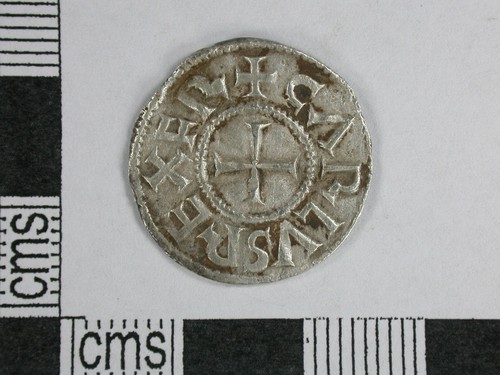
Denier of Charlemagne
A hand-struck silver denier of Charlemagne, king of the Franks: a central cross ringed by the CARLVS REX FR legend, with a royal monogram design on the reverse.
Medieval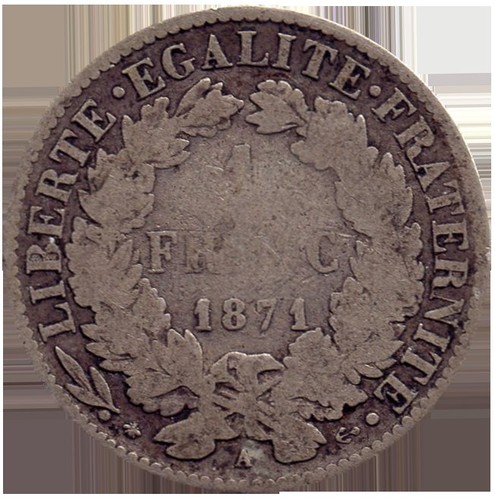
1 Franc Ceres
A small silver French franc showing the head of Cérès, goddess of the harvest, wearing wheat and a star, with the LIBERTE EGALITE FRATERNITE reverse dated 1871.
Circulation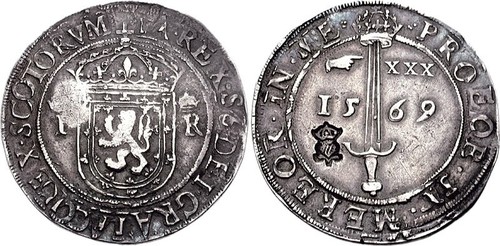
James VI Ryal
A large hammered silver Scottish ryal of James VI, showing a crowned lion-rampant shield and a mailed swordhand grasping an upright sword, dated 1569.
Hammered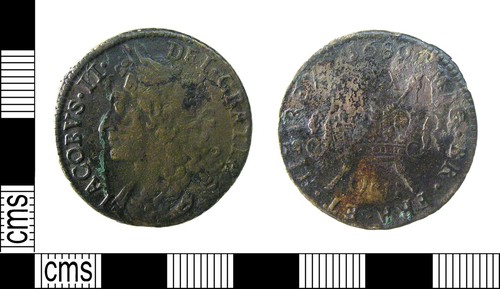
Irish Gun Money Shilling
A base-metal Irish emergency shilling struck for James II in 1689-1690, with his laureate bust and a crowned reverse dated by month, here October 1689.
Emergency Coinage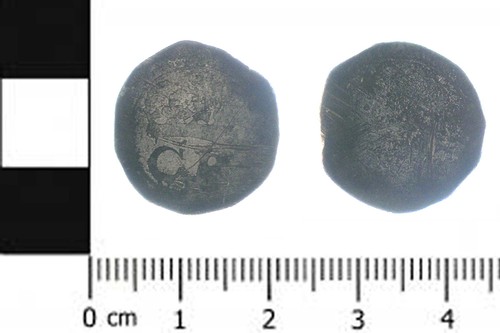
Scottish Coin (Uncertain)
A worn hammered copper-alloy Scottish coin, apparently of the reign of Charles I, showing a bearded profile and a heraldic reverse with lettering.
Hammered