
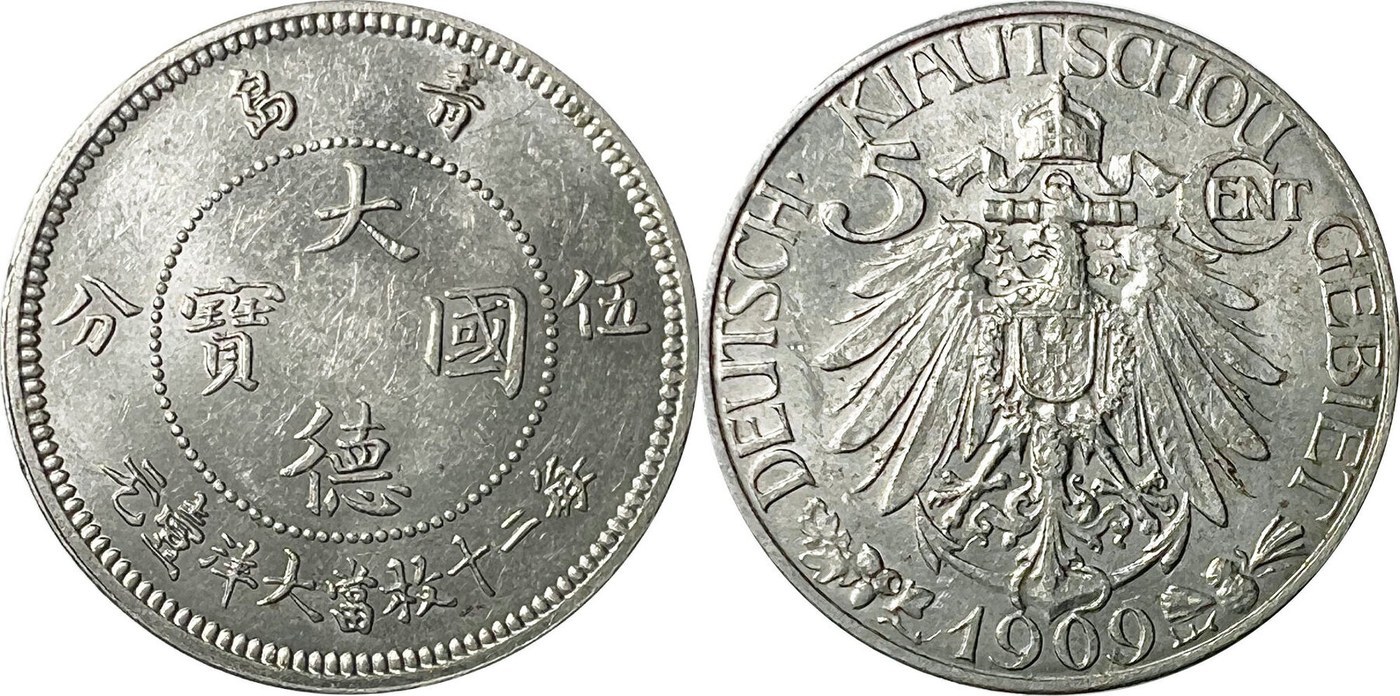
Kiautschou 5 Cents
A 1909 nickel 5 Cent coin of the German-leased Kiautschou Bay territory in China, pairing Chinese characters with the German imperial eagle.
- Country
- Kiautschou
- Denomination
- 5 Cents
- Metal
- Nickel
Got a coin like this?
Identify any coin from a photo, free.
Overview
The Kiautschou 5 Cents is a small nickel coin struck in 1909 for the German-leased territory of Kiautschou Bay (Jiaozhou) on China's Shandong peninsula, centered on the port of Tsingtau (Qingdao). It is one of only two denominations -- 5 Cent and 10 Cent -- ever issued specifically for the colony, and both bear the same year.
The pictured coin shows, on one face, Chinese characters grouped around a central numeral 5 within a beaded border, giving the denomination in the local Cent system. The other face carries the German imperial eagle (Reichsadler) perched above a shield, with the date 1909 below. This deliberate pairing of Chinese script and the German state emblem reflects the coin's dual identity as money for a Chinese territory administered by imperial Germany.
Because it was made for a single leased enclave and issued in just one year, the Kiautschou 5 Cents is a compact, self-contained series that collectors treat as a distinct German colonial issue rather than part of mainland Chinese or standard German coinage.
History & Background
Germany acquired the Kiautschou Bay concession in 1898, leasing the territory from Qing China for a nominal 99 years following the deployment of German naval forces. Administered by the Imperial German Navy rather than the colonial office, the enclave grew around the newly built port and city of Tsingtau (Qingdao), which became a modern harbor, garrison, and trading hub on the Shandong coast.
For most of its existence the colony circulated Chinese and foreign silver alongside German money, but in 1909 a dedicated small coinage was introduced in 5 Cent and 10 Cent denominations, struck in nickel at the Berlin mint. These pieces were intended to provide reliable low-value change within the leased territory, denominated in the Cent unit familiar from the wider Chinese treaty-port economy while carrying the emblems of the German Empire.
The series was short-lived. No further dates were issued, and German control of Kiautschou ended in 1914, when Japanese and British forces captured Tsingtau in the opening months of the First World War. As a result, the 1909 5 Cents survives as a relic of a brief, unusual chapter of overseas German administration in China.
How to Identify
Identify the coin by its two-culture design. One side displays Chinese characters arranged around a central Arabic numeral 5, all enclosed by a beaded (dotted) border -- this is the denomination face. The opposite side shows the German imperial eagle with a shield on its breast, above which or below which appears the date 1909. The presence of both Chinese script and the Reichsadler together is the single most telling diagnostic.
Confirm the denomination and date: the numeral 5 marks it as the smaller of the two Kiautschou values (the companion piece reads 10), and 1909 is the only year of issue, so any authentic example will bear that date. The coin is nickel and small in diameter, lighter in color than the bronze and silver coins circulating in China at the time.
Distinguish it from the 10 Cent sibling, which shares the identical layout but a larger central numeral and is slightly larger overall. It should not be confused with mainland Chinese provincial coppers or standard German pfennig coinage, none of which combine Chinese characters with the German eagle in this way.
Value & Collectibility
The Kiautschou 5 Cents is a scarce single-year colonial issue, and demand comes from collectors of German colonies and of foreign coinage struck for China. Even well-worn examples carry a clear collector premium over their tiny face value, while pieces retaining sharp detail and original nickel surfaces command considerably more.
Condition drives price sharply. Nickel coins that saw circulation often show wear on the eagle and the central numeral, and cleaned, corroded, or damaged examples sell at a discount. Problem-free coins with even wear and legible characters are the most sought after, and high-grade survivors are genuinely difficult to locate.
Because this issue is targeted by counterfeiters and because grade swings values widely, treat any single quoted figure with caution and compare against recent auction results for the same denomination and date. For a higher-value example, third-party grading and authentication add confidence.
Frequently asked questions
What country issued the Kiautschou 5 Cents?
It was issued for Kiautschou (Jiaozhou), a German-leased territory on China's Shandong peninsula centered on the port of Tsingtau (Qingdao). Germany leased the area from China in 1898, and the coin was struck in Germany for use in that colony.
Why does the coin have both Chinese characters and a German eagle?
Kiautschou was a Chinese territory administered by imperial Germany. The Chinese characters and numeral give the denomination for local use, while the German imperial eagle marks the issuing authority, reflecting the coin's dual identity.
Is the coin made of gold or silver?
Neither. The 5 Cents is struck in nickel, a hard, pale metal. It was low-value change for the colony, not a precious-metal coin.
What years was it made?
Only 1909. Both Kiautschou denominations, the 5 Cent and the 10 Cent, were issued in that single year, so every genuine example is dated 1909.
How is the 5 Cent different from the 10 Cent?
The two coins share the same design of Chinese characters with the German eagle. The 5 Cent shows the numeral 5 and is the smaller piece, while the 10 Cent shows 10 and is slightly larger.
Kiautschou 5 Cents guides
In-depth guides for identifying, valuing, and collecting Kiautschou 5 Cents.
Other coins you may enjoy
Sarawak One Cent
1870
Jamaica Half Penny
1871
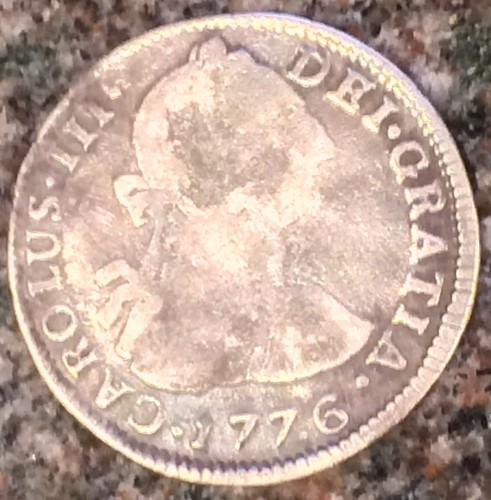
Spanish Colonial 2 Reales (Milled)
1732–1772 (pillar) and 1772–1825 (portrait); example dated 1776
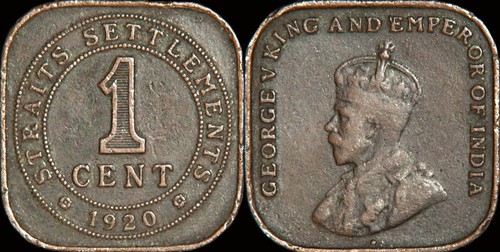
Straits Settlements One Cent
1919–1926 (this type)
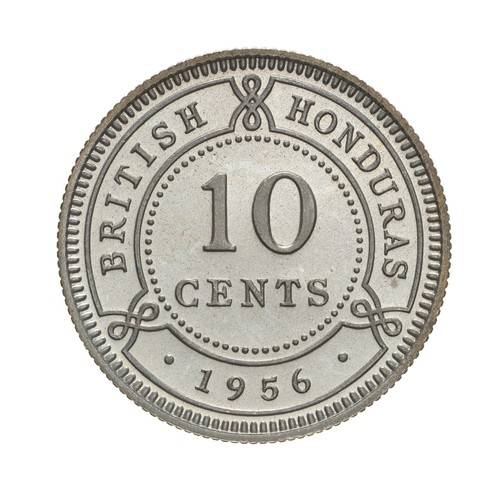
British Honduras 10 Cents
1956
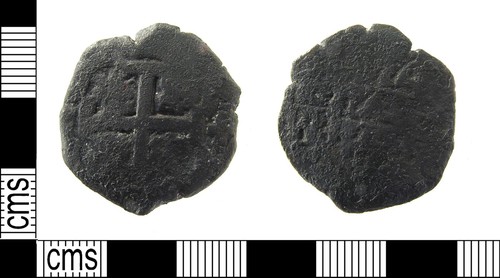
Spanish Colonial 1 Real (Bourbon)
1700-1746
Bermuda Half Penny
1909
British North Borneo One Cent
1884–1886
British Honduras One Cent
1885–1894 (Victoria); this example 1889
British North Borneo Half Cent
1885
Counterstamped 8 Reales
Charles IV era (1788-1808), host coin; counterstamps and hole added later
Fugio Cent
1787