
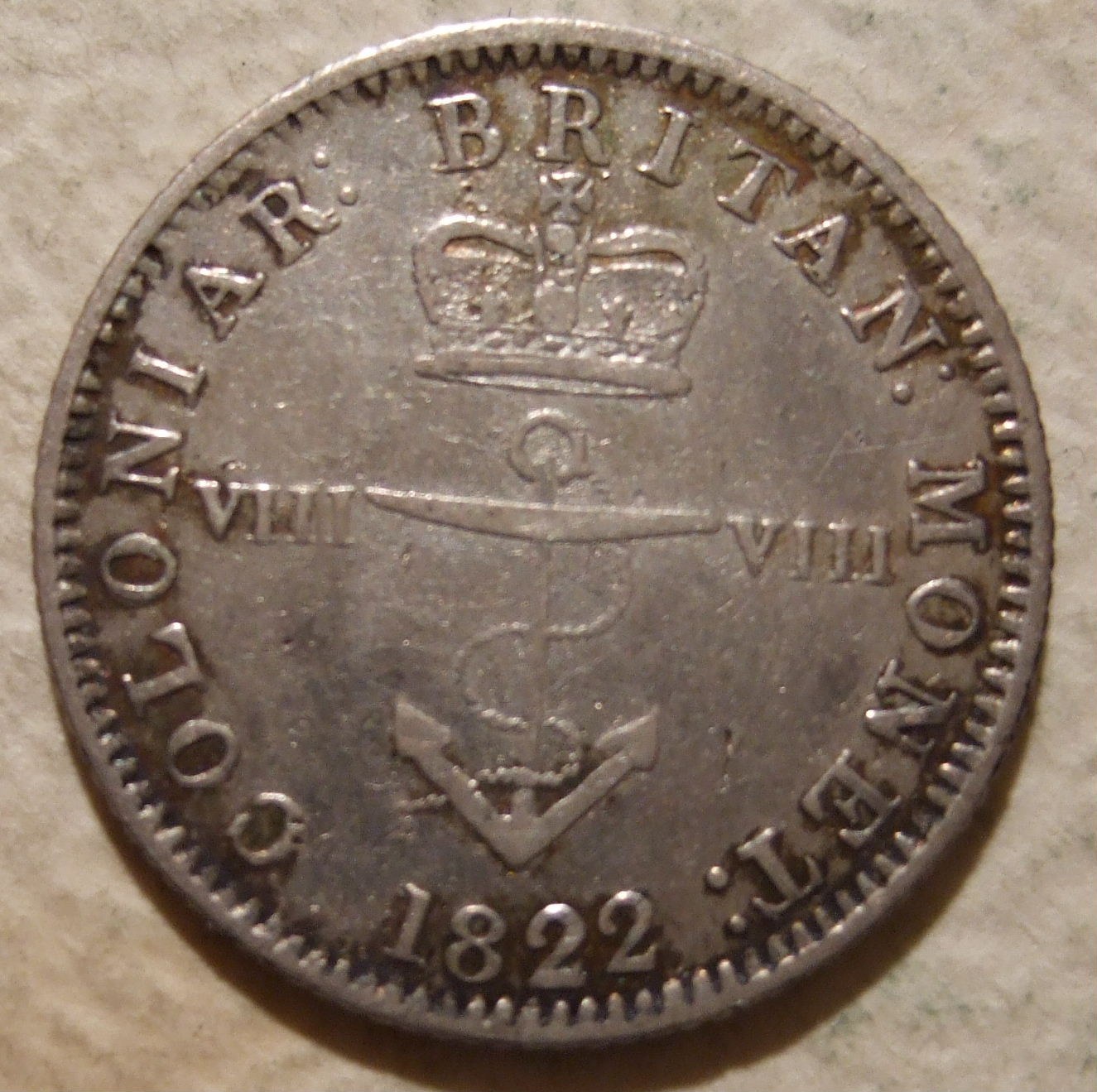
George IV One Eighth Spanish Dollar
Small 1822 British colonial silver coin from the George IV "Anchor Money," a fraction of the Spanish dollar used in the West Indies and Mauritius.
- Country
- British Colonies in the Americas
- Denomination
- 1/8 Spanish Dollar
- Metal
- Silver
Got a coin like this?
Identify any coin from a photo, free.
Overview
The George IV One Eighth Spanish Dollar is a small silver coin from the series of British colonial "Anchor Money" issued during the reign of George IV. It was made to serve as an official fractional denomination of the Spanish (or Spanish-American) silver dollar, the so-called "piece of eight," which was the dominant trade coin across Britain's overseas colonies at the time.
The coin takes its popular name from its reverse design: a large fouled anchor accompanied by a Roman numeral and the surrounding legend "PRO BRITANNIA COLONIAE," broadly meaning "for the British colonies." The obverse carries a crown with Latin royal inscriptions naming George IV. The example described here is dated 1822.
Because it was a subsidiary denomination rather than a full dollar, the eighth-dollar was one of the smaller pieces in the series, intended for everyday small transactions where a whole silver dollar was far too much value.
History & Background
In the early nineteenth century Britain's colonies suffered a chronic shortage of low-value coin. Large silver Spanish and Spanish-American dollars circulated widely for trade, but there was little official small change to make up fractions of a dollar. To address this, the British authorities issued dedicated colonial silver in fractions of the dollar, dated 1820 and 1822 under George IV, a coinage collectors now know as "Anchor Money."
The series was distributed to British colonial territories, including islands of the British West Indies and the Indian Ocean colony of Mauritius, where the Spanish dollar system was in use. The denominations were expressed as fractions of the dollar, the eighth-dollar being one of the smaller pieces. The anchor motif signalled the coins' British colonial and maritime character.
The Anchor Money experiment was short-lived. As Britain moved toward standardising sterling coinage across its empire in the following decades, these fractional-dollar issues were superseded, and surviving examples passed from circulation into the hands of collectors.
How to Identify
Look first at the reverse: a large anchor with a Roman numeral (VIII on this piece) and the encircling legend "PRO BRITANNIA COLONIAE." This anchor-and-legend combination is the defining feature of the George IV Anchor Money and immediately separates it from ordinary British or Spanish coinage.
The obverse shows a crown with partially legible Latin inscriptions naming George IV. The date, 1822, ties it to the second and larger of the two Anchor Money issues (the first being dated 1820).
The coin is struck in silver and is physically small, consistent with its role as a fraction of the dollar rather than a full-size crown or dollar. Wear often leaves the fine details of the crown and legends only partially visible, so the anchor reverse is usually the most reliable identifying element.
Value & Collectibility
As a short-lived British colonial issue, the George IV eighth-dollar Anchor Money is genuinely scarce and is valued as a collector coin rather than for bullion. Its small silver content means intrinsic metal value is minor; nearly all of its worth is numismatic.
Prices vary widely with grade, eye appeal, and the strength of the anchor and legends. Well-worn but clearly identifiable pieces typically trade in the modest tens of dollars, while sharp, problem-free examples with full detail can command substantially more, into the hundreds. Certified, high-grade specimens are the most sought after.
Because the series is collected and copies exist, condition and authenticity strongly influence price. For any piece of significant value, independent grading and authentication are recommended before buying or selling.
Frequently asked questions
Why is it called a "Spanish Dollar" if it is a British coin?
It is a British colonial coin, but it was denominated as a fraction of the Spanish (Spanish-American) silver dollar, the "piece of eight," which was the main trade coin in Britain's colonies. The eighth-dollar filled the need for official small change within that dollar system.
What does the anchor on the reverse mean?
The fouled anchor is the emblem of this British colonial issue, reflecting its maritime and imperial character. The whole series is nicknamed "Anchor Money" because of it, and the anchor is the quickest way to recognise the coin.
What does "PRO BRITANNIA COLONIAE" mean?
It is a Latin legend that broadly means "for the British colonies," identifying the piece as coinage struck for use in Britain's overseas territories rather than for the home country.
Which colonies used this coin?
The Anchor Money was issued for British colonial territories including islands of the British West Indies and the Indian Ocean colony of Mauritius, where the Spanish dollar and its fractions circulated.
Is my eighth-dollar made of real silver?
Yes, these were struck in silver, though as a small fractional coin its metal value is minor. Its value to collectors comes from its scarcity and history, not its bullion content.
George IV One Eighth Spanish Dollar guides
In-depth guides for identifying, valuing, and collecting George IV One Eighth Spanish Dollar.
Other coins you may enjoy
Sarawak One Cent
1870
Jamaica Half Penny
1871
Spanish Colonial 2 Reales (Milled)
1732–1772 (pillar) and 1772–1825 (portrait); example dated 1776
Straits Settlements One Cent
1919–1926 (this type)
British Honduras 10 Cents
1956
Spanish Colonial 1 Real (Bourbon)
1700-1746
Bermuda Half Penny
1909
British North Borneo One Cent
1884–1886
British Honduras One Cent
1885–1894 (Victoria); this example 1889
British North Borneo Half Cent
1885
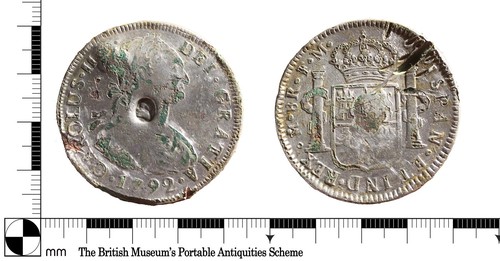
Counterstamped 8 Reales
Charles IV era (1788-1808), host coin; counterstamps and hole added later
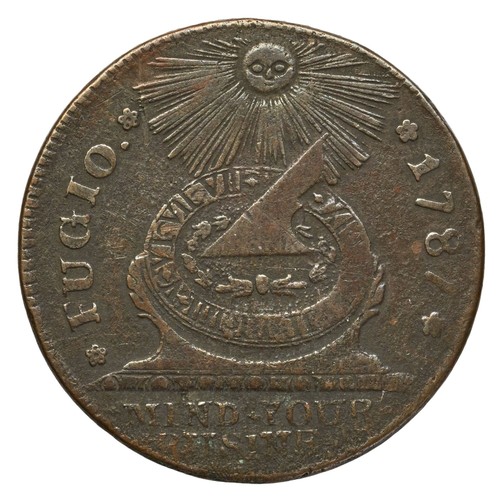
Fugio Cent
1787