
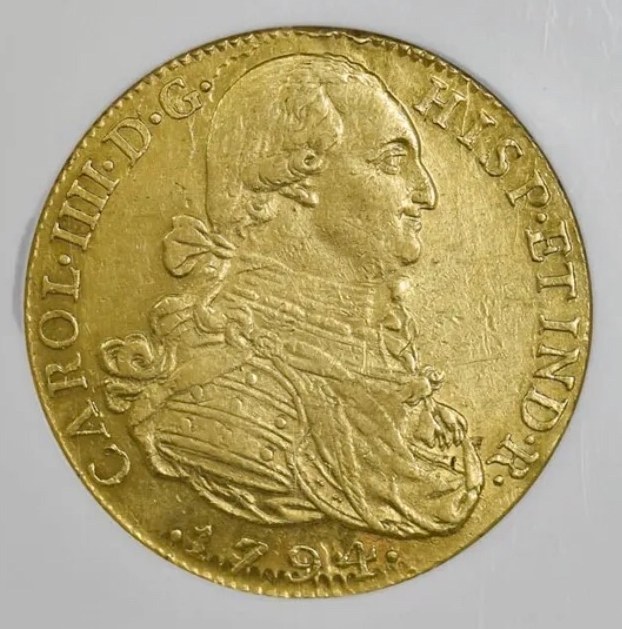
Colombia 8 Escudos (Base Metal)
A base-metal (copper-alloy) piece styled after the colonial Colombian 8 escudos gold onza, with a Charles III profile and crowned heraldic arms dated 1760.
- Country
- Colombia
- Denomination
- 8 Escudos
- Metal
- Copper Alloy
Got a coin like this?
Identify any coin from a photo, free.
Overview
This is a copper-alloy piece made in the style of the Spanish colonial 8 escudos, the large gold "onza" once struck in what is now Colombia. The example shown carries a right-facing bust identified as King Charles III on the obverse and a crowned heraldic coat of arms on the reverse, with the date 1760. It reproduces the design of the escudos issued under the Viceroyalty of New Granada.
The key point for identification is the metal. A genuine circulating 8 escudos of this era was struck in high-purity gold. A specimen in copper alloy is not a precious-metal onza but a base-metal version—typically a replica, souvenir, museum-style copy, or a period or modern counterfeit. It is best understood and collected as a representation of the famous colonial gold coin rather than as the coin itself.
History & Background
The 8 escudos was the top gold denomination of the Spanish colonial system, known as the onza and often called a "doubloon" in English. In the Viceroyalty of New Granada it was struck chiefly at the Santa Fe de Bogotá (Nuevo Reino) mint and at Popayán, using gold from the region's rich placer and vein deposits. The date 1760 falls at the very start of the reign of Charles III (1759–1788), whose portrait replaced that of Ferdinand VI on colonial coinage.
Genuine onzas of this kind were high-value coins used in international trade and settlement, and their gold origins made them targets for both period counterfeiters and, much later, modern replica makers. Because the design is historically iconic, base-metal copies—cast or struck in brass, bronze, or other copper alloys, sometimes gilded—have been produced for jewelry, display, and the souvenir trade. Such a piece echoes the history of the colonial onza without being a struck gold coin of the mint.
How to Identify
Look first at the metal and weight. A real 8 escudos is gold, about 27 grams, and shows the warm, dense character of a precious-metal coin. A copper-alloy example is lighter for its size, shows reddish, yellow-brass, or bronze tone where surfaces are worn or scratched, and may reveal a different core beneath any gilding. This alone marks it as a base-metal piece rather than a genuine onza.
The design follows the escudos pattern: a right-facing armored bust of Charles III on the obverse within a Latin legend naming the king, and a crowned coat of arms on the reverse, typically the quartered Spanish shield surrounded by the collar of the Order of the Golden Fleece, with the date 1760. On authentic mint coins, small letters give the mint mark (such as those for Santa Fe de Bogotá or Popayán) and the assayer's initials; on many copies these details are soft, garbled, or absent, which is itself a useful diagnostic.
Value & Collectibility
Value depends entirely on what the piece is. A base-metal (copper-alloy) 8 escudos in the style shown here carries little to no precious-metal or numismatic value on its own; such replicas, souvenirs, and copies generally trade for small sums and are collected as curiosities or display items rather than as investment coins.
By contrast, a genuine gold 8 escudos of colonial New Granada is a scarce and valuable coin whose worth runs well into the range of a substantial gold piece, varying with mint, date, and condition. Because the difference is so large, the essential step is to confirm the metal. If there is any question that a piece might be genuine gold, have it weighed, measured, and tested by a reputable dealer or third-party grading service before assigning value.
Frequently asked questions
Is this a real gold 8 escudos?
No. A genuine 8 escudos was struck in gold. This piece is copper alloy, so it is a base-metal version—most likely a replica, souvenir, or copy—rather than a circulating gold onza.
What was the real coin used for?
The gold 8 escudos, or onza, was the largest gold denomination of the Spanish colonial system, used in high-value trade and often called a doubloon.
Who is on the obverse?
The bust is identified as King Charles III of Spain, who reigned from 1759 to 1788. The 1760 date places the design at the start of his reign.
Does it have any value?
As a base-metal copy it has modest value as a curiosity or display piece. Only a verified gold example carries significant numismatic worth, so test the metal before assuming value.
Colombia 8 Escudos (Base Metal) guides
In-depth guides for identifying, valuing, and collecting Colombia 8 Escudos (Base Metal).
Other coins you may enjoy
Sarawak One Cent
1870
Jamaica Half Penny
1871
Spanish Colonial 2 Reales (Milled)
1732–1772 (pillar) and 1772–1825 (portrait); example dated 1776
Straits Settlements One Cent
1919–1926 (this type)
British Honduras 10 Cents
1956
Spanish Colonial 1 Real (Bourbon)
1700-1746
Bermuda Half Penny
1909
British North Borneo One Cent
1884–1886
British Honduras One Cent
1885–1894 (Victoria); this example 1889
British North Borneo Half Cent
1885
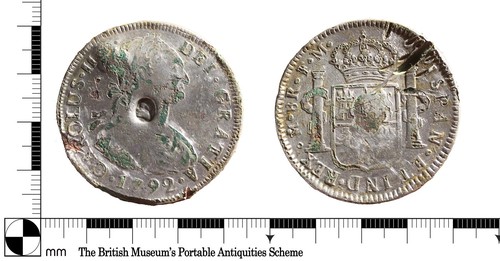
Counterstamped 8 Reales
Charles IV era (1788-1808), host coin; counterstamps and hole added later
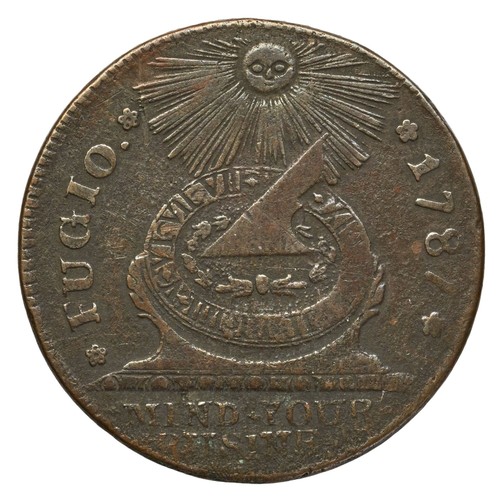
Fugio Cent
1787