
How to Identify the Colombia 8 Escudos (Base Metal)
A collector's walkthrough for recognizing a base-metal 8 escudos copy by its metal, weight, design details, and the marks a genuine gold onza would carry.
Read the full Colombia 8 Escudos (Base Metal) encyclopedia entry →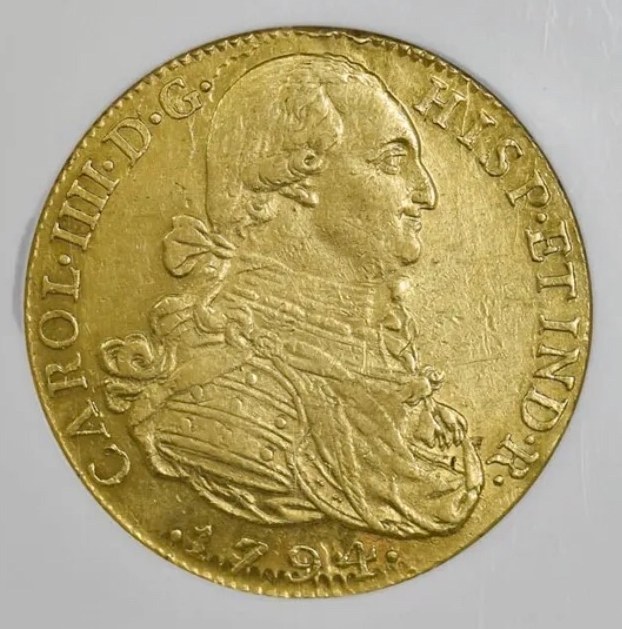
Begin with the metal, because it decides everything. Hold the piece to good light and check worn edges, rims, and any scratches: a copper-alloy coin shows red, brassy, or bronze color under the surface, while a genuine 8 escudos is solid gold throughout. Gilded copies can look convincing at a glance, so look specifically for a different-colored core peeking through high points or nicks. This single observation separates a base-metal representation from a precious-metal onza.
Weigh and measure it. A real 8 escudos runs about 27 grams and roughly 34–37 mm in diameter, with the heft of a gold coin. A base-metal example of the same size will typically feel lighter and can ring or balance differently. An accurate scale and caliper are far more reliable here than a visual impression.
Read the design against the true type. The obverse should show a right-facing armored bust of Charles III with a Latin legend naming the king; the reverse should show a crowned coat of arms—usually the quartered Spanish shield within the collar of the Golden Fleece—with the 1760 date. On authentic mint coins you would expect crisp lettering plus tiny mint marks for a New Granada mint such as Santa Fe de Bogotá or Popayán, and an assayer's initial. Copies often blur or omit these small marks, or render the legends unevenly.
Watch for the tell-tale signs of reproduction. Casting seams on the edge, a grainy or pitted surface, mushy details, or a plain rather than a properly ornamented edge all point to a copy. Many replicas were made for jewelry and still show solder marks, mounting holes, or loop scars. None of these features appear on a well-struck genuine onza.
When the stakes are high, get expert confirmation. Because a genuine gold 8 escudos is worth vastly more than a base-metal copy, any piece that might plausibly be gold deserves professional testing—non-destructive metal analysis, weighing, and measurement—by a trusted dealer or grading service rather than a guess based on appearance alone.
Frequently asked questions
How can I tell base metal from gold quickly?
Check worn edges and scratches for red or brassy color, and weigh the coin. A genuine 8 escudos is about 27 grams of solid gold; a lighter, copper-toned piece is base metal.
Where would the mint mark be on a genuine coin?
On the reverse, in the small letters beside the crowned shield, along with the assayer's initial. Copies frequently blur or omit these marks.
What are the signs it is a replica?
Edge seams, pitted or grainy surfaces, soft or uneven lettering, gilding over a different-colored core, and mounting or solder marks all indicate a base-metal copy.
Should I have it professionally tested?
Yes, if there is any chance it could be gold. The value gap between a copy and a genuine onza is large, so non-destructive testing by a reputable dealer or grader is worthwhile.