
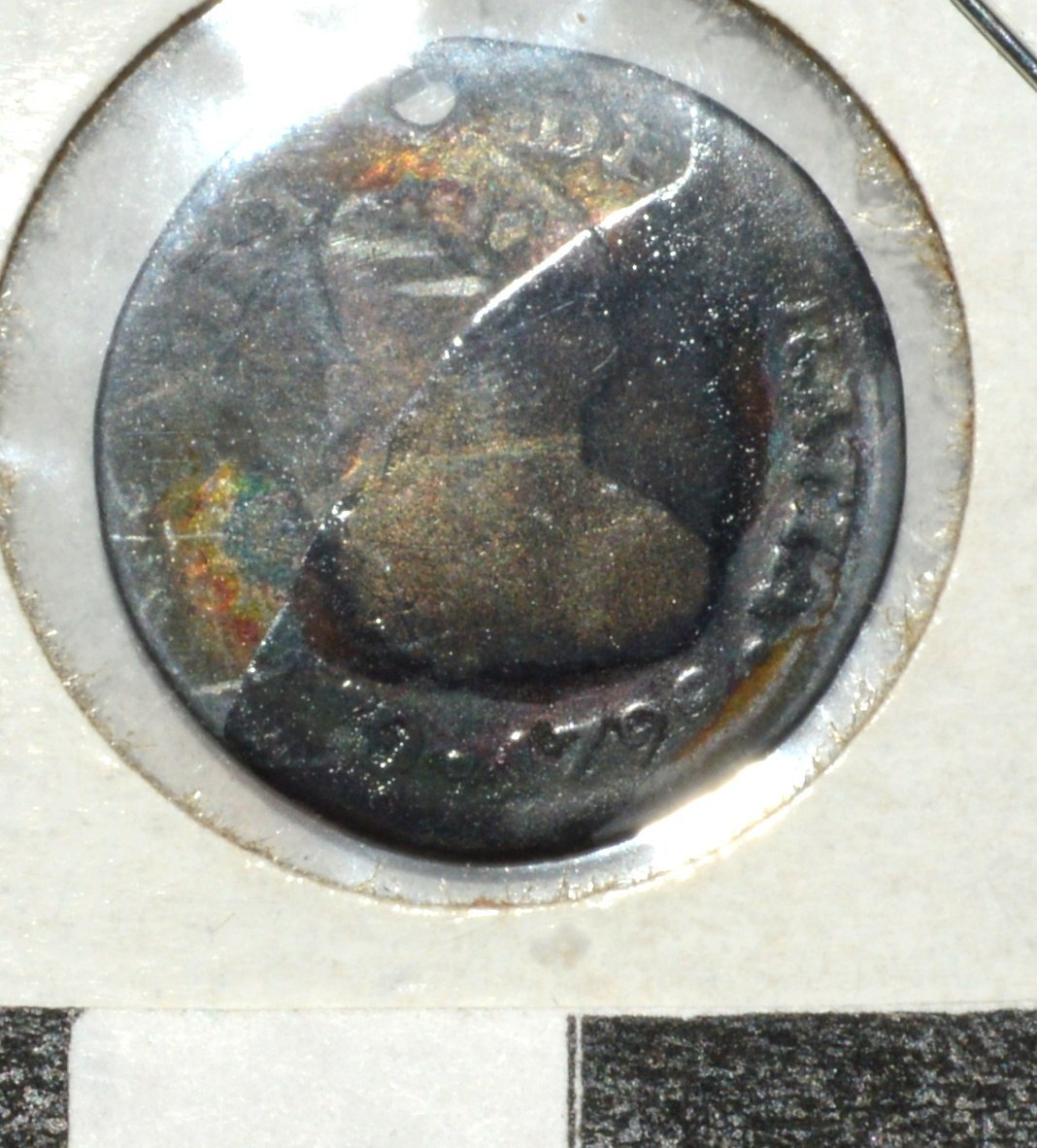
Spanish Colonial Half Real
The smallest milled silver coin of Spain's American empire: a tiny 1/2 real with a royal bust and the crowned arms between pillars.
- Country
- Spain
- Denomination
- 1/2 Real
- Metal
- Silver
Got a coin like this?
Identify any coin from a photo, free.
Overview
The Spanish Colonial Half Real, or medio real, was the smallest standard silver denomination of Spain's empire in the Americas. Worth one-sixteenth of the famous eight-real "piece of eight," it was pocket change for everyday transactions across Mexico, Peru, and the other colonial mints.
The example shown is a bust type of the reign of Charles IV, dated 1799. One side carries the laureate, armored bust of the king with the Latin legend CAROLUS IIII DEI GRATIA; the other shows the crowned Spanish royal coat of arms flanked by the Pillars of Hercules, encircled by HISPAN ET IND REX ("King of the Spains and the Indies").
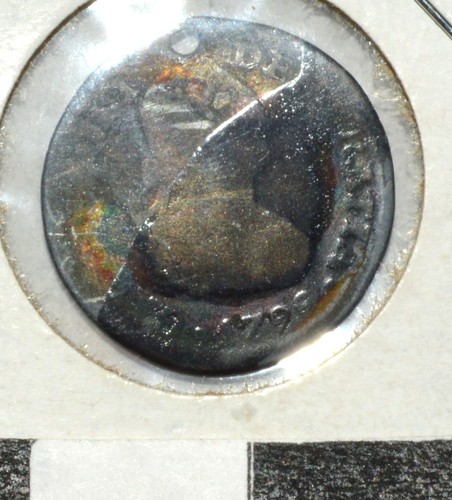
Struck in silver of roughly .896 fineness, the coin is small and thin, typically weighing under two grams. Because so many were made and heavily circulated, surviving pieces are often worn, toned, or holed, as seen in these photos.
History & Background
Spain reorganized its colonial coinage in 1772, replacing older designs with a portrait (bust) series. From then on the half real bore the reigning monarch's bust rather than the earlier pillars-and-globes or crowned-shield-only motifs. The type shown belongs to Charles IV (reigned 1788-1808), whose portrait and the abbreviation CAROLUS IIII appear on coins of this period.
These minors were produced at multiple colonial mints, including Mexico City (mint mark Mo), Lima, Potosi, Santiago, Guatemala, and the New Granada mints. Silver flowed from American mines through these facilities and out across global trade routes, making Spanish colonial silver a near-universal currency well into the 1800s.
Production of the colonial bust type wound down as Spain's American colonies won independence in the 1810s and 1820s, after which new republics issued their own coinage.
How to Identify
Look first at the two designs. The obverse (portrait side) shows a laureate, draped-and-armored bust of the king facing right, with a Latin legend beginning CAROLUS IIII DEI GRATIA and the date. The reverse shows the crowned Spanish royal coat of arms set between the two Pillars of Hercules, which carry PLVS VLTRA banners, surrounded by HISPAN ET IND REX.
Size and metal are key: the half real is a small, thin silver coin roughly 16-18 mm across and well under two grams. On the reverse, small letters and symbols flanking the shield record the mint mark, the assayer's initial(s), and the value mark for the half real.
The date on these examples reads 1799. Heavy wear, dark toning, and edge damage are common on circulated pieces and do not by themselves indicate a problem; they are typical of coins that saw decades of daily use.
Value & Collectibility
As one of the most heavily produced denominations of the Spanish empire, the colonial half real is common, and worn examples are among the more affordable colonial silver coins. Circulated pieces in the condition shown generally trade in a modest range, often from a low double-digit figure up to a few tens of dollars, depending on mint, date, and eye appeal.
Value rises for coins with strong detail, attractive original toning, scarcer mints or dates, or certified higher grades. Damage such as holing, bending, cleaning, or heavy corrosion (all visible on some surviving examples) reduces value.
Because condition and mint attribution drive price, treat any single figure as a guide only. For a specific coin, compare against recent sales of the same mint and date in similar grade.
Frequently asked questions
How much was a half real worth?
A half real (medio real) was one-half of a real and one-sixteenth of the eight-real "piece of eight." It was small change used for everyday purchases across the Spanish colonies.
Is this coin made of real silver?
Yes. Colonial half reales of this period were struck in silver of roughly .896 fineness. The coin is small and light, so its silver content is modest.
Who is on the coin?
The bust is Charles IV of Spain, identified by the legend CAROLUS IIII. He reigned from 1788 to 1808, which fits the 1799 date on these examples.
Why is my coin so dark and worn?
These minors circulated heavily for decades, so wear, dark toning, and even holes are common. Such condition is normal and does not mean the coin is fake.
Spanish Colonial Half Real guides
In-depth guides for identifying, valuing, and collecting Spanish Colonial Half Real.
Other coins you may enjoy
Sarawak One Cent
1870
Jamaica Half Penny
1871
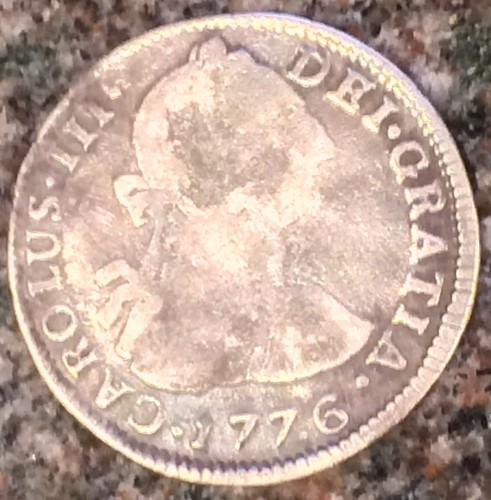
Spanish Colonial 2 Reales (Milled)
1732–1772 (pillar) and 1772–1825 (portrait); example dated 1776
Straits Settlements One Cent
1919–1926 (this type)
British Honduras 10 Cents
1956
Spanish Colonial 1 Real (Bourbon)
1700-1746
Bermuda Half Penny
1909
British North Borneo One Cent
1884–1886
British Honduras One Cent
1885–1894 (Victoria); this example 1889
British North Borneo Half Cent
1885
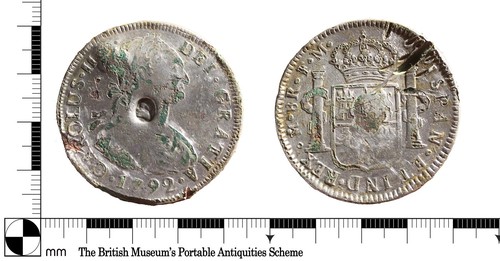
Counterstamped 8 Reales
Charles IV era (1788-1808), host coin; counterstamps and hole added later
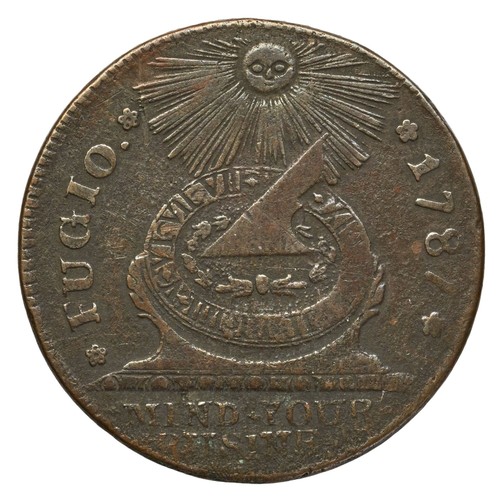
Fugio Cent
1787