
How to Identify the Spanish Colonial Half Real
A collector's checklist for the tiny 1/2 real: reading the bust, the crowned arms and pillars, mint marks, and spotting look-alikes.
Read the full Spanish Colonial Half Real encyclopedia entry →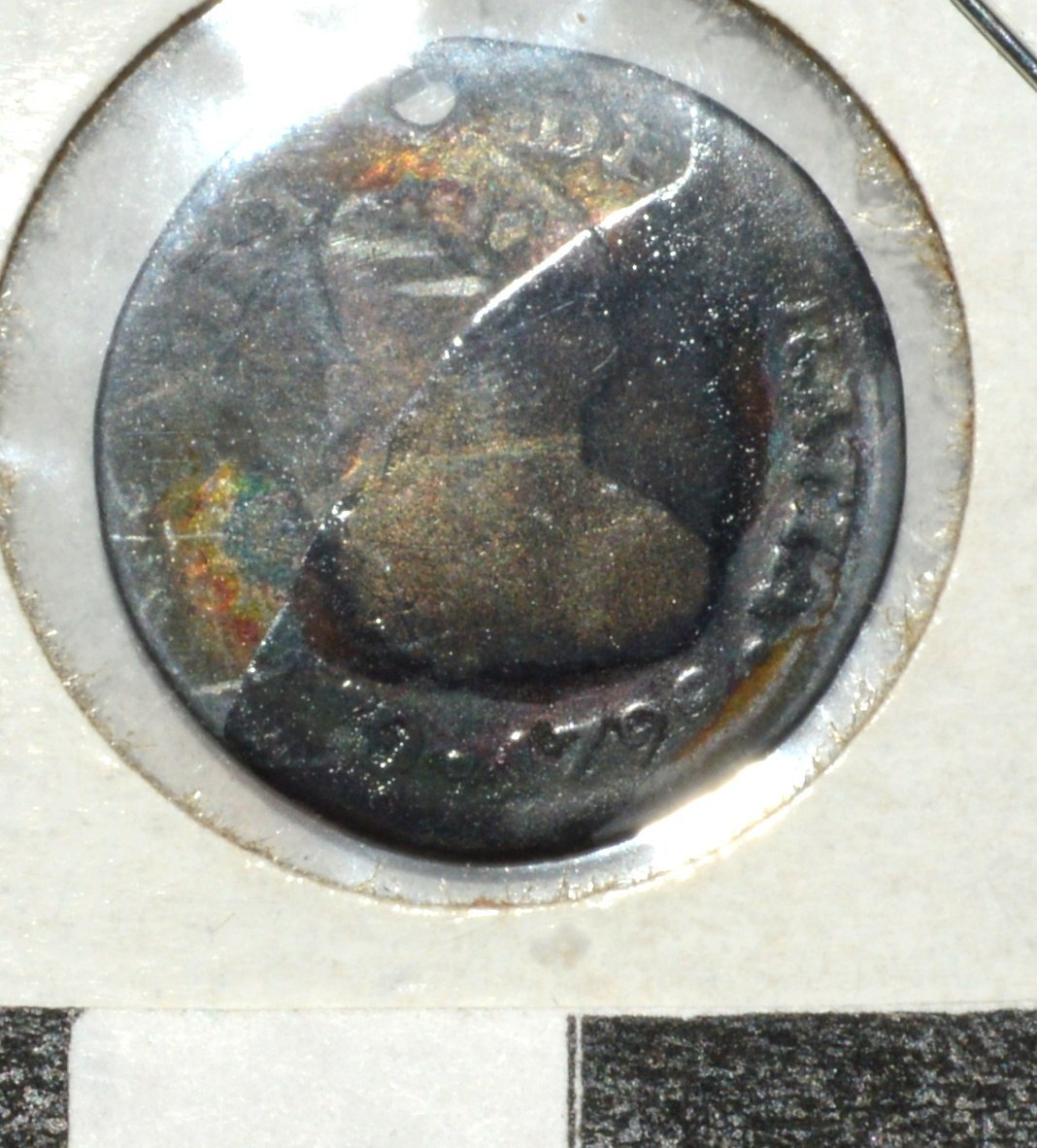
Start with size and weight. The half real (medio real) is the smallest standard colonial silver coin, roughly 16-18 mm in diameter and typically under two grams. If a supposed half real is noticeably larger or heavier, you may actually have a one-real or two-real piece, which share the same design at a bigger scale.
Read the two sides. The portrait side shows a laureate, armored bust facing right with a Latin legend beginning CAROLUS IIII DEI GRATIA (Charles IV) plus the date. The shield side shows the crowned Spanish royal arms between the two Pillars of Hercules bearing PLVS VLTRA scrolls, encircled by HISPAN ET IND REX. On these examples the date reads 1799.
Find the mint mark and assayer initials, usually small letters flanking the shield on the reverse, together with the value mark for the half real. Common mint marks include Mo (Mexico City), plus Lima, Potosi, Santiago, Guatemala, and the New Granada mints. Attributing the mint and date is what separates a common coin from a scarcer one.
Watch for look-alikes and problems. Mainland Spanish minors, later Latin American republic coins, and low-grade contemporary counterfeits can resemble the type. Cast fakes often look soft or bubbly, have a mold seam, or ring dull; genuine struck coins show crisp lettering under wear. Because these coins are small and were often mounted, holes, solder traces, and bent flans are frequent and affect value.
When detail is worn away, focus on what remains: the shape of the bust and shield, any legible legend fragments, the position of mint and assayer marks, and the diameter. For valuable or uncertain pieces, weigh and measure the coin and, if needed, seek certification rather than relying on toning or surface look alone.
Frequently asked questions
How do I tell a half real from a one-real coin?
They share the same bust-and-arms design, so use size and weight. The half real is the smallest, at about 16-18 mm and under two grams; the one real is larger and heavier.
Where is the mint mark?
Look at the reverse, in the small letters flanking the crowned shield. There you will usually find the mint mark, the assayer's initial(s), and the value mark for the half real.
The coin has a hole. Does that matter?
Many of these small coins were worn as jewelry, so holes are common. A hole does not make the coin fake, but it does lower collector value compared to an undamaged example.
How can I spot a fake?
Cast counterfeits often show a seam, soft or bubbly surfaces, and a dull ring. Genuine struck coins keep crisp lettering even when worn. Correct diameter and weight are strong reassurance.