
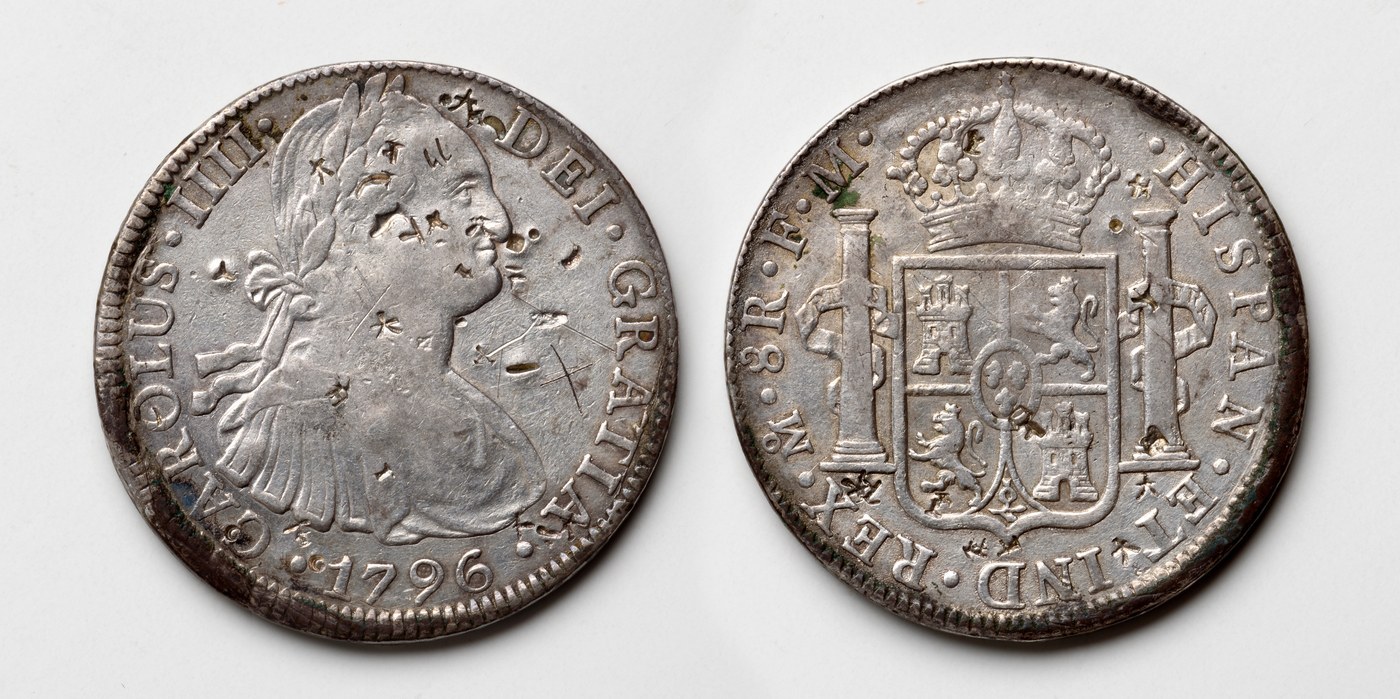
Spanish Colonial 8 Reales (Milled Bust)
The milled-bust Spanish colonial 8 reales—the classic “piece of eight,” a large silver coin bearing the Spanish king's portrait and royal arms.
- Country
- Spain
- Denomination
- 8 Reales
- Metal
- Silver
Got a coin like this?
Identify any coin from a photo, free.
Overview
The Spanish colonial 8 reales of the milled-bust type is a large silver coin struck across Spain's American colonies for use throughout the empire and far beyond it. The example shown here dates to 1796 and carries the right-facing portrait of King Carlos IV on the obverse, with the crowned Spanish coat of arms on the reverse. Coins of this pattern are the famous “piece of eight” of maritime trade and legend.
Because it was produced in enormous quantity and to a consistent standard, the milled-bust 8 reales circulated worldwide and became one of the most recognized trade coins in history. It is a cornerstone type for collectors of colonial and world silver, prized for its size, its Baroque design, and its deep historical associations.
History & Background
The bust or “portrait” design was introduced in 1772, when Spain replaced the earlier pillar (columnario) 8 reales with a type showing the reigning monarch's bust. Coins were struck at colonial mints in the Americas—most prolifically Mexico City, along with Potosí, Lima, Guatemala, Santiago, and others—using silver from the great mines of New Spain and Peru. The 1796 pieces belong to the reign of Carlos IV (1788–1808), whose portrait replaced that of his predecessor Carlos III.
The milled 8 reales was the standard “dollar” of global commerce in the 18th and early 19th centuries, changing hands from the Caribbean to China. In the young United States it circulated as legal tender and helped inspire the American silver dollar; it remained accepted in the U.S. until 1857. The portrait type continued through the reign of Ferdinand VII until the wars of independence ended Spanish colonial minting in the Americas in the 1820s.
How to Identify
Look for a large silver coin roughly 39–40 mm in diameter and about 27 grams in weight, with a reeded or ornamented edge. The obverse bears an armored bust of the king facing right, encircled by a Latin legend that names the monarch as “CAROLUS IIII” (used even for Carlos IV) with “DEI GRATIA,” plus the date—here 1796. Note that the numeral style can make the king's regnal number easy to misread.
The reverse shows the crowned Spanish coat of arms—a quartered heraldic shield—flanked by the two crowned Pillars of Hercules bearing “PLVS VLTRA” banners, with the legend “HISPAN ET IND REX” (King of Spain and the Indies). Small letters beside the shield give the mint mark, the assayer's initials, and the denomination “8R.” Identifying the specific mint and assayer from these marks pins down where and by whom a given coin was struck.
Value & Collectibility
As a widely produced silver trade coin, the milled-bust 8 reales is generally affordable and available, though value varies widely with the mint, date, assayer, and—above all—condition. Well-worn but genuine examples are common and trade at modest premiums over their silver content, while sharply struck, high-grade, or scarce mint-and-date combinations command substantial premiums.
Coins showing Chinese merchant “chopmarks,” attractive toning, or clear pedigree can appeal to specialists. Because values swing so much on grade and rarity, and on the silver market, seek a recent auction record or dealer quote for the exact mint, date, and condition rather than relying on a single figure.
Frequently asked questions
Is this the coin known as a “piece of eight”?
Yes. The Spanish 8 reales—worth eight reales—is the historical “piece of eight,” and the milled-bust type is the version most people picture from the age of sail.
Why does an 1796 coin of Carlos IV read “CAROLUS IIII”?
The Latin legend spells the king's name and regnal number, and the mint used “IIII” rather than “IV.” A 1796 date places it firmly in the reign of Carlos IV.
Where was this coin made?
Milled-bust 8 reales were struck at Spain's American colonial mints such as Mexico City, Potosí, Lima, and Guatemala. The small mint mark beside the shield on the reverse identifies the specific mint.
How much is a Spanish colonial 8 reales worth?
It depends heavily on mint, date, assayer, and condition. Common worn examples trade near their silver value, while scarce or high-grade pieces bring significant premiums. Check a recent record for the exact coin.
Spanish Colonial 8 Reales (Milled Bust) guides
In-depth guides for identifying, valuing, and collecting Spanish Colonial 8 Reales (Milled Bust).
Other coins you may enjoy
Sarawak One Cent
1870
Jamaica Half Penny
1871
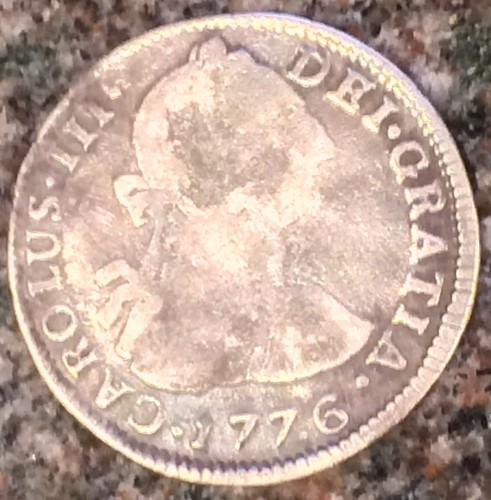
Spanish Colonial 2 Reales (Milled)
1732–1772 (pillar) and 1772–1825 (portrait); example dated 1776
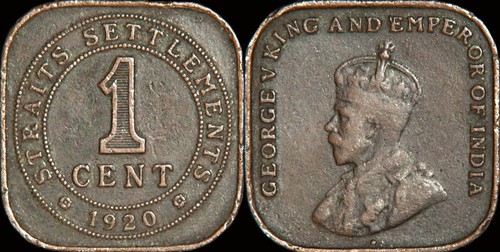
Straits Settlements One Cent
1919–1926 (this type)
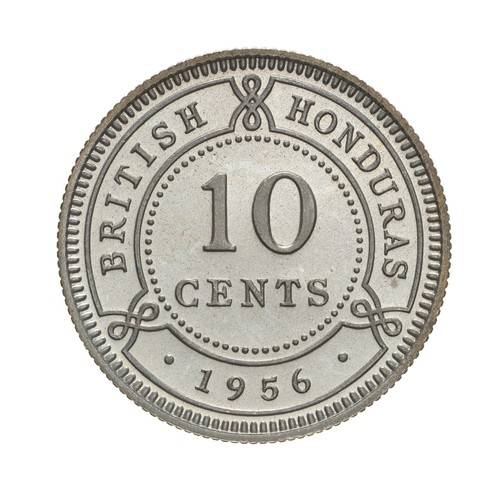
British Honduras 10 Cents
1956
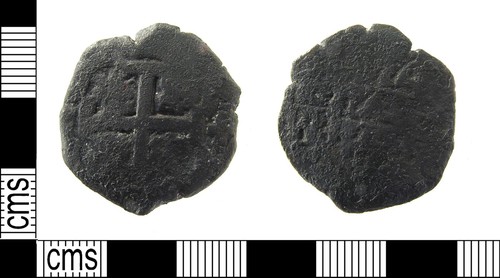
Spanish Colonial 1 Real (Bourbon)
1700-1746
Bermuda Half Penny
1909
British North Borneo One Cent
1884–1886
British Honduras One Cent
1885–1894 (Victoria); this example 1889
British North Borneo Half Cent
1885
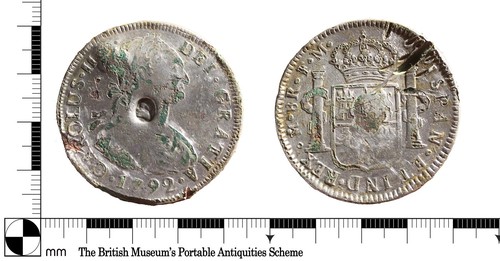
Counterstamped 8 Reales
Charles IV era (1788-1808), host coin; counterstamps and hole added later
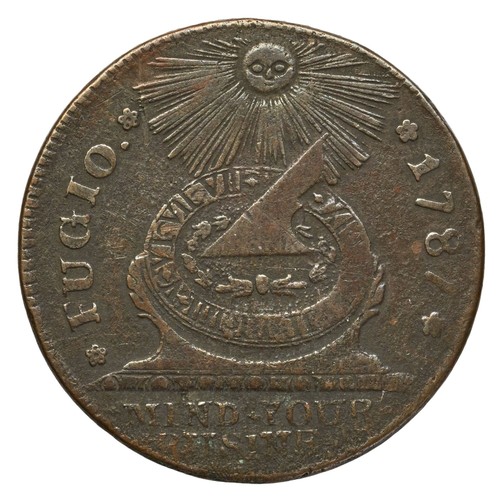
Fugio Cent
1787