
Coin Encyclopedia
Search and identify coins from around the world — with country, denomination, metal, mint, history, and how to tell them apart.
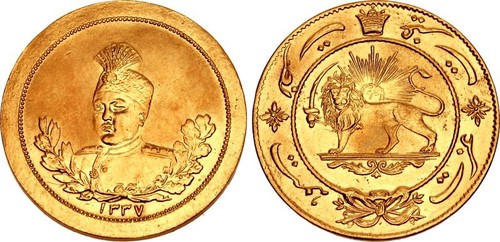
Qajar 5 Tomans Commemorative
A late Qajar gold 5 Tomans of Persia showing Ahmad Shah Qajar in a laurel wreath and the national Lion emblem, dated 1299.
Persia / Iran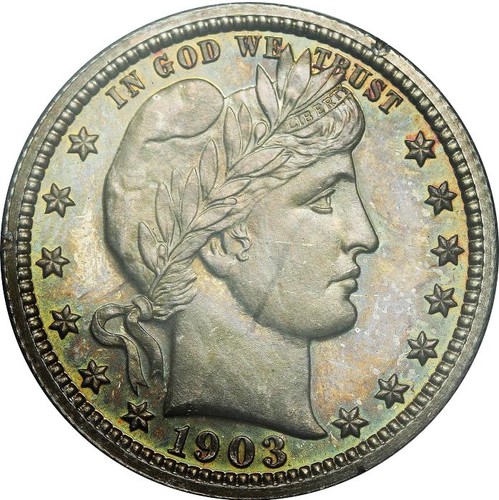
Barber Quarter
U.S. twenty-five-cent silver coin struck 1892–1916, with a left-facing Liberty head and a heraldic shield-eagle reverse.
Quarter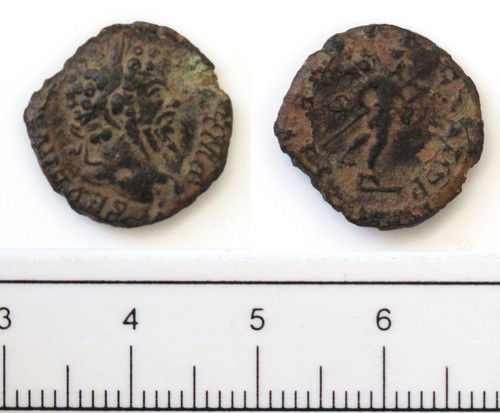
Denarius of Septimius Severus
Silver denarius of the Roman emperor Septimius Severus (193–211 AD), showing his laureate head and a standing reverse figure.
Ancient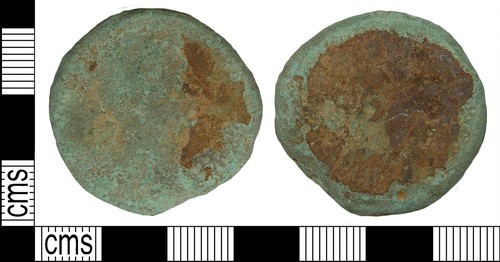
Sestertius of Commodus
A large Roman bronze sestertius of Emperor Commodus (180–192 AD), his laureate bearded head on one side and a standing figure on the other.
Ancient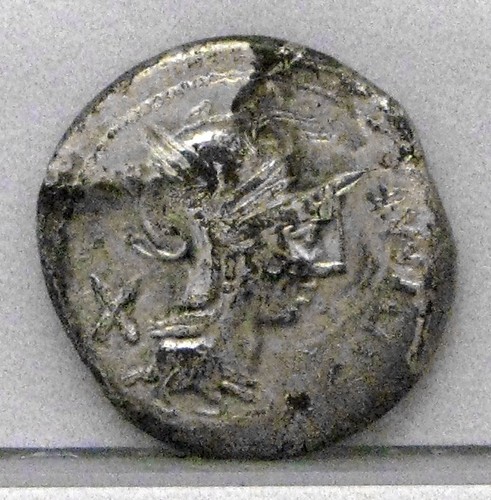
Roman Republican Denarius (Unidentified)
A silver Roman Republican denarius of about 115-114 BC: helmeted Roma on the obverse, Victory driving a two-horse chariot on the reverse.
Ancient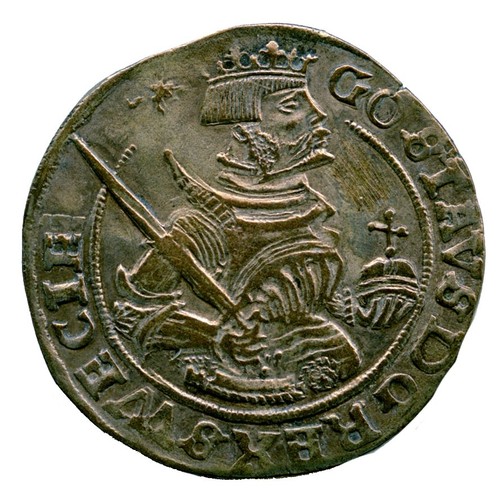
Gustav I Silver Coin
Early-Renaissance Swedish silver of Gustav I Vasa (r. 1523–1560), pairing a crowned armored royal bust with a crowned heraldic lion.
Medieval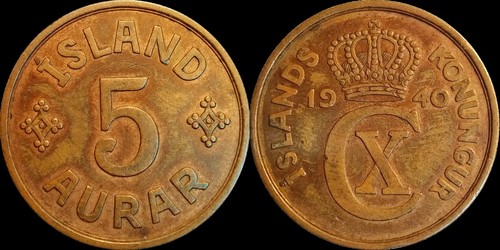
5 Aurar
Icelandic bronze 5 aurar of the Kingdom era, marked ÍSLAND with a crowned KONUNGDÓMUR ÍSLANDS reverse, struck 1926-1942.
World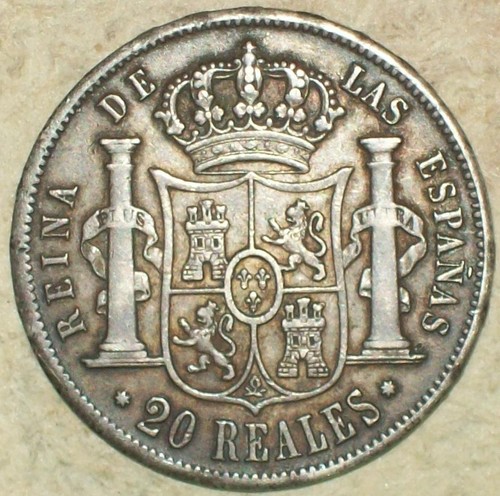
20 Reales (Isabel II)
Crown-sized Spanish silver 20 Reales of Queen Isabel II, with her crowned right-facing profile and a crowned pillared shield, dated 1854.
Modern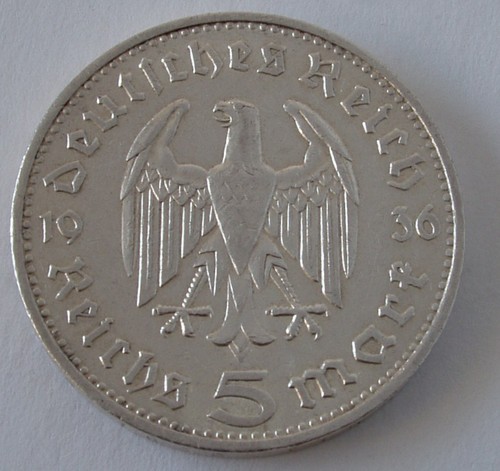
German 5 Reichsmark (Hindenburg)
German silver 5 Reichsmark of the Third Reich, pairing a portrait of Paul von Hindenburg with an eagle-and-swastika reverse; dated 1936.
Circulation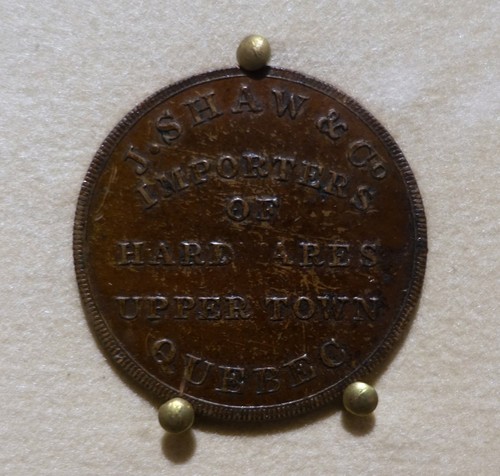
J. Shaw & Co. Hardware Token
Copper halfpenny-sized merchant token advertising J. Shaw & Co., importers of hardware in Upper Town, issued around the 1850s.
Canadian & Provincial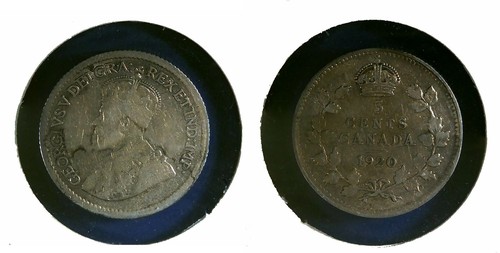
Canadian Five Cents (Nickel)
Canada's five-cent 'nickel,' with G.E. Kruger Gray's beaver reverse. This 1987 example pairs the beaver with an Elizabeth II portrait.
Canadian & Provincial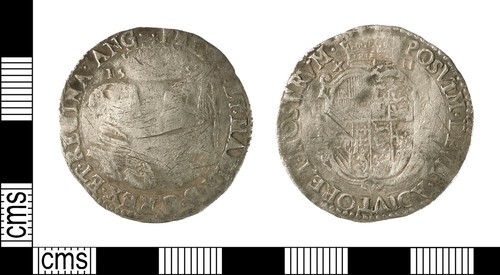
Philip and Mary Shilling
Hammered silver shilling of Philip II of Spain and Mary I (1554-1558), showing their paired royal busts and a crowned quartered shield of arms.
Hammered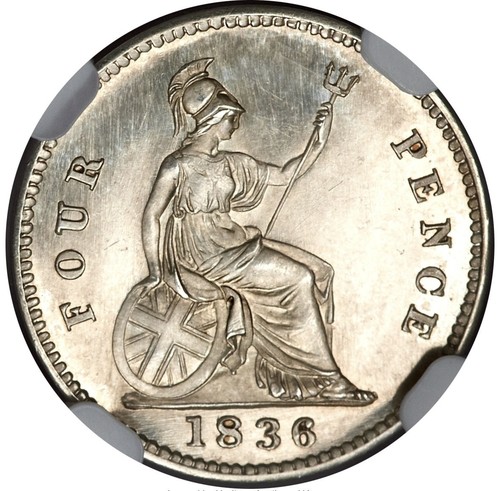
Groat of William IV
A small silver fourpenny piece of William IV (1836–1837), with a seated Britannia reverse; the coin that revived the modern British groat.
Milled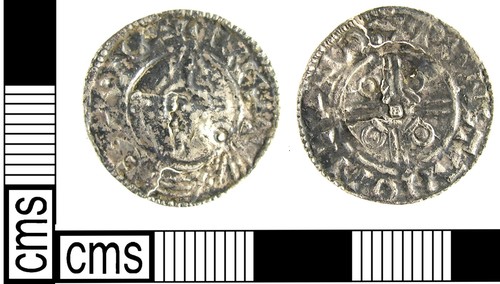
Penny of Cnut
Anglo-Saxon silver penny of King Cnut (Canute), showing a diademed bust facing left with a cross-and-pellets reverse, struck c.1024-1030.
Medieval Coins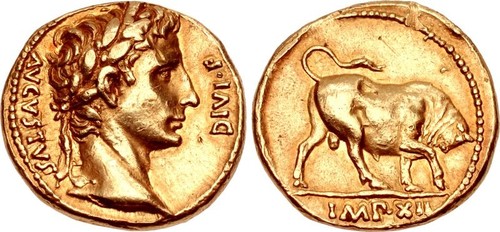
Aureus of Augustus
Roman imperial gold coin bearing the bare head of Augustus, first emperor of Rome, struck during his reign from 27 BC to 14 AD.
Ancient Coins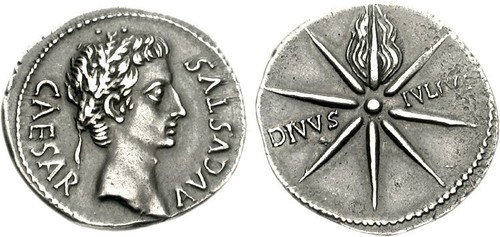
Denarius of Augustus
Silver denarius of Augustus (c. 19-18 BC) with his bare head and a comet-star of the deified Julius Caesar, inscribed DIVVS IVLIVS.
Ancient Coins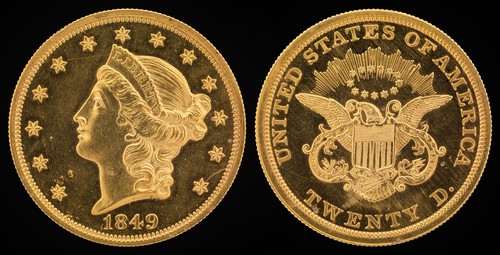
Liberty Head Double Eagle
U.S. $20 gold coin struck 1850–1907, showing a coroneted Liberty head left and a heraldic eagle with shield; the 1869 is a with-motto Type 2.
Double Eagle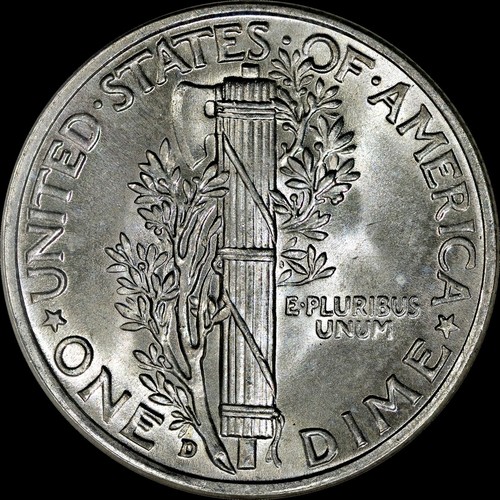
Mercury Dime
U.S. silver ten-cent coin struck 1916–1945, showing a winged-cap Liberty head on the obverse and a fasces with an olive branch on the reverse.
Dime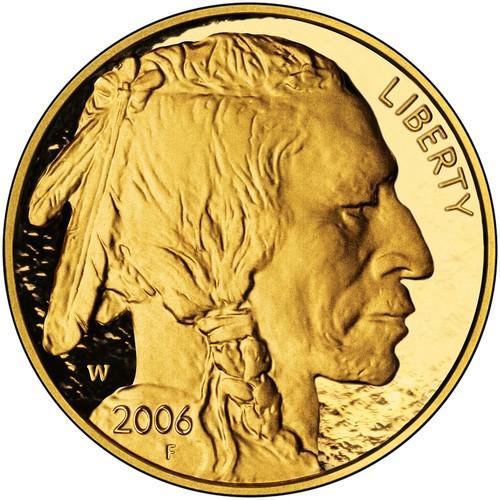
Buffalo Nickel
Iconic U.S. five-cent coin struck 1913–1938, with a Native American profile on the obverse and a standing American buffalo on the reverse.
Nickel Five Cent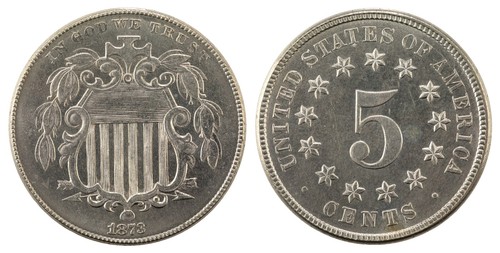
Shield Nickel
The first U.S. five-cent piece struck in copper-nickel, showing a Union shield on the obverse and a large numeral 5 on the reverse, made 1866–1883.
Nickel Five Cent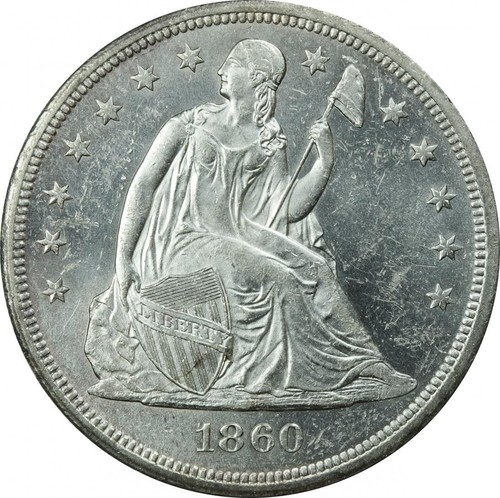
Seated Liberty Dollar
U.S. silver dollar (1840-1873) with Liberty seated holding a shield and a liberty-cap pole, ringed by stars. The pictured coin is dated 1860.
Dollar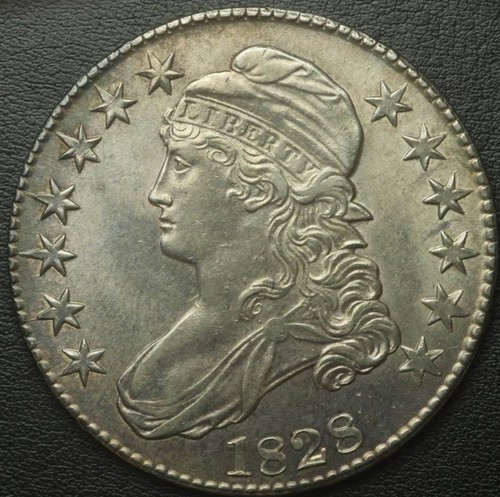
Capped Bust Half Dollar
U.S. fifty-cent silver coin struck 1807–1839, showing Liberty in a Phrygian cap surrounded by stars and a heraldic eagle on a shield.
Half Dollar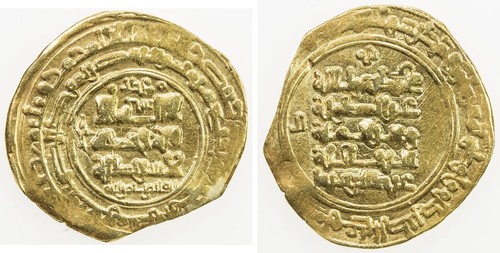
Ghaznavid Dinar
Gold dinar of the Ghaznavid dynasty (c. 10th–11th century), an epigraphic Islamic coin struck at Ghazna and allied mints in Afghanistan.
Medieval Islamic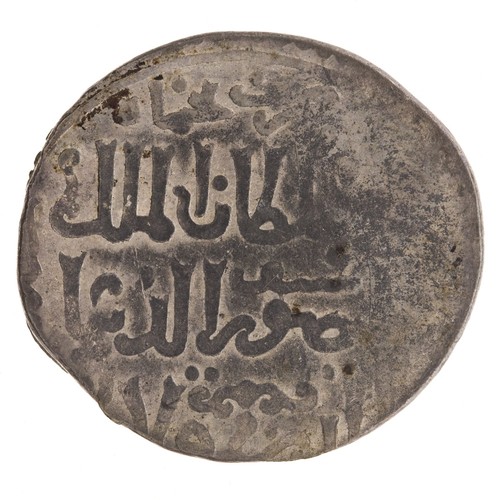
Silver Dirham of Sultan Qalawun
A hand-struck Mamluk silver dirham of Sultan Qalawun of Egypt, covered on both faces with Arabic calligraphy and struck AD 1279–1290.
Islamic