
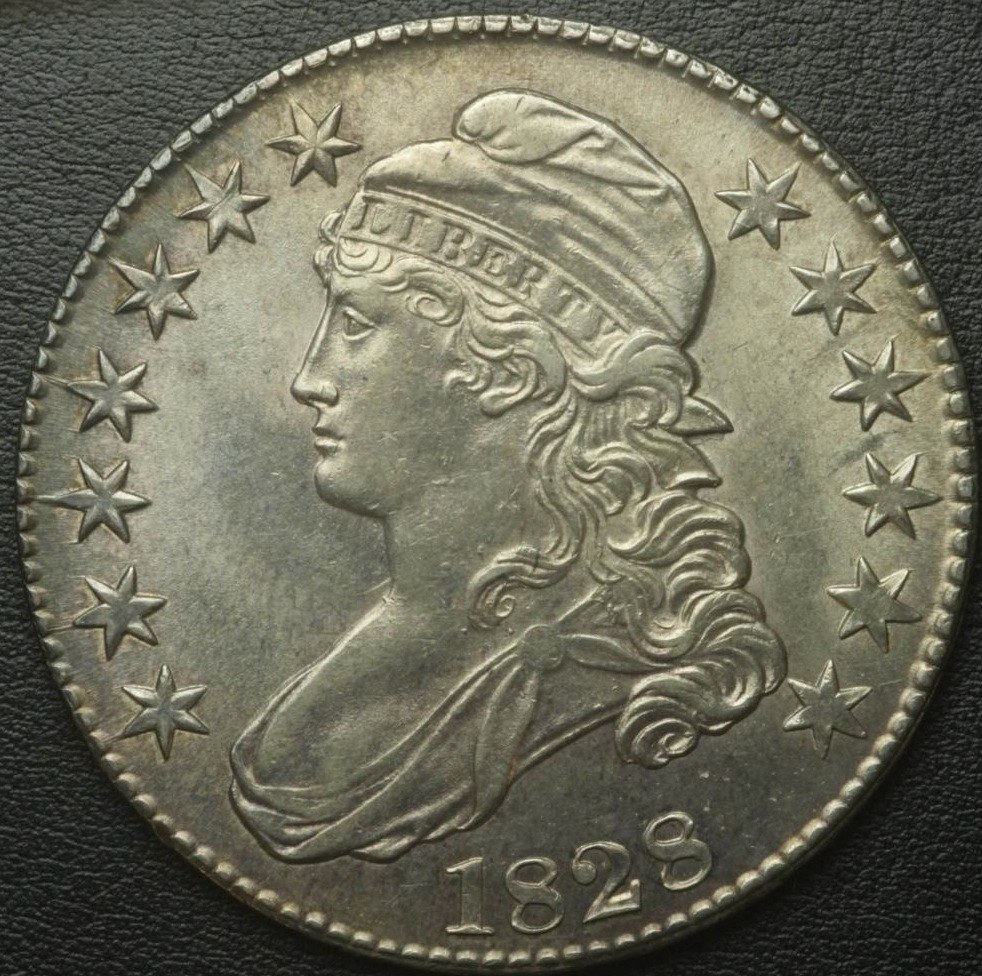
Capped Bust Half Dollar
U.S. fifty-cent silver coin struck 1807–1839, showing Liberty in a Phrygian cap surrounded by stars and a heraldic eagle on a shield.
- Country
- United States
- Denomination
- 50 Cents
- Metal
- Silver
Got a coin like this?
Identify any coin from a photo, free.
Overview
The Capped Bust Half Dollar is a United States fifty-cent coin produced by the U.S. Mint from 1807 through 1839. The obverse shows Liberty facing left wearing a soft Phrygian ("liberty") cap inscribed "LIBERTY," surrounded by stars with the date below. The reverse displays a heraldic eagle perched on a shield, clutching an olive branch and a bundle of arrows, with "UNITED STATES OF AMERICA" and the denomination around it. The design is attributed to Mint engraver John Reich.
The 1822 example shown here belongs to the long-running lettered-edge series struck in 89.2% silver. These half dollars are large coins, roughly 32–33 mm in diameter and about 13.4 grams, with the edge lettered "FIFTY CENTS OR HALF A DOLLAR" rather than reeded. For much of this period the half dollar was the workhorse denomination of American commerce and was struck in very large numbers.
History & Background
The Capped Bust design was introduced in 1807, replacing the earlier Draped Bust motif, and was the work of John Reich, an assistant engraver at the Philadelphia Mint. The lettered-edge type, which includes the 1822 coin shown here, ran from 1807 through 1836. Because these coins were produced from many individually made dies, collectors have catalogued the series by die marriage (the Overton numbering system), and this die variety collecting is a defining feature of the type.
During the 1830s the Mint modernized its production. In 1836 the half dollar shifted to steam-powered coinage with a reeded edge and a slightly reduced size, and the design was reworked into the "capped bust, reeded edge" style through 1839 before being replaced by the Seated Liberty half dollar in 1839. The bulk of Capped Bust halves, including the 1822 issue, were struck at the Philadelphia Mint, which used no mint mark; branch-mint examples exist only among the final New Orleans reeded-edge coins.
How to Identify
The obverse depicts Liberty facing left in a cloth Phrygian cap bearing the word "LIBERTY," with curls of hair falling to her shoulder. Thirteen stars ring the border—commonly seven left and six right—and the date sits at the bottom, reading 1822 on this coin. The reverse shows a heraldic eagle with a striped shield on its breast, an olive branch in one talon and arrows in the other, a banner reading "E PLURIBUS UNUM" above, "UNITED STATES OF AMERICA" around the top, and "50 C." for the denomination below.
These are large silver coins of about 32–33 mm and roughly 13.4 grams. The most reliable diagnostic for the 1807–1836 type is the edge: instead of grooves it carries incused lettering, "FIFTY CENTS OR HALF A DOLLAR." Philadelphia coins of this era carry no mint mark, so the absence of one is normal. The denomination is written as "50 C." on the lettered-edge coins, while the later 1836–1839 reeded-edge halves read "HALF DOL." and are slightly smaller.
Value & Collectibility
Capped Bust Half Dollars are widely collected, and common dates in worn grades are among the more affordable large U.S. silver type coins, carrying a value driven by their silver content plus a solid collector premium. Condition matters greatly: sharp detail in Liberty's hair and cap, in the eagle's feathers, and in the stars pushes prices well above worn examples. Original, uncleaned surfaces are strongly preferred.
Within the series, value is heavily shaped by date and by die variety. The 1822 is a relatively available date, but certain die marriages, overdates, and scarce years command significant premiums, and the whole series is studied by "bust half nut" specialists who chase specific Overton varieties. Prices move with grade, eye appeal, and the silver market, so a coin certified by a reputable third-party grading service is the most dependable reference for value.
Frequently asked questions
Who designed the Capped Bust Half Dollar?
The design is attributed to John Reich, an assistant engraver at the Philadelphia Mint, and was introduced in 1807 to replace the Draped Bust half dollar.
What is an 1822 Capped Bust Half Dollar made of?
It is struck in 89.2% silver and about 10.8% copper, weighs roughly 13.4 grams, and measures about 32–33 mm across, with lettered rather than reeded edges.
Why doesn't my 1822 half dollar have a mint mark?
That is normal. Nearly all Capped Bust halves were struck at the Philadelphia Mint, which used no mint mark in this period. Mint marks appear only on the final 1838–1839 New Orleans reeded-edge coins.
What does the edge lettering say?
On the 1807–1836 lettered-edge coins the edge reads "FIFTY CENTS OR HALF A DOLLAR" in raised letters. This incused edge lettering is a key way to confirm the type and to detect fakes.
Are Capped Bust Half Dollars valuable?
Common dates in worn condition carry a modest premium over their silver value, but high-grade coins, scarce dates, and sought-after die varieties can be worth substantially more.
Capped Bust Half Dollar guides
In-depth guides for identifying, valuing, and collecting Capped Bust Half Dollar.
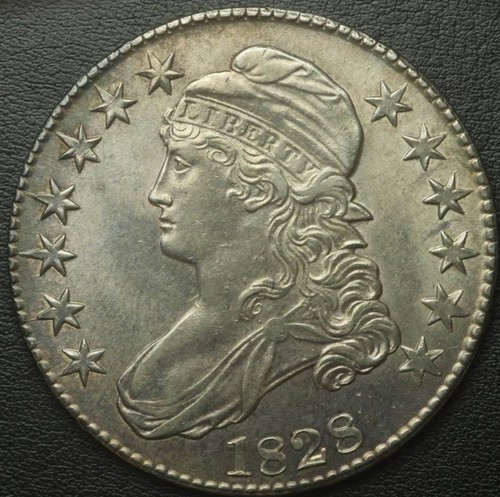
Capped Bust Half Dollar identified by the community
Real coins identified with Coin Identifier.
Other coins you may enjoy
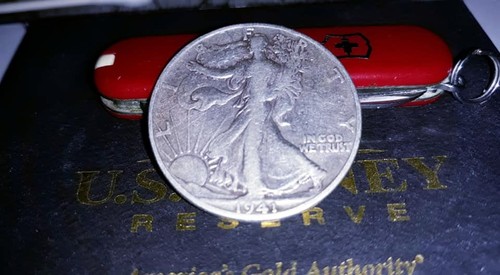
Walking Liberty Half Dollar
1916–1947
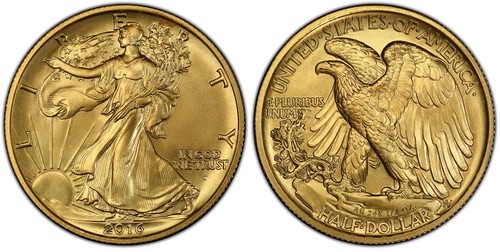
Walking Liberty Half Dollar Centennial Gold
2016
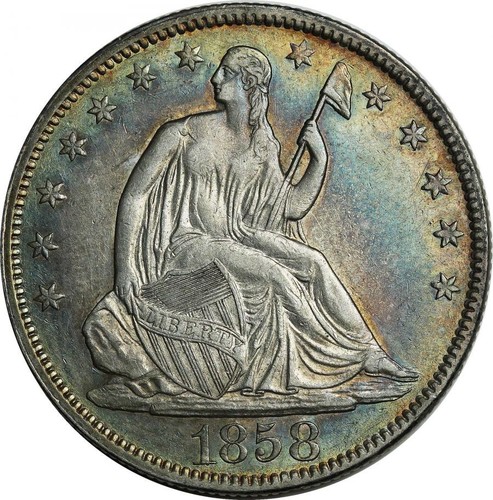
Seated Liberty Half Dollar
1839–1891
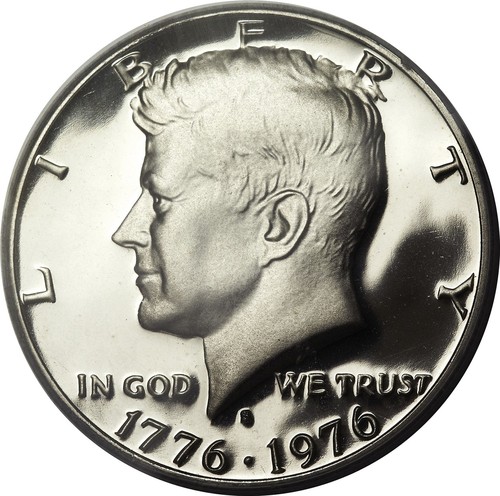
Kennedy Half Dollar Bicentennial
1976
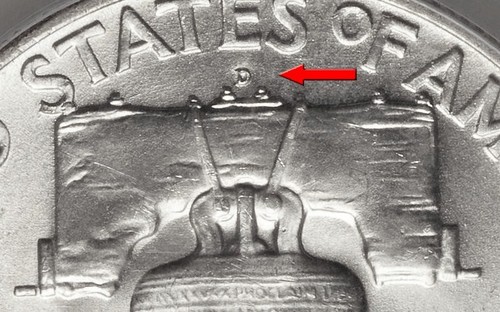
Franklin Half Dollar
1948–1963
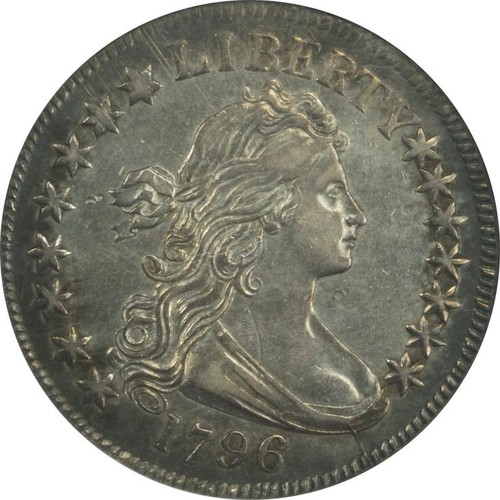
Draped Bust Half Dollar
1796–1807
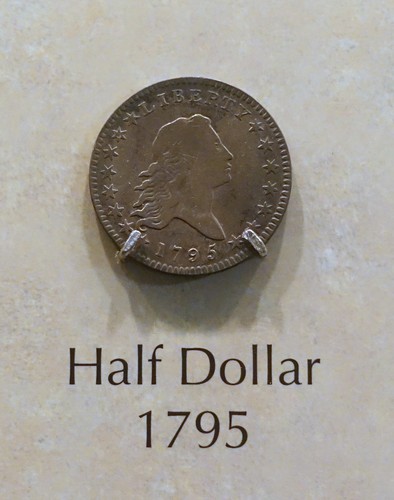
Flowing Hair Half Dollar
1794–1795
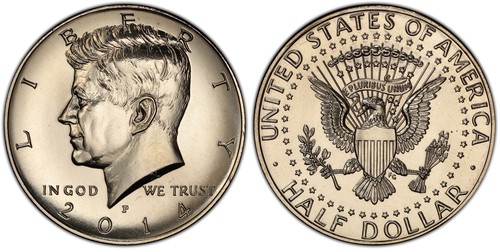
Kennedy Half Dollar 50th Anniversary High Relief
2014