Mercury Dime
U.S. silver ten-cent coin struck 1916–1945, showing a winged-cap Liberty head on the obverse and a fasces with an olive branch on the reverse.
- Country
- United States
- Denomination
- 10 Cents
- Metal
- Silver
Got a coin like this?
Identify any coin from a photo, free.
Overview
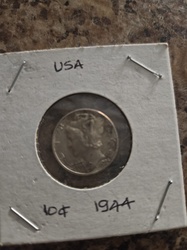
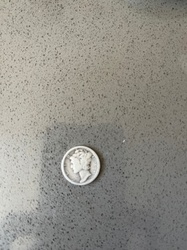
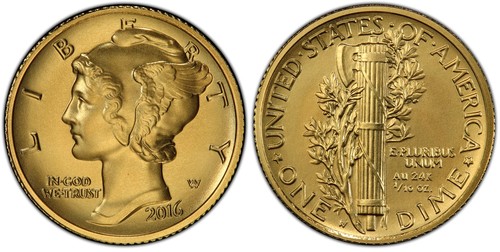
The Mercury Dime is a United States ten-cent coin produced by the U.S. Mint from 1916 through 1945. The obverse shows a left-facing head of Liberty wearing a winged cap, with "LIBERTY" around the rim and "IN GOD WE TRUST" in the lower left field. The reverse displays a fasces — a bundle of rods bound around an axe — entwined with an olive branch, alongside the denomination "ONE DIME." Despite its popular name, the figure is Liberty, not the Roman god Mercury.
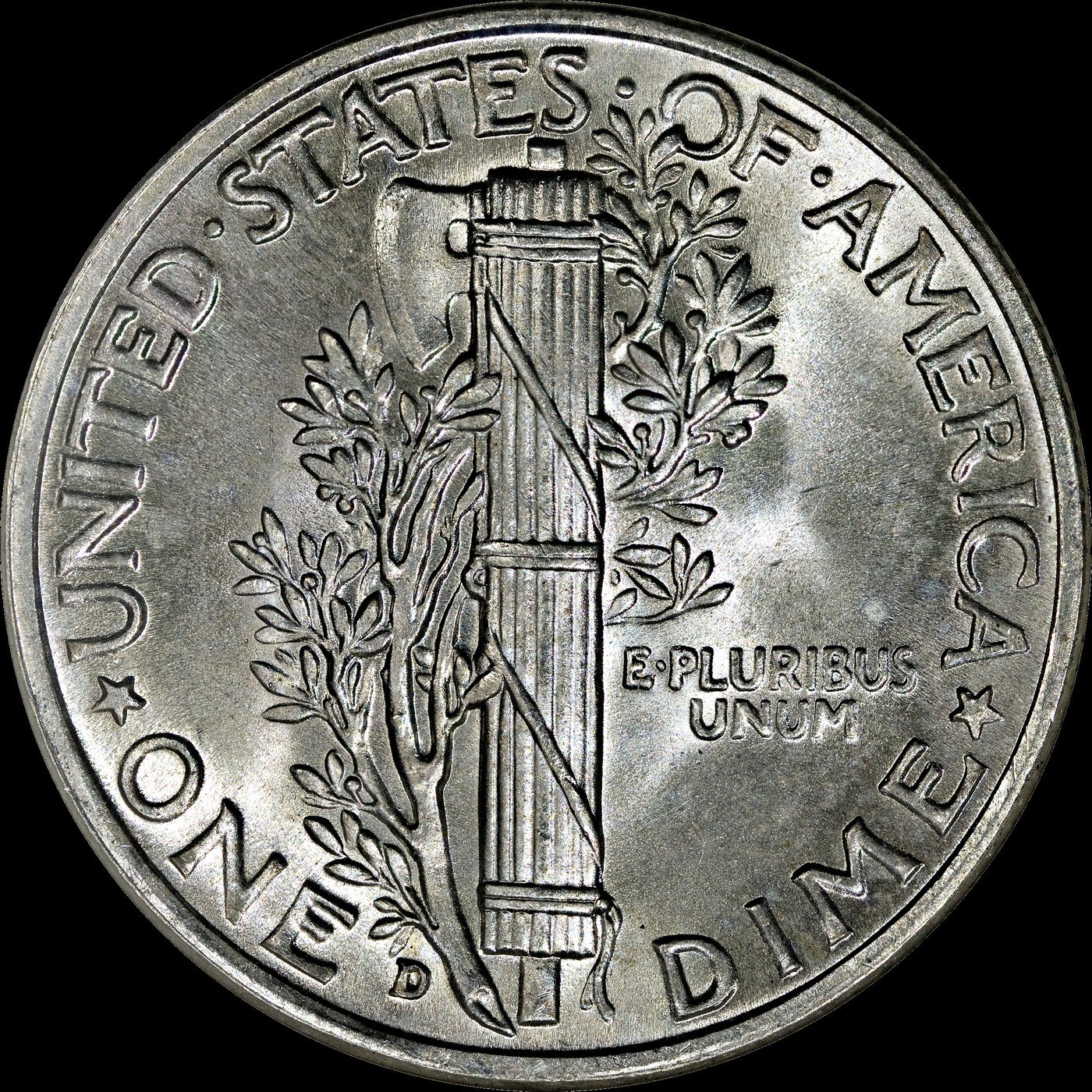
The 1943 example shown here is a wartime issue struck in 90% silver and 10% copper. It measures about 17.9 mm in diameter, weighs roughly 2.5 grams, and has a reeded (grooved) edge. The "D" mint mark on the reverse marks it as a product of the Denver Mint.
History & Background
The Mercury Dime was designed by sculptor Adolph A. Weinman and introduced in 1916 to replace the Barber dime. Weinman's winged cap was meant to symbolize liberty of thought, but the public quickly nicknamed the coin the "Mercury Dime" because the design resembled the winged helmet of the Roman messenger god. The name stuck even though the Mint's own title for the coin was the Winged Liberty Head dime.
The series ran for three decades and spanned the First World War, the Great Depression, and the Second World War. The 1943 date shown here falls in the wartime years; unlike the five-cent piece, which switched to a silver alloy during the war, the dime retained its long-standing 90% silver composition throughout. Production ended in 1945, after which the Roosevelt dime was introduced in 1946.
How to Identify
The obverse depicts Liberty in left-facing profile wearing a close-fitting winged cap, with "LIBERTY" arced around the upper rim, "IN GOD WE TRUST" in the lower left field, and the date at the lower right. The reverse shows a vertical fasces — rods bound with horizontal bands around an axe — crossed by an olive branch, framed by "UNITED STATES OF AMERICA," "E PLURIBUS UNUM," and "ONE DIME."
The coin is 90% silver, about 17.9 mm across, near 2.5 grams, with a reeded edge and a bright silver-gray tone. When present, the mint mark appears on the reverse to the left of the fasces near the base: a "D" for Denver or an "S" for San Francisco. Coins struck at Philadelphia carry no mint mark. The example shown bears a "D," identifying it as a Denver issue.
Value & Collectibility
Common-date Mercury Dimes in worn grades trade close to their silver bullion value, since each contains roughly 0.072 troy ounce of silver. Wartime dates such as 1943 were produced in large numbers and are among the more common issues, so circulated examples are affordable and priced mainly on metal content plus a modest collector premium.
Value rises sharply with high grade, original luster, and — especially — a "Full Bands" strike, meaning the two horizontal bands at the center of the fasces are fully separated and sharp. Key dates and varieties, above all the low-mintage 1916-D and the 1942/1 and 1942/1-D overdates, command strong premiums regardless of the common-date market. Because condition and strike drive value so heavily, a certified example from a reputable grading service is the most reliable guide to worth.
Frequently asked questions
Is the Mercury Dime actually the god Mercury?
No. The figure is Liberty wearing a winged cap meant to symbolize freedom of thought. The public nicknamed it "Mercury" because the winged cap resembled the Roman messenger god, and the name stuck.
What is a 1943 Mercury Dime made of?
Like the whole series, it is 90% silver and 10% copper, weighing about 2.5 grams and measuring roughly 17.9 mm in diameter. The dime kept its silver composition throughout World War II.
Where is the mint mark on a Mercury Dime?
On the reverse, to the left of the fasces near its base. A "D" means Denver and an "S" means San Francisco; Philadelphia coins have no mint mark. The pictured coin shows a "D."
What does 'Full Bands' mean?
It refers to the two horizontal bands across the center of the fasces on the reverse. When they are fully raised and separated, the coin earns a "Full Bands" designation, which can add significant value to high-grade examples.
Are Mercury Dimes valuable?
Most common dates in worn condition are worth close to their silver value, but sharp high-grade coins, Full Bands strikes, and key issues like the 1916-D and the 1942/1 overdates can be worth much more.
Mercury Dime guides
In-depth guides for identifying, valuing, and collecting Mercury Dime.
Mercury Dime identified by the community
Real coins identified with Coin Identifier.