Barber Dime
U.S. ten-cent silver coin struck 1892–1916, showing a right-facing Liberty head and a wreath enclosing "ONE DIME" on the reverse.
- Country
- United States
- Denomination
- 10 Cents
- Metal
- Silver
Got a coin like this?
Identify any coin from a photo, free.
Overview
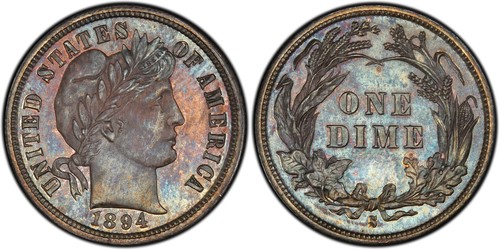
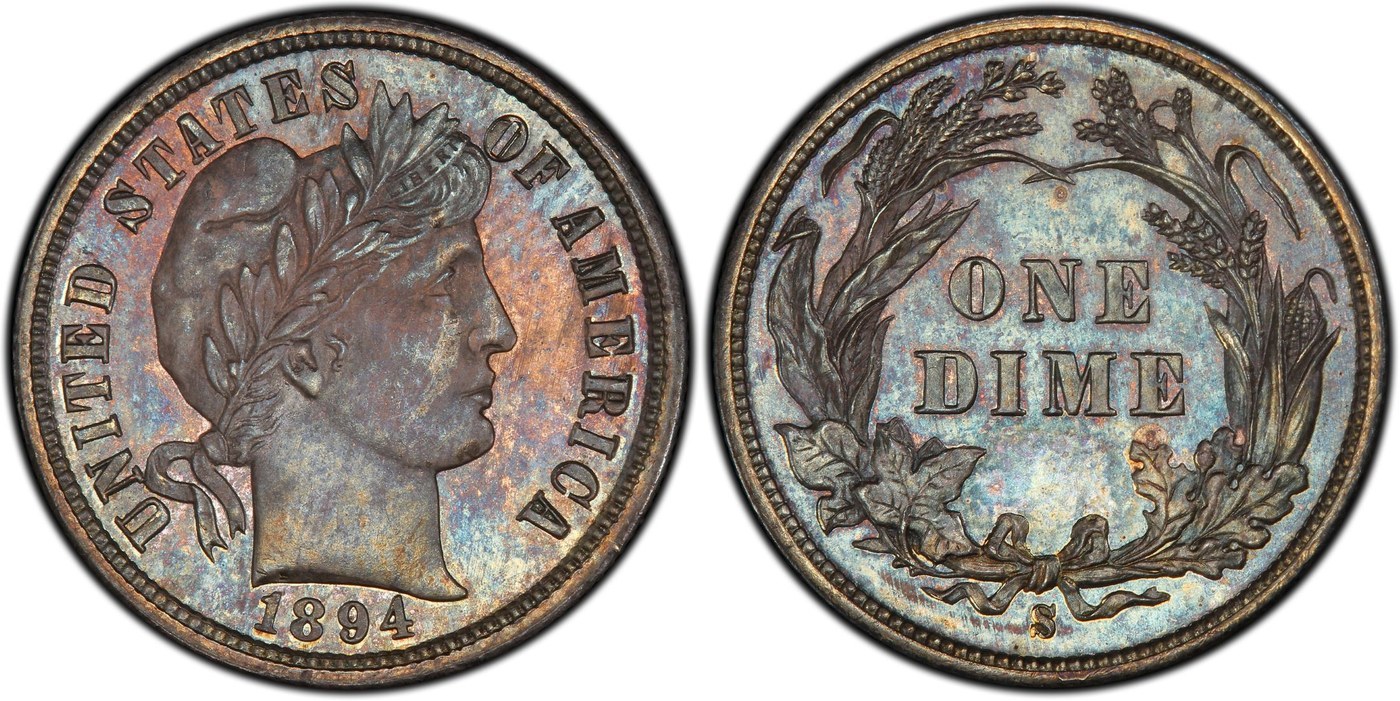
The Barber Dime is a United States ten-cent coin produced by the U.S. Mint from 1892 through 1916. The obverse shows the head of Liberty in profile wearing a laurel wreath and cap, with "LIBERTY" on the headband, "UNITED STATES OF AMERICA" around the top, and the date below. The reverse displays a wreath of agricultural leaves enclosing the words "ONE DIME." The coin is named for its designer, Chief Engraver Charles E. Barber.
The 1914 example shown here is a later-series coin struck in 90% silver and 10% copper. It measures about 17.9 mm in diameter, weighs roughly 2.5 grams, and has a reeded (grooved) edge. By this date the design had been in continuous use for more than two decades and had settled into its long-running standard form.
History & Background
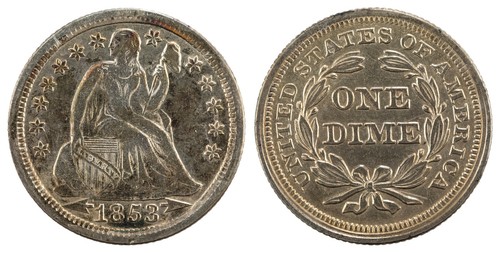
The Barber Dime was designed by Charles E. Barber, Chief Engraver of the U.S. Mint, and introduced in 1892 to replace the long-running Seated Liberty design. The same Liberty-head motif appeared on the dime, quarter, and half dollar of the period, giving the three denominations a uniform look, though the dime carries a wreath reverse rather than the heraldic eagle used on the larger Barber coins.
The series ran through 1916, when it was replaced by Adolph Weinman's "Mercury" (Winged Liberty Head) dime. Over its 25-year run the Barber Dime was struck at four mints, and it circulated heavily across the country. The 1914 date shown here falls in the coin's later, well-established production years, when large numbers were made at Philadelphia, Denver, and San Francisco.
How to Identify
The obverse depicts Liberty facing right, wearing a laurel wreath and a cap with a headband inscribed "LIBERTY." The legend "UNITED STATES OF AMERICA" curves around the upper rim and the date sits at the bottom, reading 1914 on this coin. The reverse shows a wreath of corn, wheat, oak, and maple leaves tied with a ribbon, encircling the two-line inscription "ONE DIME."
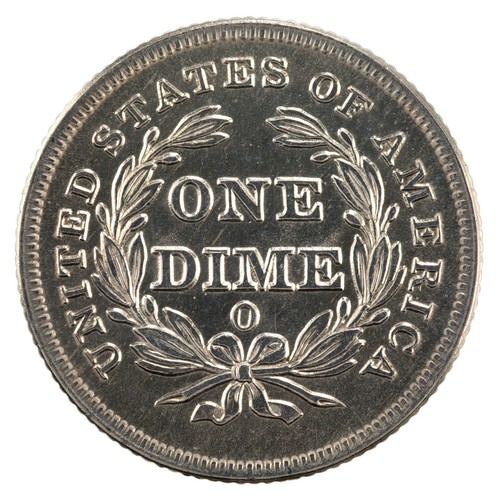
The coin is 90% silver, about 17.9 mm across, near 2.5 grams, with a reeded edge and a light gray silver tone. Mint marks, when present, appear on the reverse just below the wreath, above the "ONE DIME" ribbon: an "O" for New Orleans, "D" for Denver, or "S" for San Francisco. Coins struck at Philadelphia carry no mint mark. Note that the dime's reverse is a wreath, not the shield-and-eagle used on the matching Barber quarter and half dollar.
Value & Collectibility
Common-date Barber Dimes in worn grades, including many 1914 examples, are affordable and carry a base value tied to their silver content plus a modest collector premium. Value climbs with condition, full "LIBERTY" detail on the headband, and original, unblemished surfaces. Well-worn coins with a smooth Liberty band are worth less to specialists.
Certain issues are far scarcer and command strong premiums — the 1894-S is a famous rarity with only a tiny number known, and low-mintage branch-mint dates from the 1890s also bring high prices. A standard 1914 Philadelphia coin is a common date, while the 1914-D and 1914-S are somewhat less common. Prices vary widely with grade and the silver market, so a certified example from a reputable grading service is the most reliable guide.
Frequently asked questions
Who designed the Barber Dime?
It was designed by Charles E. Barber, Chief Engraver of the U.S. Mint, whose surname gives the coin its common name. The same Liberty-head design also appeared on the Barber quarter and half dollar.
What is a 1914 Barber Dime made of?
Like the whole series, it is 90% silver and 10% copper, weighing about 2.5 grams and measuring roughly 17.9 mm in diameter, with a reeded edge.
Does the Barber Dime have an eagle on the back?
No. The dime's reverse is a wreath enclosing "ONE DIME." The shield-and-eagle reverse belongs to the larger Barber quarter and half dollar, not the ten-cent coin.
Where is the mint mark on a Barber Dime?
On the reverse, just beneath the wreath above the ribbon. An "O" means New Orleans, "D" means Denver, and "S" means San Francisco; Philadelphia coins have no mint mark.
Are Barber Dimes valuable?
Most common dates in worn condition are worth a modest premium over their silver value, but scarce issues like the 1894-S and sharp, high-grade coins with full 'LIBERTY' detail can be worth substantially more.
Barber Dime guides
In-depth guides for identifying, valuing, and collecting Barber Dime.