Roosevelt Dime
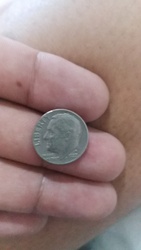
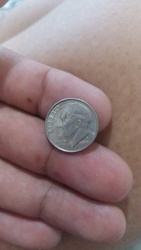
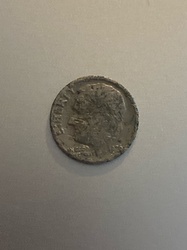
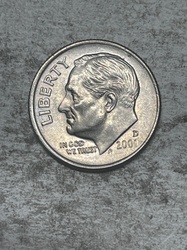
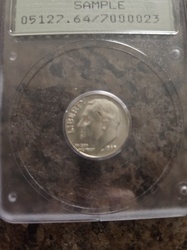
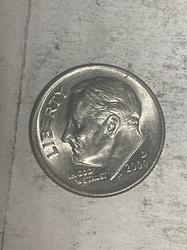
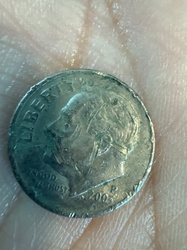
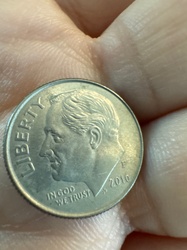
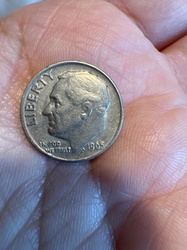
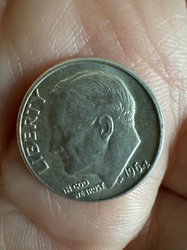
The circulating U.S. ten-cent coin honoring Franklin D. Roosevelt, shown here as a 1965 copper-nickel clad issue with a torch, olive, and oak reverse.
- Country
- United States
- Denomination
- 10 Cents
- Metal
- Copper-Nickel Clad
Got a coin like this?
Identify any coin from a photo, free.
Overview
The Roosevelt Dime is the ten-cent coin that has served the United States since 1946, named for President Franklin D. Roosevelt, whose left-facing profile fills the obverse. The reverse displays a lit torch flanked by an olive branch and an oak branch, symbols of liberty, peace, and strength. The coin pictured here is dated 1965.
The 1965 date marks a turning point: it is a copper-nickel clad piece rather than the 90 percent silver used from 1946 through 1964. Clad dimes are made of outer layers of copper-nickel bonded to a pure copper core, which is visible as a reddish stripe on the coin's edge. From 1965 onward this composition became the standard for circulating dimes.
As an ordinary clad coin still made and spent today, the Roosevelt Dime is one of the most common U.S. coins in existence. It is collected as an inexpensive, complete-able series, with silver dates, proofs, and high-grade examples drawing the most collector attention.
History & Background
The Roosevelt Dime was introduced in 1946, months after Franklin D. Roosevelt's death, to honor the president and his association with the March of Dimes campaign against polio. The design was created by U.S. Mint Chief Engraver John R. Sinnock, whose initials JS appear at the base of Roosevelt's neck.
Through 1964 the dime was struck in 90 percent silver. Rising silver prices and coin shortages led Congress to pass the Coinage Act of 1965, which removed silver from circulating dimes and quarters and replaced it with copper-nickel clad. The 1965-dated coin shown here is among the first of this new clad composition, and to discourage hoarding the Mint initially struck 1965 coins without mint marks.
The clad Roosevelt Dime has continued essentially unchanged in design ever since, making it one of the longest-running U.S. coin types. Silver production later resumed only for special collector proof and commemorative sets, while the copper-nickel clad version remains the everyday circulating dime.
How to Identify
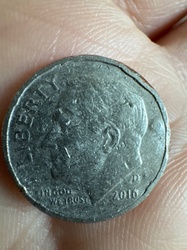
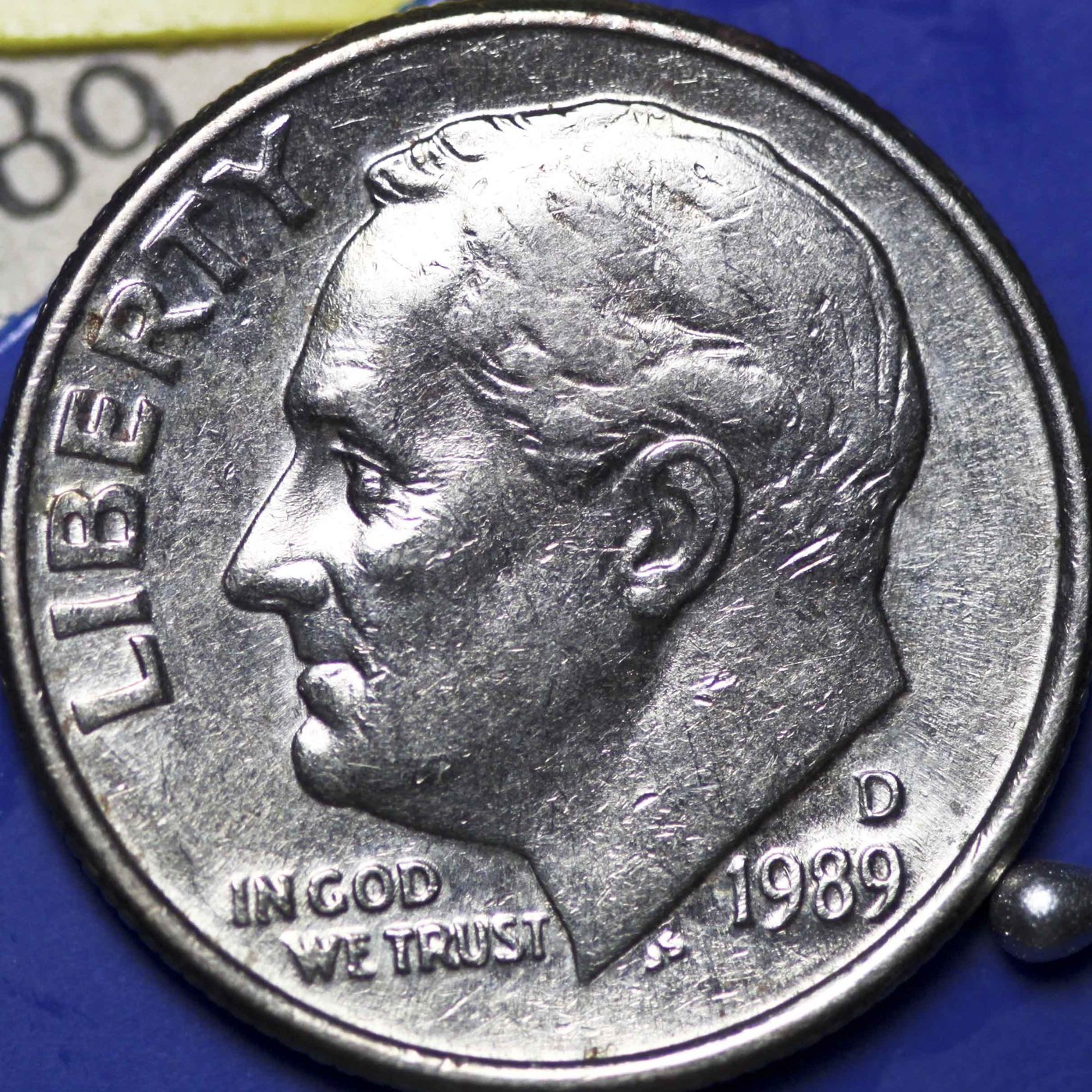
Identify the obverse by Roosevelt's bust facing left, with LIBERTY along the left rim, IN GOD WE TRUST below the chin, and the date to the lower right. The reverse shows a central lit torch, an olive branch to the left and an oak branch to the right, with E PLURIBUS UNUM across the field and UNITED STATES OF AMERICA and ONE DIME around the rim. The pictured coin is dated 1965.
The clad dime measures 17.9 mm across, weighs about 2.27 grams, and has a reeded (grooved) edge. The surest test of a clad versus silver dime is the edge: a clad coin shows a distinct copper-colored stripe between silver-white outer faces, while a pre-1965 silver dime looks solid silver all the way through. A silver dime also weighs slightly more, about 2.5 grams.
Mint marks, when present, sit on the reverse near the base of the torch on 1946–1964 issues, and on the obverse above the date beginning in 1968. Coins dated 1965 through 1967, including this one, carry no mint mark at all, which is normal for those transitional years.
Value & Collectibility
Circulated clad Roosevelt Dimes from 1965 onward are extremely common and generally worth only face value. The 1965 issue is a clad coin with no precious-metal content, so it does not carry the melt value that pre-1965 silver dimes do. Everyday examples are collected mainly to fill an album rather than for monetary gain.
Premiums appear in specific situations: uncirculated coins with full original luster, proof strikes from collector sets, and pieces graded with a Full Bands designation (sharp separation on the horizontal torch bands) can be worth more. Certain error and variety coins, and any accidental 1965-dated silver strikes, are rare and valuable exceptions best confirmed by an expert.
Because the coin is so plentiful, condition is what separates a face-value piece from a collectible one. Well-preserved, spot-free examples and certified high-grade coins command the strongest premiums, while worn circulated dimes remain pocket change.
Frequently asked questions
Is a 1965 Roosevelt Dime silver?
No. Starting in 1965 dimes were made of copper-nickel clad, not the 90 percent silver used through 1964. You can confirm this by the copper-colored stripe visible on the coin's edge.
Why doesn't my 1965 dime have a mint mark?
The Mint struck dimes dated 1965 through 1967 without mint marks to discourage hoarding during the transition away from silver. An absent mint mark on a 1965 dime is normal and correct.
What do the torch, olive, and oak on the back mean?
The lit torch represents liberty, the olive branch stands for peace, and the oak branch symbolizes strength and independence. All three appear on the reverse of every Roosevelt Dime.
How much is a 1965 clad Roosevelt Dime worth?
In circulated condition it is generally worth face value, ten cents. Uncirculated, high-grade, or Full Bands examples can bring a modest premium, and genuine errors are the rare exception.
Who is on the dime and who designed it?
The dime honors President Franklin D. Roosevelt. It was designed by U.S. Mint Chief Engraver John R. Sinnock, whose initials JS appear at the base of the neck.
Roosevelt Dime guides
In-depth guides for identifying, valuing, and collecting Roosevelt Dime.
Roosevelt Dime identified by the community
Real coins identified with Coin Identifier.