How to Identify the Roosevelt Dime
A collector's checklist for confirming a Roosevelt Dime, telling clad from silver, locating the mint mark, and spotting look-alikes.
Read the full Roosevelt Dime encyclopedia entry →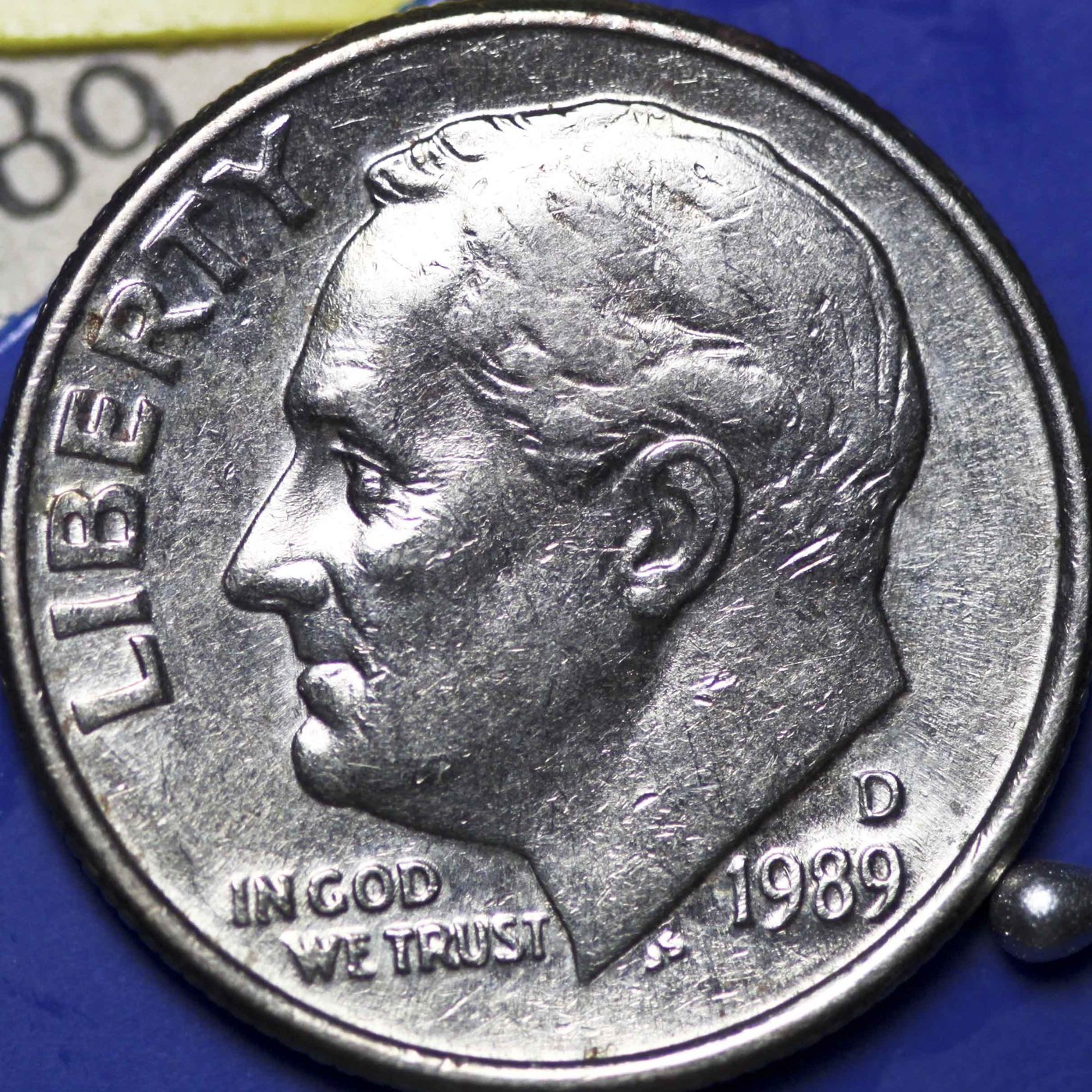
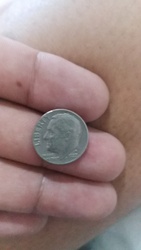
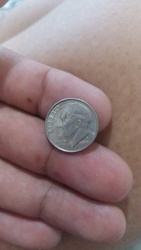
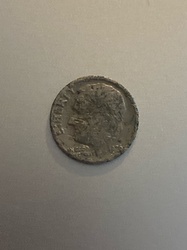
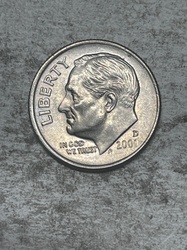
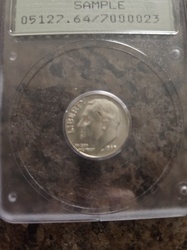
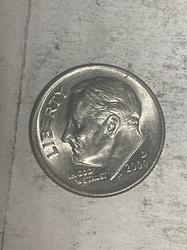
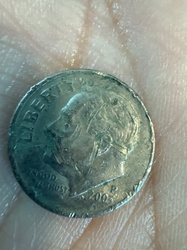
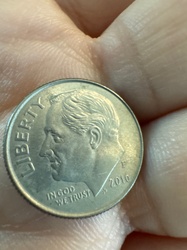
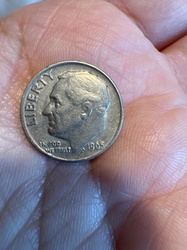
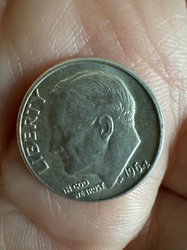
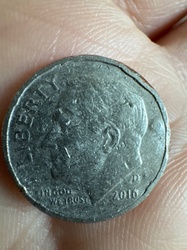
Begin with the design. The obverse must show Franklin D. Roosevelt facing left with LIBERTY along the rim, IN GOD WE TRUST beneath his chin, and the date at lower right. The reverse must show a central lit torch flanked by an olive branch and an oak branch, with ONE DIME and UNITED STATES OF AMERICA around the edge. The coin illustrated here is dated 1965.
Confirm the physical coin next. A Roosevelt Dime is 17.9 mm in diameter, has a reeded edge, and weighs about 2.27 grams if clad or about 2.5 grams if the earlier silver alloy. The fastest way to separate the two is to look at the edge straight on: a copper-nickel clad coin like this 1965 shows a clear copper stripe sandwiched between silver-white faces, while a 1964-or-earlier silver dime is uniformly silver through the edge.
Check for a mint mark based on the date. On 1946–1964 coins it sits on the reverse to the lower left of the torch; from 1968 onward it moves to the obverse above the date. Coins dated 1965, 1966, and 1967 have no mint mark by design, so do not treat a missing mark on this 1965 coin as suspicious.
Watch for look-alikes and easy confusions. The Roosevelt torch reverse can be mistaken at a glance for the Mercury (Winged Liberty) Dime's fasces, but Mercury dimes show a winged Liberty head, not Roosevelt, and end in 1945. Do not confuse the small dime with a similarly toned nickel or a foreign ten-cent coin; the dime is smaller than a nickel yet worth more, and only the U.S. dime carries the Roosevelt portrait and ONE DIME legend.
Finally, apply reasonable caution before assuming any premium. The great majority of 1965 dimes are ordinary clad coins worth face value. Genuinely valuable pieces, such as a 1965 struck accidentally on a silver planchet, are rare and should be weighed and, if promising, authenticated by a reputable grading service rather than judged by eye alone.
Frequently asked questions
How can I tell if my dime is silver or clad?
Look at the edge. A clad dime shows a copper-colored stripe between two silver-white layers, while a pre-1965 silver dime is solid silver through the edge. Silver dimes also weigh slightly more, about 2.5 grams versus 2.27 for clad.
Where is the mint mark on a Roosevelt Dime?
It depends on the year. On 1946–1964 coins it is on the reverse near the base of the torch; from 1968 on it is on the obverse above the date. Coins dated 1965–1967, including this one, have no mint mark.
What is the difference between a Roosevelt and a Mercury Dime?
Both are ten-cent coins, but the Mercury Dime shows a winged Liberty head and a fasces reverse and ends in 1945, while the Roosevelt Dime shows Roosevelt's profile and a torch-with-branches reverse from 1946 onward.
Should I get my 1965 dime authenticated?
Only if it appears unusual, such as being noticeably heavier or lacking the copper edge stripe, which could hint at an off-metal error. Ordinary clad 1965 dimes are common and do not require certification.
Roosevelt Dime identified by the community
Recent Roosevelt Dime coins identified with Coin Identifier.